
The newly released national security document from the White House is more of a culture-war manifesto than a strategic guide for US foreign policy.
The document makes a series of troubling claims and, despite lacking any coherent guidance, signals two major shifts: an institutional breakdown at home and a strategic pullback from the Eastern Hemisphere.
Transcript
Hey all, Peter Zeihan here coming to you from Colorado. And today we’re gonna talk about the new national security document that was put out by the white House. Now, the whole idea of the document comes out every year, and it’s supposed to be the white House guidance to the rest of the U.S. government. What our goals are and what we’re worried about on an international stage.
So it’s supposed to be tactical advice for generals and admirals and diplomats and all the rest. That’s not what we got this time. What we got this time was the American culture war in international form. It’s basically a campaign document. And whereas all the national security documents in the past have been designed about around guidance, this is really just a lot of really assertive claims.
And while in the past it’s all been about the United States, this is one is very much about Donald J. Trump. His name came up almost 30 times in the document. If as far as I am aware, in the decades of the white House has been putting this document together, never once has a sitting president’s name arrived at all.
Because it’s not about one guy. It’s about the country. That is not the case. And again, this is basically a culture war document taking American domestic political considerations and projecting that onto the international system, something that won’t work very well because in the United States, if you want to run for president of a political faction, you have to rally that faction.
That’s how Trump became president. So he got the Republican nomination. That’s how he took over the party. Yes, yes, yes. But that doesn’t work on the international stage because there is no vote. This is a document that is basically designed to be red meat for MAGA and provides absolutely nothing for guidance for policymakers. It also does a couple of things that are grossly against American national interests.
For example, it almost expressly ascribes a specific sphere of influence that no one else should have power. And for both China and Russia, and in conflict with several things that have actually come out of this administration, has actually said that the Chinese should have a right to basically control everything in their neighborhood. Russia barely comes up at all, despite the fact that the Russians have killed more Americans over the last 30 years than any other country, far more than anyone involved in the war on terror.
Obviously not a lot comes up about Ukraine. No real shock there. But what is perhaps most concerning from an international point of view, if you’re not an American, is the attitude towards Europe. Basically, the Trump administration is now saying it’s an American national interests for the politics of Europe to revert to back to where it was in the 1930s.
And I’m like, it’s like, just remember what happened in Europe in the 1930s. It was not a pretty place. It says national interests of the United States, involve include the ethnic breakdown of individual European states, which is, I mean, fascist and racist are the two words you would probably want to use. And the Europeans are…
Let me put it this way. If this really is what the United States wants, then we are basically asking the Europeans to go back to the darkest page of their history and basically kill anyone that doesn’t look like them. And to rearm as part of that process and have an independent foreign and security policy. Every time that that has happened in the past, Europe has gotten really fucking crazy in a very short period of time.
Most recently, we called it World War Two, and before that, World War one, and then the half dozen major wars we had in the 19th century as well. But let’s put that to the side. Does this mean that this thing doesn’t matter because there’s no real guidance? It’s really just a political stake in the ground, not what I’m saying.
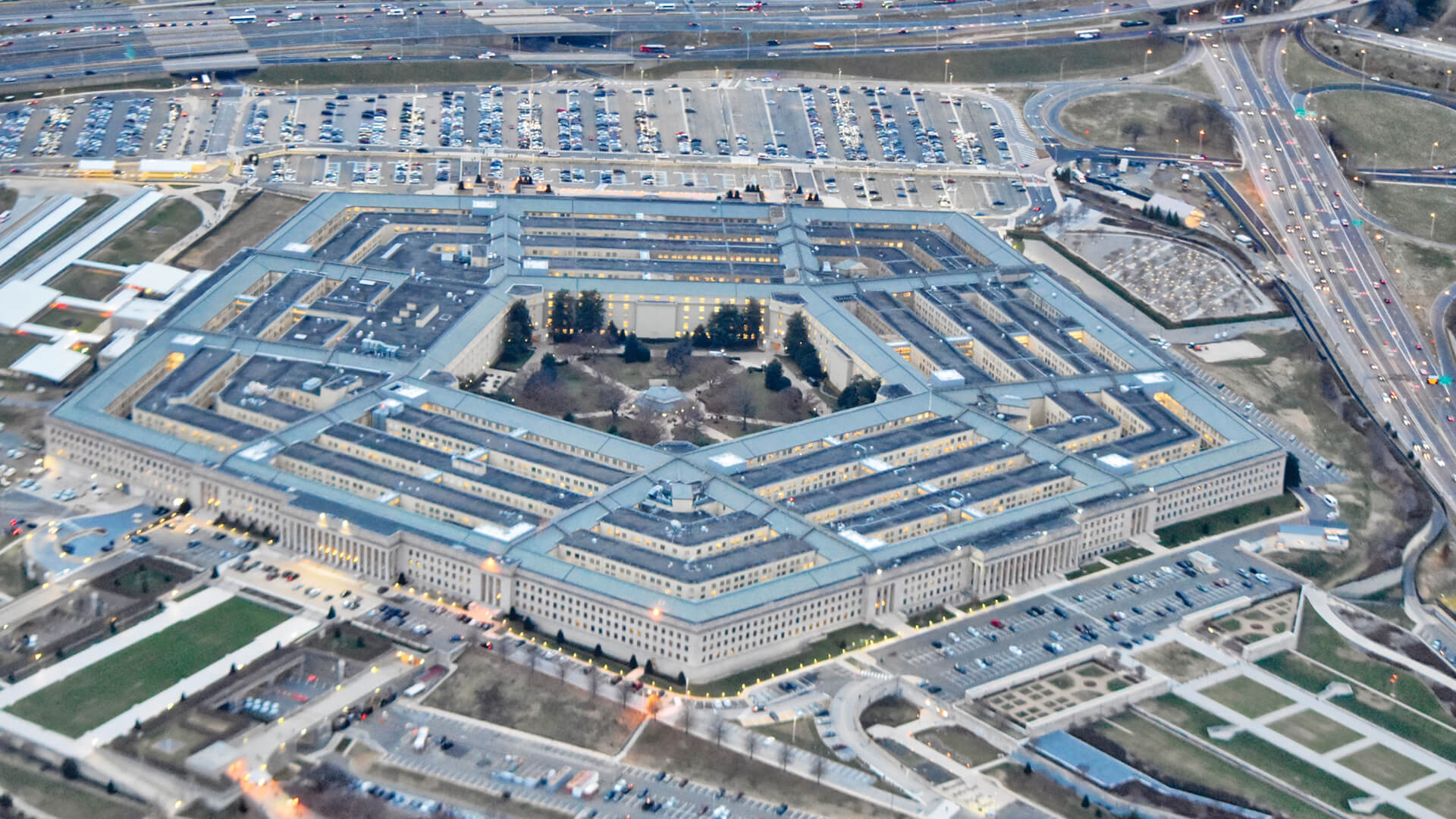
It matters very much for two big reasons. Number one, this administration, is really bad at building institutions. And to implement the things that are in this document requires a fundamental rethinking of American governance, and especially the American military. For example, one of the things it says it wants to do is use the military to secure the southern border.
If that is what we want to do, that means no more F-35s, no more Abrams, no more special forces. That means retraining the military to patrol an area that’s 2000 miles from end to end to an indeterminate amount of thickness in order to catch illegal migrants. That is a very different sort of force. And the force we have now is vastly over trained for that.
And we’d be basically taking people that we’ve invested somewhere like 100 to $400,000 per person based on the job, to basically make them all cops, massive waste of material, massive weights of skill sets, and the time that it would take to build up an institution that was capable of doing that. It’s not something that you measure in months or even years.
A great example is what the Trump administration is trying to do with Immigration and Customs Enforcement. They’re trying to double the number of agents and for their domestic policy concerns. That makes a lot of sense. But what they’re discovering is when you take the rhetoric of the white House and combine it with the reality of the immigration, pool in the United States, you get a very different situation.
According to the rhetoric, they’re going after the drug dealers and the rapists. According to the data, most of the people that have been arrested have no record whatsoever or very, very minor infringements. And so when you’re recruiting people for that specific task and the people who start to look at the jobs realize that the drapes don’t match the carpet, you get a very different sort of applicant.
And so, the Immigration and Customs Enforcement Bureau has had to basically dumbed down their training regimen. They’ve gone from a 16 week course to a six week course. They’ve removed Spanish proficiency, and they’ve basically started to actively recruit from, like, white power gangs because they’re having a hard time getting people who have a sense of what law enforcement is about, who really want to uphold the rule of law, to go into downtown Chicago and get people who are trying to, you know, do yard work.
I actually have a client who told me a couple of weeks ago that She got hit by a little tear gas when she was out for a walk with her dog, because ice was reading a house where a guy was finishing a bathroom because, you know, the Sinaloa cartel of bathroom finishers. That’s the real threat.
When the rhetoric is done for ideological purposes, eventually it crashes into reality. And that happens here. And it’s making very hard for this administration to build an institution. They’re pretty good at tearing them down. Which brings us to the next piece. Something that can be done out of this document is a whole scale re shifting of American military power from the Eastern Hemisphere to the Western Hemisphere.
Very, very clear that that is something that this administration wants to do that can be done. You can shut down the bases in the Eastern Hemisphere. You can reposition your military in this hemisphere and carry out different sorts of activities here. Now, according to the document, they want to do that with allies.
The problem is, is that the three countries in the Western Hemisphere, that the United States has the strongest links with to battle human migration and to battle illegal narcotics, are the three countries that this administration has gone out of their way to antagonize Canada, Mexico and Colombia. Meaningful trade talks with Canadians are at a standstill at the moment.
The Mexicans are basically dodging every bullet that the Trump administration can fire their way. And now President Trump himself is down on record calling the president of Colombia a drug dealer. So this is stuff we’re going to have to do ourselves if we are serious about it. One of the advantages of the old system, where the United States controlled the global order and led this vast alliance network, is when the rubber hit the road.
If shooting never actually happened, the US took control of almost the entirety of the alliances, armies and navies and air forces. Massive force multiplier before you even consider things like basing rights. If we’re going to do this in the Western Hemisphere, if we’re going to do this ourselves. You’re talking about a military budget that’s going to have to at least double, and a massive retraining of everything that we have had the military do over the last 60 years.
That is a lot of wasted investment in order to do things that would be much easier to do hand in glove with some allies. So overall, what do I think about this document? Well, I don’t think you’re going to find a lot of people with any intelligence or security experience, much less economic experience, who think there’s a lot here that is worth salvaging. But this is only year one of a four year term for Trump round two, and there is a lot of time between now and the next presidential election where things like this can actually dig in
Until this administration can prove that it can build something as opposed to just tear it down, we’re simply looking at a reduction in the ability of the United States to affect the world around it, and that is something that will reverberate throughout the world for decades to come.