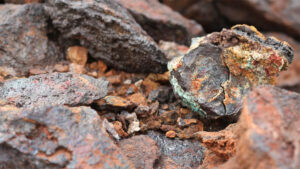
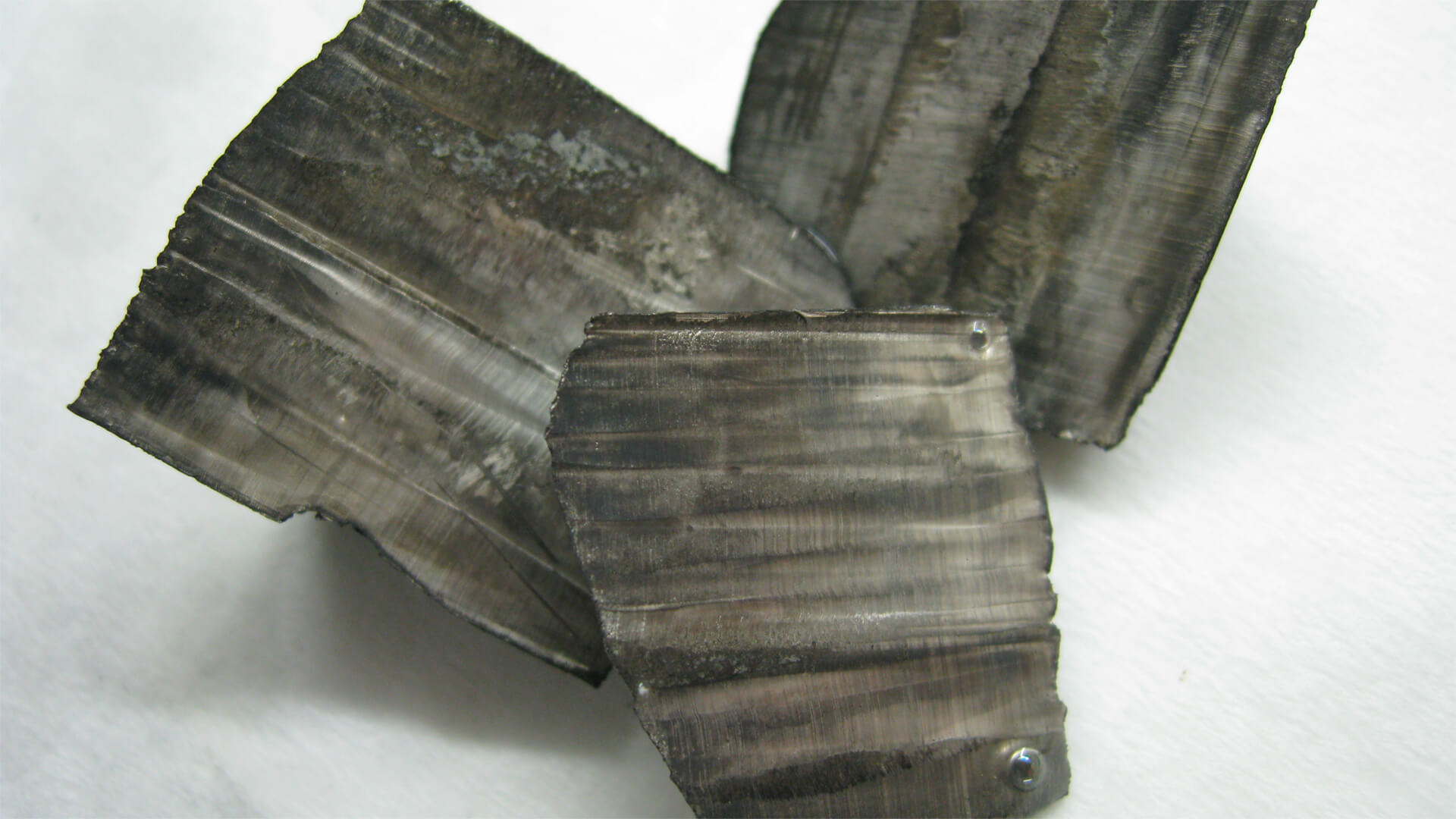

Bolivia is in the midst of a political reshuffling that could alter its minerals future.
For decades, Bolivia’s socialist government has kept the country poor and starved of foreign investment. On top of that, the complex internal political situation between the indigenous population (who live in the regions containing these vast lithium reserves) and the rest of the country, makes accessing these minerals complicated.
A more market-friendly government may embrace foreign investment, but that could upset local communities. Even if they can figure that out, the Bolivians couldn’t have chosen a more challenging time; global demand is entering a lull driven by unsteady US industrial policy and Chinese demand for raw minerals is fading.
Transcript
Hey, Peter Zeihan here. Coming to you from lake, Monona terrace here in Madison, Wisconsin. The land of cheese curds. There is the Capitol back there. Today we’re talking about a country that does not come up often, and that is Bolivia. They recently had a pretty significant shift in their electoral system, it’s resulted in a significant shift in political alignments. So back going into the early 2000, Guy by the name of Evo Morales came in who was a poor coca farmer, became president. Started Bolivia on a path towards what they call socialism. It’s really, low grade populism.
And I don’t want to say he drove the economy into the ground, because that would imply that most of Bolivia was doing well before. But he certainly didn’t leave the place better than he found it. We’ve had 20 years of governments that were of Evo Morales or people like him. And the country, was already functionally the poorest of the major states in Latin America. And it’s still in that position. Bolivia is split into two chunks. And that’s part of the problem.
You’ve got the lowlands in the east that are basically an extension of the agricultural zones of Brazil. About one third of the population lives there, mostly European descent. It’s mostly an agro industrial economy, not the most productive on the planet, but still you know, it’s a hungry world. So you produce agricultural exports and it does. Okay. The upper two thirds are indigenous.
And the reason the indigenous live in the upper two thirds is they were killed everywhere else. The Native American experience in South America is not significantly better than the one in the United States. In most places, Bolivia is only a partial exception, because when you move upland, what we discovered, what humans discovered throughout the 1415, 1617 and 1800s is that the locals were able to reproduce and women were able to give birth at 12,000ft, whereas the Europeans cannot.
And that singular biological difference. The people who had adapted to that before the Columbian Times, were basically able to populate this zone. Bolivia had a number of very, very, very, very, very, very stupid governments in the 1617 hundreds, in the 1800s. And they generated one of the original rules of Latin America is that no matter how many wars you lose, you can still beat Bolivia.
And you can also count on them to pick the fight. So Bolivia lost a lot of territory, was basically reduced to what it is today. And most of the land is of limited use. That doesn’t mean that in the modern times it’s of no use.
In some ways, what’s going on? Bolivia is a little similar to what we have in the United States. In the United States, we’ve been mining the country since formation, since a little bit before formation. And so most of the really good metal deposits have been mined out. And as we enter a world where we know, we know we need different sorts of materials, most notably things like rare earths or lithium.
We’re going into places that we really haven’t mined before, and there are very, very few of those. And most of what they are are on or near Native American lands, which in the United States, for the most part, are reservations. Now, the native population in the United States is only about 1% of the total, and all of their lands are directly controlled by Congress and the Bureau of Indian Affairs.
So if the federal government decides to force the issue, it can’t. That’s not how it works in Bolivia and Bolivia. Those zones are where two thirds of the population live, two thirds of the population is native. And you can’t just wave an administrative wand and make it happen. So it requires a lot more negotiation, and the local communities have a lot more say in how it goes down.
As a result, under the governments of Evo Morales and his successors, we basically had the federal government in Bolivia say that any sort of extraction had to involve the federal government as well as local groups, and that created such onerous terms. Really, no one played the Russians and the Chinese, you know, toyed with the idea, but really we’ve had no meaningful production.
And Bolivia is part of the lithium triangle that connects Bolivia, Argentina and Chile. So there is no doubt that the minerals are there. Just the legal structure to get them out has not existed.
Give you an idea of just how far behind how backwards Bolivia is in this regard. Argentina, where foreign investors are actively penalized. And it’s discussed publicly, has significantly more foreign investment in their space and development of the lithium fields than Bolivia does.
Basically, less than 1% of the world’s lithium comes out of Bolivia, despite them having arguably the best deposits on the planet. So with this new government, will this change what might have having a federal government that is more pro-market is probably going to take us into a different direction, but it’s not going to obviate the fact that two thirds of the population still lives in the zone that controls the political decisions that are required, so we’re more likely to get a lot of civil unrest if we move in the direction of greater mineral extraction.
There’s one other thing to keep in mind. One of the reasons why Bolivia did okay during the last 20 years is commodity prices have been pretty high because the Chinese basically hoovered up everything, and that allowed a little bit more production to come out of Bolivia than normally would have. We’re now kind of in this moment where we’re hanging.
The Chinese are still churning along, building stuff, but the demographic situation is atrocious, and they’re not going to be with us a lot longer. At the same time, we’ve got the United States where there seems to finally be this economic and political understanding that we need to do a massive re industrialization program. But we have a government that is actually penalizing people who do things in that direction with state ownership or with tariff policy.
So we’re kind of hanging right now. The trends up Demand of the past are fading very fast, and the trends of Demand of the future haven’t really taken hold with policies that are going to really encourage them. And that means we’re at this soft point for commodities where the Bolivians are trying to make decisions. So they’re making the decisions about the right things at the right time, but they don’t yet have the economic impulse that would make it really, really stick. So tough times for the Bolivians. Let’s see what happens on the other side of this flip.