Imminent US Strikes Against Venezuelan Government

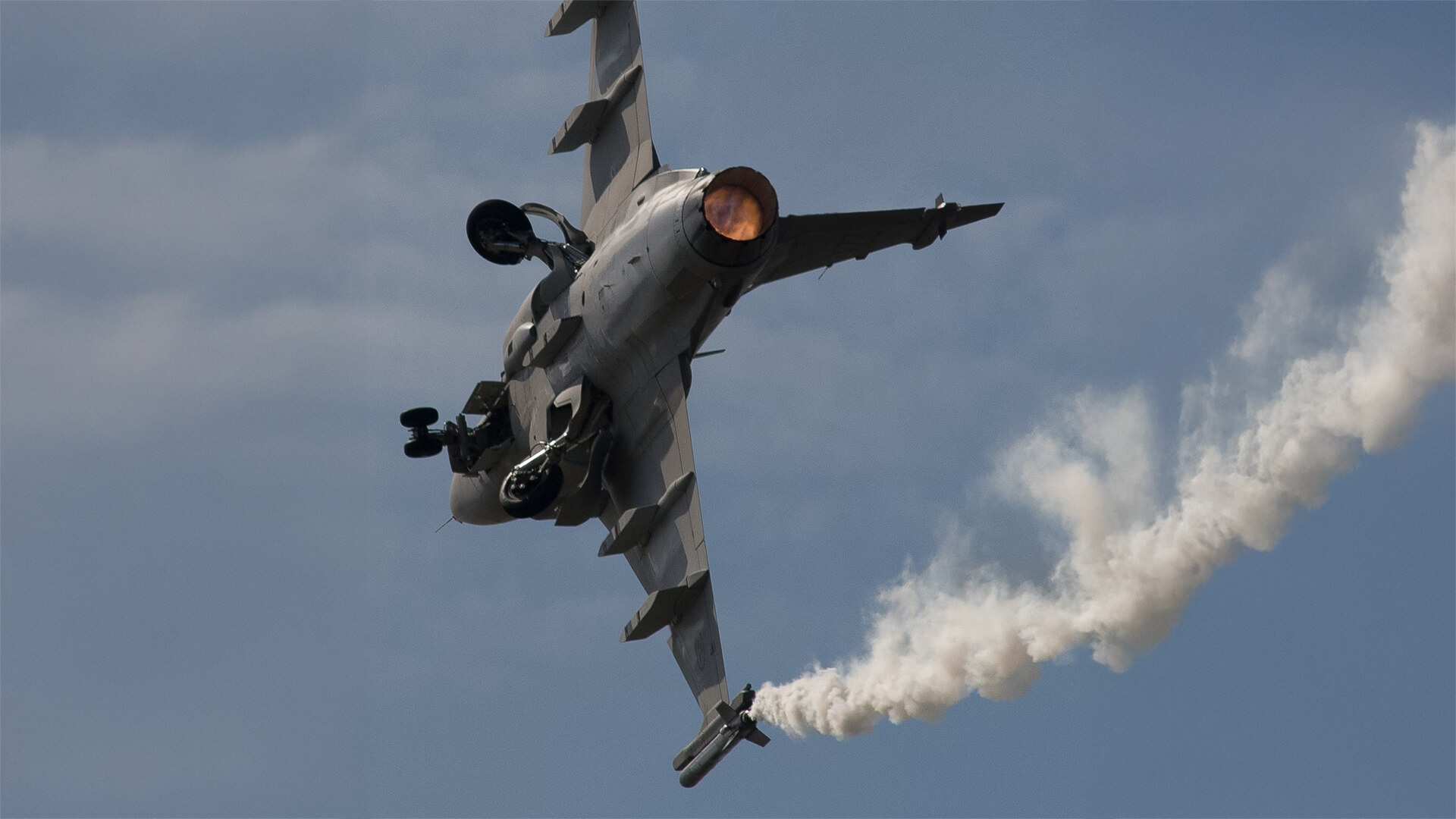
A US Fighter jet conducting a barrel roll

It appears that US military strikes against the Venezuelan government are imminent. Let’s take a look at what passes for a military in Venezuela.

Transcript

Hey, all. Peter Zeihan here coming to you from Colorado. And today we’re talking about Venezuela because it looks like the United States is getting ready to overthrow the Venezuelan government. We now have the USS Ford, which is the largest and newest of the American super carriers in the region, by far the most important and powerful battle platform that humanity has ever created. 

A along with roping in certain countries in the region like, say, Trinidad and Tobago, which are directly off the coast of Venezuela. And then, of course, the US facilities in Puerto Rico being used very aggressively to push troops and ships into the regions. 

Let’s talk about what the other side looks like. Okay. That’s about it. One of the fun things about Latin American militaries is back in the 1970s and 1980s, they were involved in coups. And so when democracy kicked back in in the 90s and 2000, the military’s were deliberately gutted. 

And so as a result, they’re really not capable of much. 

Venezuela was a partial exemption to that because in Venezuela, you actually had a relatively robust democracy throughout this entire period until a guy by the name of Hugo Chavez, who was a military dude, through his own coup and overthrew the democratically elected government and basically imposed an authoritarian system that has since, under his successor, become flat out dictatorial. Chavez. Maduro and their click have basically robbed the country blind, ripping up everything that wasn’t bolted down and even a lot of things that were bolted down and basically destroying the entire, non-oil economy of the country. And they haven’t exactly done a great job with the oil economy either. So what used to be the most technically, educationally, and industrially advanced country in all of Latin America is now a laggard. 

What that means for the military. Well, Chavez, when he came in, was not a general. I think he was a colonel. Was even that? No, I don’t think he was even that. I’m not a big dude. So his coup wasn’t really military in the traditional sense, and the military had been a pillar of support for the old government. 

So Chavez started by buying off the leadership of the military directly, but no longer really purchased a lot of equipment. Then when it became apparent that he was going to be opposed to the United States and he realized the military hardware would be useful. He started buying hardware from the Russians. But the Russians, not having a lot of respect for Chavez, sold him a lot of crap. 

That didn’t even operate when it was purchased in the 2000. Well, it’s now 2025. And for the last several years, the leader of Venezuela has been a bus driver. So the military has not been given a priority. It’s been gutted of all of its leadership. It’s basically been turned into a corruption sieve. And they haven’t gotten really good equipment since the 1990s. 

So if it came up to a straight up fight between the United States embassy guards in Caracas and the Venezuelan military, I would bet on the embassy guards. Even those are only a couple dozen of them, because they’re Marines and dirt. In a straight up fight between the military of Venezuela and the military, the United States. There’s no math here. 

If the United States decides that it wants to knock off the government of Nicolas Maduro, this is an operation that will be measured in hours, days if they get really lucky. That doesn’t mean that this is a great idea, because there’s always the question of what happens the next day. Knocking the government off is the easy part, especially in a place like Venezuela. 

Putting a government back together on the other side. Well, the United States tried to do that in Iraq and Afghanistan, and we saw how much fun that was. Venezuela is in better shape than Afghanistan, but I’d say worse shape than Iraq was under Saddam. 

Oh, and one more thing. Under the previous government, Chavez, the Venezuelan government 

imported a huge number of AK 47. Not for the military, but for the population. And then built an AK 47 facility to make more. By a very, very, very, very conservative assessment. There’s 100,000 AK 47 in public circulation with the approach of eastern gangs. 

And a probably a more realistic number is upwards of a half a million. So no matter who the next political authority is who tries to run Venezuela, there are literally hundreds of thousands of assault rifles in the hands of a population that has literally been paid for the last 25 years to be on the side of the government that will now be deposed. 

So whatever comes next to Venezuela, Lord, it’s going to be messy.

Regime Change for Venezuela

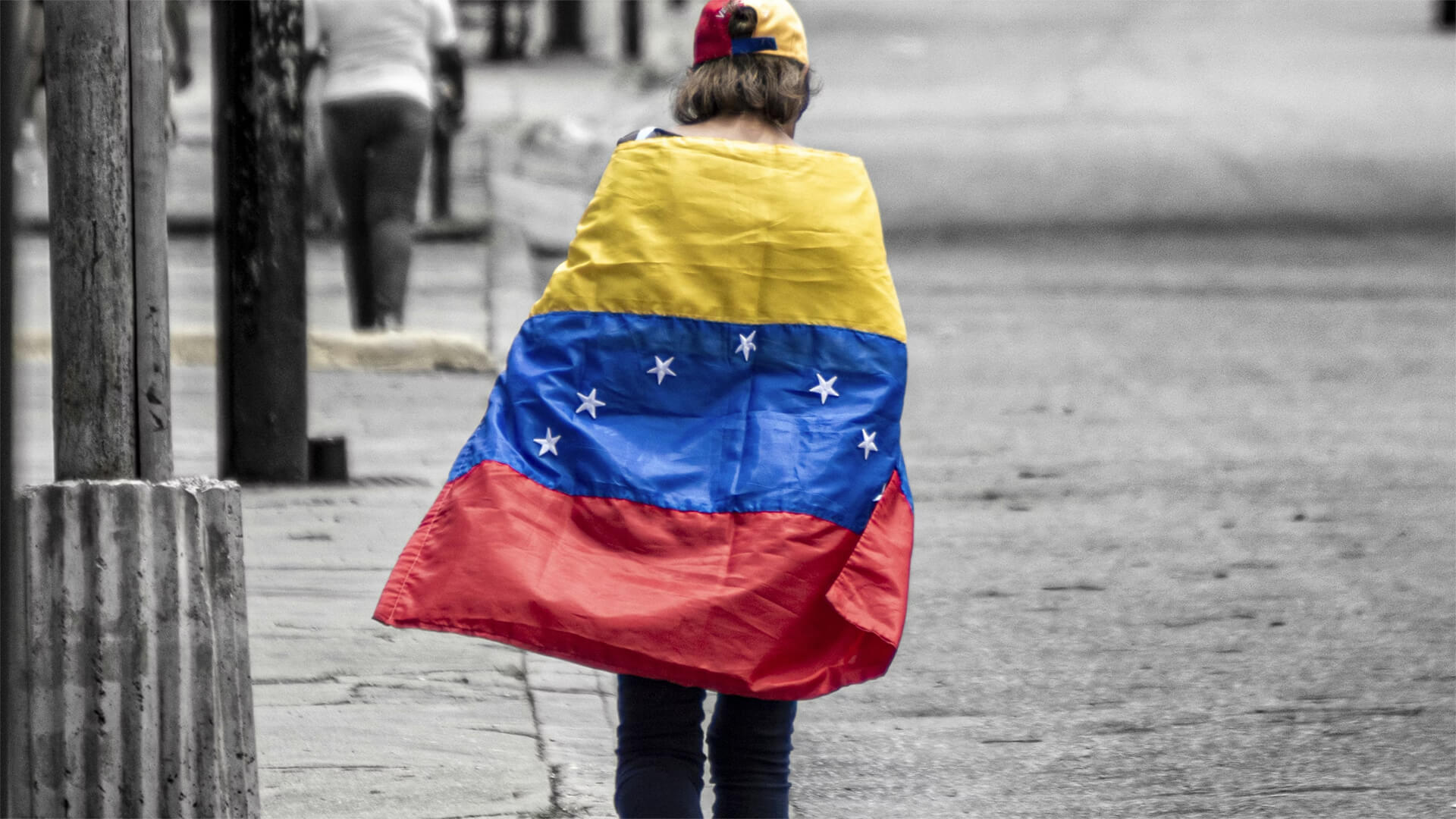
The Flag of Venezuela

The Trump administration is sending the USS Ford, America’s most powerful supercarrier, to the waters off Venezuela. It’s an unprecedented move that could signal a coming regime change. Let’s break down what this means.

To watch our previous video discussing what a Venezuelan incursion might look like, here is the video link.

Transcript

Hey, all Peter Zeihan I’m here coming to you from Colorado. And it looks like the Americans about to knock off a government. The Trump administration has just ordered the USS Ford Super carrier to the waters off of Venezuela, from where it currently is in the Mediterranean. The ford is probably 60%, 100% more powerful than the Nimitz super carriers that have been the backbone of American power for the last 50 years. 

It hasn’t been bloodied in a real fight yet. So this is going to be interesting from any number of angles, but, you don’t send a super carrier somewhere in the Western Hemisphere unless you really have something important to do. The last time an American super carrier was involved in an operation in the Western hemisphere was in 1983, the Grenada operation, where I would argue it was overkill. 

That was an old forester, Forrestal class. This one is much, much, much, much, much bigger. Before that, I mean, let’s see, carriers were involved in the Cuban Missile crisis, but nobody ever shot at anyone there. And, and that’s it. So unprecedented by any number of matters. You could make the argument. Maybe the Trump administration is just trying to intimidate the government of Venezuela, which is led by President Nicolas Maduro. 

There are a lot better sticks for that, I would argue. Keep in mind that over the last few weeks, the United States has not just been going after what the, government of the United States says are drug boats, but is also said publicly that the CIA has kind of been let loose to carry out operations in the country. 

There is already, the USS Iwo Jima, which is a wasp class amphibious assault vessel, which in any other part of the world would be called a supercarrier. But for the United States, these are smaller carriers that also just happened to carry a few thousand Marines. So if you have a supercarrier in order to do strategic overwatch and air bombings, and you have the Marine Expeditionary Unit based on the EO jima, that is going to do, land incursions, this is how you knock off a Latin American government in a weekend, and it probably will only take that amount of time. 

Now, whether this is a good idea or not, push that to the side. Whether Congress is going to be notified, push that to the side. There’s a lot of details here that under normal circumstances, the American political system would be debating and discussing. We are not going to see that this time around because Donald Trump, at least at the moment, still has a lock on the Republican Party in Congress. 

And I really don’t see Congress doing anything unless and until we actually see American soldiers and body bags and this sort of operation. This should not be hard. The government of Nicolas Maduro is really just a couple of dozen dudes, and getting rid of them should be very, very easy. With the assets that seem to be steaming into the region, does that mean the next day will be pretty? 

No. This will probably trigger some sort of civil war and state collapse. The few thousand Marines that are on, I mean, you are nowhere near enough to impose a reality on the ground in Caracas, much less the wider world. We did a video a couple of weeks ago about what it be like to be to impose rule on Venezuela. 

We will share that video again. You don’t want to get involved with that. So this seems like a bomb it and forget it situation. Keep in mind that the Maduro government is so incompetent that they mismanaged selling crude to get dollars to buy food, to feed their people to such a degree that the average Venezuelan a few years ago lost 20 pounds in oil in a year, full on famine. 

You remove the government. That’s probably the only way you could make something worse. So last time that encouraged almost one third of the Venezuelan population to flee the country to avoid famine. We’ll probably see something on that scale again in the months to come. Should this be what the Trump administration has planned?

Venezuela and the War Powers Act

Photo of a US Naval Carrier

The Trump administration’s campaign against alleged Venezuelan drug smuggling is raising some eyebrows. Let’s unpack the War Powers Act and how it applies to this.

The goal of this piece of legislation was to limit unilateral action; it requires presidents to brief Congress within 48 hours of deploying and withdraw them within 60 days unless an extension was approved. But with every president calling this Act unconstitutional since it was put in place (and the fact that Congress hasn’t had the gumption to challenge a president since it was established), this move will most likely go unchecked.

So, Trump has free rein unless Congress decides to step up after 50+ years of silence. Meaning the current operation involving warships, bombers, and 10,000+ US personnel targeting Venezuelan ships will continue with limited transparency.

Transcript

Hey, all, Peter Zeihan here coming to you from Colorado. And today we’re gonna talk about what is going on in the southern Caribbean, specifically the Trump administration’s, targeting of alleged drug smuggling vessels coming out of Venezuela. A lot of people have written them asking me for a comment on the legality of this. And the best I can give you is that this is a gray area, no matter really how you look at it. 

According to the Constitution, the US president has the authority over the armed forces, and that is largely without restriction, unless in case of war, in which case Congress by a two thirds majority, needs to declare war. But Congress hasn’t declared a war since World War two, leaving all military policy basically in the hands of the president unless and until Congress says otherwise. 

Now, in 1973, Congress did say otherwise, and they passed something called the War Powers Act that says within 48 hours of any commitment of American forces into a combat situation, the president has to brief Congress on the details and then withdraw all forces within 60 days unless the president applies and is approved, for an extension. Anything beyond that requires the two thirds majorities by Congress to actually declare a military conflict. 

Now, since then, every single president, including Trump, won and Trump, too, has said that the War Powers Act is unconstitutional. But the War Powers Act was passed by a veto proof majority over the objections of the president at the time. And so you have this conflict between the executive branch and the legislative branch, and it really means that the president still can do whatever he wants so long as Congress does not act. 

And since 1973, we have not had a situation where two thirds of the Congress has been willing to oppose the president on military affairs. And that is where we remain today. So that leaves the president the ability to do whatever he wants. Now, under Trump administration, notification of Congress is something that has become very weak under the best of circumstances, and military affairs are no difference. 

There have been times in the past where the Trump administration has done something militarily and said that when it hit the news that was notification of Congress, which I don’t think any court back up. But again, Congress has not gotten together and had two thirds of its members say otherwise, which is what would be necessary in the current situation. 

Members of the House Military Affairs Committees and the intelligence committees had basically been furious with the Trump administration, not just the Democrats, especially the Republicans, because the Trump people who have come in to brief them have basically provided no information and no proof that any of these, ships were carrying drugs. Does that mean, I think that the Trump administration is just blowing up random ships? 

No, because there’s there’s quite an operation going on down there. Now. We have over 10,000 American service people that are involved in this operation. And at any given time, at least eight warships. We also are flying bombers, off the coast of Venezuela. So something is afoot. And the Trump administration is not sharing very many details with anyone, especially with Congress. 

And that leaves all of us kind of grasping at straws. All I can tell you for certain is that unless and until Congress starts acting like Congress, the Trump administration has full leave to do whatever it wants legally, where that takes us. I don’t have enough information to say right now.

So, You Want to Invade Venezuela…

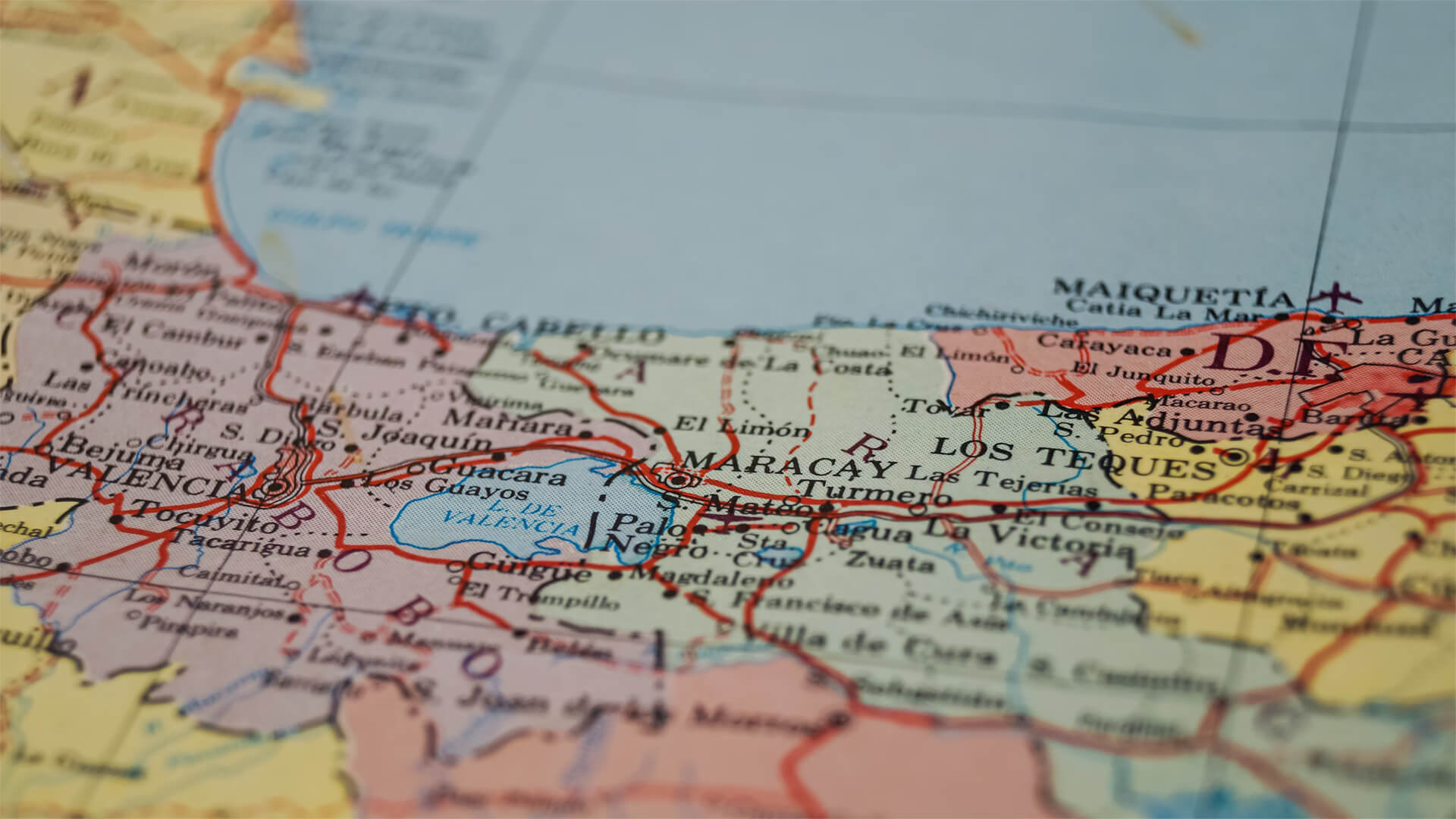
Map of a bay of Venezuela

US military intervention in Venezuela keeps getting floated around, but I’m not sure people fully comprehend how UGLY this would be.

Venezuela is a mess. They have a corrupt leader, who has caused irreparable harm to the nation…but getting rid of him is the easy part. Caracas is the Everest of this endeavor, and it all comes down to geography. Sure, Caracas looks coastal, but it sits on a plateau behind 2 miles of tunnels and steep mountains. Translation: it’s not easy to get to.

We are talking about the US military though, so capturing Caracas wouldn’t be difficult. Holding and sustaining the population afterward is the scary part. We’re talking a multi-year, multi-billion-dollar project, with a population that depends upon imports that travel on fragile transit infrastructure. Think of this is a South American Chechnya.

Before I say this next line, allow me to emphasize that this as a VERY bad idea. But if someone was really gung on invading Venezuela, the western port city of Maracaibo is where I would start.

Transcript

Peter Zeihan here, coming to you from Colorado. Today we’re talking about Venezuela because relations between the Americans and the Venezuelans are getting pretty nasty, and people are starting to discuss, I wouldn’t say plan, but discuss whether or not there’s going to be a military intervention. At the moment, I don’t have any guidance on that. The Maduro government of Venezuela is obviously horrendously corrupt and obviously is involved in drug trafficking, if not to the degree that the Trump administration asserts. 

Most of the drugs still come from Colombia up through Central America and Mexico and the United States doesn’t mean that there’s not an important vector coming out of Venezuela, but it’s nowhere near the primary one. But the Maduro government is absolutely involved with the smuggling. So, you know, everybody gets a piece for the right, everybody gets a piece where they’re wrong. 

Let’s talk about what a military intervention would look like. The population of Venezuela, most notably the capital, Caracas, is only a few miles from the coast, which makes it sound like it’s ripe for a maritime intervention or an amphibious landing. But you would be wrong, because there’s a very strong coastal uplift with mountains basically paralleling the coast in that entire section of the country. 

So to get to Caracas, you actually have to go up into the mountains and then punch through a couple of tunnels, one of which is about a mile and a third long. The other one’s a little less than a third of a mile, half a mile somewhere in there. In order to get to the plateau where the city is. 

So four lane highway, two tunnels, which collectively are about two miles long, which means knocking off Nicolas Maduro and his government, is not the hard part. The hard part is then keeping the city and the country alive between the incompetence of Maduro. He used to be a bus driver and his predecessor, Hugo Chavez, who was touched. This country has completely destroyed their capacity for growing food and even if you remove the government and everything, all of a sudden remembers how to do it. 

You still have a couple of growing seasons before anything would be back on the sheet. So I strongly encourage you to consider what happened back in Iraq when the United States knocked off the Hussein government. Food production plummeted for a couple of years before eventually gradually recovering. In the meantime, the United States was responsible for keeping the civilians alive. 

But in the Iraq scenario, we could ship things in through northern Iraq because Turkey was an ally and there was infrastructure in place. We could ship things in from the south because Kuwait was an ally, and there was a U.S. military base right there, and there was a port, right at the southern tip of Iraq. So there were a number of ways that things could be brought in. 

You don’t have that with Caracas. The food production regions are more deeply in the interior, and you required billions, if not tens of billions of dollars of reconstruction work to bring online. And you have to ship in everything for the capital through this four lane highway. And this is a place that, based on whose math you’re using, imports somewhere between 70 and 80% of their food, mostly ultimately from the United States. 

But that’s another issue anyway. So tunnels, one that’s over a mile long, even a mild explosive by, say, a TV star who decides he wants to stick it to the Americans, shuts that down, and now you’re forced to use a road that was built before 1950 that goes up and over the mountains, which takes a lot longer now, a lot longer subjective. 

If you use the tunnel system to get in from the coast and there’s really no traffic, this is less than a half hour drive. If you go up and over, it’s maybe an hour and 15 minutes. But if you’re talking about a military occupation where the United States is directly responsible for the security and food distribution over 5 million people, that’s a whole nother problem. 

You’re talking about hours and any number of ways that things can go wrong. One of the advantages we had in Iraq that everything was a flat desert road. Mountains are very, very different. Basically, you’d be working in a tropical Chechnya. It would be ugly. And for those of you think that. Hey, air power. Yeah. No, it takes about a thousand times the energy to move a pound by air that it does by water. 

And maybe 100 times compared to what it takes to move by road. And like the Berlin Airlift, which people like to point to, we were flying things from western Germany to West Berlin, which was less than 100 miles here. The nearest airbase is what Cuba, which we’re not going to be operating from. So you’d have to set up some sort of operation on one of the outlying lines, like, I don’t know, Margarita, and then fly in from there and just. 

No, no, no, there’s no way you support 5 million people that way. So knocking off the top cut of the head off a snake, that’s the easy part. Reconstruction is an ongoing issue that would take years, if not decades, and keeping everyone alive from here to there would be just beyond what the U.S. military could handle. If this is not me saying we should do it this way, but if this were to happen, the more reasonable approach would be to do the invasion via a place called Maracaibo, which, if you look at a map of Venezuela, is this big bay to the west? 

It has no escarpment separating from the water. The major population centers are actually ports. It’d be much easier for U.S. forces to operate it. And two other things to keep in mind. Mark Cabo is a major oil producing region, and it doesn’t particularly like Caracas. It never has. And if there’s ever going to be a secession war in Venezuela, it’s going to be Maracaibo trying to go its own way. 

So the likelihood of the population being hostile is much lower, and the likelihood of being able to keep the population alive is much higher. So if if it’s going to be done, that would be the way to do it. Not me saying that this is a Latin American war. That would be fun. It wouldn’t be. But you don’t have to make it a disaster.

Venezuelan Crude Is Off the Menu… But You Can Still Get It Around Back

Photo of black oil barells

Venezuelan oil is getting the boot from the US. Well, kinda, sorta, not really. Let me walk you through what’s going on.

Biden allowed Chevron to import Venezuelan crude to help lower gasoline prices, but Venezuela couldn’t meet their election-related obligations and the deal failed. Regardless, Biden’s motives were misguided as Venezuelan crude is such a small portion of US imports.

Trump came along and revoked that Chevron deal and is now focusing on deporting Venezuelan migrants (many of whom are highly skilled).

Regardless of the policy shift, global oil markets won’t be impacted. Venezuelan crude will likely continue to flow to the US, even if it takes a pit stop somewhere else for a “rebrand” – a page out of the Iranians’ playbook.

Here at Zeihan on Geopolitics, our chosen charity partner is MedShare. They provide emergency medical services to communities in need, with a very heavy emphasis on locations facing acute crises. Medshare operates right in the thick of it, so we can be sure that every cent of our donation is not simply going directly to where help is needed most, but our donations serve as a force multiplier for a system already in existence.

For those who would like to donate directly to MedShare or to learn more about their efforts, you can click this link.

Transcript

Hey, everybody. Peter Zeihan here. Coming to you from Colorado. And today we’re going to talk about Venezuela specifically. The Trump administration has recently revoked an operating contract that allows, U.S super major Chevron to import about a quarter million barrels a day of Venezuelan crude. This is unwinding some of the things that I think was one of the dumber things that the Biden administration did. 

To explain that I need to go back and explain why the Biden administration did what it did. Okay. So step one, if you go back to the transition from Trump one to Biden, both leaders were basically competing for our affections. And in doing so, they decided to do the Great American political thing and bribe everybody. So in his last month in office, Donald Trump pushed through a or two months in office. 

He pushed through a stimulus program that put $1 trillion into Americans pockets. And the first thing that Biden did in his first three weeks is do the same thing. So with $2 trillion of stimulus spending, cash put in everyone’s pockets, even though Covid was already and fully in the rearview mirror, and there was no sign that we needed the stimulus at all, that $2 trillion generated inflation over the next two years, which eventually caused Joe Biden some political headaches. 

And then he started to obsess about bringing inflation down. But, the Biden team, like the Trump team, has no one on it that can really do math. So they kind of did their best guess based on ideology and past history, of which Joe Biden has a lot, in order to decide what needed to be done. And Joe Biden settled on gasoline prices. 

He specifically believed that as long as OPEC was producing large volumes of crude that could then flow throughout the world, or OPEC and other producers, that gasoline prices in the United States would stay under control, and he wouldn’t have to deal with that political headache. It’s it’s not that the math is completely bad. The U.S does have a semi-open energy market, specifically the shale oil that is the vast, vast, vast majority of American energy production is super light and super sweet. 

It’s not really hard to refine, but the American Refining Complex was designed for something else back in the 1980s and 1990s when we knew knew that the global crude stream was getting uglier and more sour and more polluted. We retooled our refineries to be the best in the world, which would allow them to take any crude, no matter how crappy, and turn it to any product, no matter how nice. 

Most notably gasoline, diesel, jet fuel. Well, shale Revolution came along, turned that math on its head. And so now the United States exports a lot of light, sweet crude and imports a fair amount of heavy sour crude and then makes bonkers money on the difference, taking in cheap crude and turn it into a high end product. Anyway, that was kind of lost for him. 

And so he just thought more was better. So he looked at Russian crude and was like, you know what? I don’t like the Russians. And I want them to suffer for the Ukraine war, but I we need their crude to keep gasoline prices in the United States under control. So let’s work out a regime where they can still export their crude, but they don’t get all the cash. 

And it was, you know, squirrely, in the case of Iran, something similar. Let’s bring him in partially from the cold so they can officially export more crude in order to keep crude prices under control. And then, of course, the same with Venezuela and now with Venezuela. It was a little bit more of a match up because Venezuelan crude is that heavy sour that U.S. refiners really crave. 

But we’re only talking about total production here of under a million barrels a day, with the exemption that was granted to Chevron only for less than a quarter of that. Most of the heavy crude that the United States imports comes from Alberta, our Canadian neighbors. So that’s like 3 million barrels a day. So apples and oranges. Well, not opposite oranges, but like apples and trees full of apples. 

In addition, 250,000 barrels a day in a good month, compared to a total market in the U.S. of 20 million barrels a day, didn’t really move the needle very much. Joe Biden got some crap deserved it for, cutting the deal because it basically said that, in exchange for this oil access, the Venezuelan government has to have real elections. 

And they didn’t. So basically, Maduro, who is the dictator down in Venezuela, got all the benefits without having to pay anything. And now the Trump administration is, in my opinion, rightly unwinding this. But of course, we have to talk about what’s happening now with the American Venezuelan relationship, because while Biden was all about gasoline prices and probably did it wrong, Donald Trump is all about illegal migration and is probably doing it wrong, because most of what he has been hammering on the Venezuelan government with is about taking back, Venezuelan migrants. 

Now, the Venezuelans have a special dispensation from the US government. So while they may have started a flow that was originally illegal, most of these guys are now registered. Now, part of it is really real political asylum, unlike folks who are applying from, say, a Central America. And as a rule, Venezuelan migrants tend to be much higher skilled than what everybody else is crossing the southern border. 

Keep in mind that until Hugo Chavez, who was Maduro’s, predecessor, an idol, until Chavez took over, Venezuela in the early 2000. This is one of the most skilled labor markets in the Western Hemisphere, probably third or fourth behind the United States, Argentina and Canada. 

So they’re the kind of migrants that we say that we want. Most of them were in some sort of legal system. And now, the Trump administration is sending them home. Maduro agreed to take them. He has no problem butting heads together for people who might be, his opponents. And that’s going to be a little bit of a drama down the line now that the people who tried to get away are now back. 

And at the end of the day, the energy thing probably isn’t going to matter too much anyway. One of the things that people forget about crude refining is because the US complex is so good. 

Not a lot of places can process Venezuelan crude. So what will probably happen next is what happened before in that, Venezuelan crude will probably be purchased by some Chinese state major, which will be then sold to a middleman and then sold back to the United States and marketed as something that’s not Venezuelan crude. Will be a little bit of a markup because of the middlemen, but the flows will continue. 

We’ve seen something very similar, with Iran in the past as well. Anyway, that’s what’s going on. See you next time.

Can Venezuela Help Out with a Middle East Oil Shortage?

Flag of venezuela over some homes

With the increasing possibility of disruptions to the Middle East oil supply, I was asked an ~interesting~ question on how to solve it. Could foreign intervention in Venezuela open its oil supply as an alternative to Middle Eastern oil.

Before we look at Venezuela, we need to know who might be interested first. The US has its oil needs figured out, so it’s really only the Europeans that would consider this. There’s plenty of crude in Venezuela, but years of mismanagement have left infrastructure and fields in poor condition. Couple that with a host of security issues, political instability, and a heavily armed civilian population…and it’s definitely not a cakewalk.

Even if the Europeans were willing to make the massive investment to revamp the oil industry in Venezuela and put forth a substantial military presence to establish the order needed to make this possible, they would still need the sign off from the US…and that’s probably not going to happen without some major incentives.

Here at Zeihan on Geopolitics, our chosen charity partner is MedShare. They provide emergency medical services to communities in need, with a very heavy emphasis on locations facing acute crises. Medshare operates right in the thick of it, so we can be sure that every cent of our donation is not simply going directly to where help is needed most, but our donations serve as a force multiplier for a system already in existence.

For those who would like to donate directly to MedShare or to learn more about their efforts, you can click this link.

Transcript

Hey everybody, Peter Zeihan here coming to you from the Golden Horn above Denver and it’s probably my last snow free day of the season. Anyway, We are. Oh. 

Oh, deer. 

Today we’re taking a question from the Patreon crowd. Specifically with everything in the Middle East starting to look very Middle Eastern again, would it be worth considering some sort of operation in operation? 

To remove the government of Nicolas Maduro of Venezuela so that the world has another source of crude available for when the Persian Gulf becomes a place you really don’t want to be? Might sound a little neo imperialist, but that’s a pretty good question. You got 20 million barrels a day of crude that comes out of the, the Persian Gulf states. 

And any meaningful conflict that involves Iran or Saudi Arabia, clearly is going to take a substantial percentage of that off line. And even if the oil fields in the United Arab Emirates and Saudi Arabia take no damage, and even if those two countries stand, and even if the bypass pipelines that get around Hormuz or go to the Red sea, operate at full capacity, you’re still talking about roughly how 12, 12 to 13 million barrels per day that’s under severe threat. 

So the idea of being able to get some more crude out of Venezuela is a solid idea from a supply point of view. In addition, if you look back at history, the original oil embargoes that OPEC did, were Arab. They were not they didn’t involve all oil producers. And back in the day, Venezuela was not a participant in them. 

So we saw more production out of Venezuela, which didn’t simply, cushion the blow. 

But I would argue that over the period of several weeks to months, it actually broke the back of the embargo. So having Venezuela in play is obviously great. That said, the country that would do something like that is 100% not the United States. 

While the United States does prefer heavy crude, Venezuela has been such an a sneaky producer for so many years, more than a decade now that, with the exception of a few incidental cargoes, U.S. refiners just don’t even want to take delivery of the stuff because they can’t plan on it. You tool your refineries step by day, week by week, by month, by month, year by year, based on what you anticipate, the blend of crudes coming in going to be. 

And so if you can’t rely on a particular supplier, it’s better for you simply not to use it at all. And ever since the early days of Hugo Chavez, maybe going back to 2007, there have been very, very few refineries in the United States who have chosen to use Venezuelan crude. I know that doesn’t match the rhetoric. 

It’s always about, oh, we’re not going to ship to the Americans anymore. Well, the Americans weren’t buying anymore. So if Venezuela were somehow magically to come back into the mix, its specific grade, a very heavy, very sour crude would have a hard time finding a local buyer. That’s problem one. Problem two. The middle row government is well, it’s like Zimbabwe levels of incompetent, Zimbabwe being a country that was one of the world’s great breadbasket until the government of Mugabe and his successor just drove it into the ground and made it a food importer, under first Hugo Chavez. 

No, Nicolas Maduro, we’ve basically seen the, cronies of the government literally rip up everything, even if it was nailed down, and sell it oftentimes for scrap. So the country now imports 80% of its food. It used to be a food exporter. And, its total oil output is kind of bouncing back and forth between 500,000 million barrels per day based on what happens with, Chevron, the American company, which is really the only one that’s still operating there. 

Most of the reservoirs have suffered extreme damage. The infrastructure hasn’t been maintained. And don’t get me started on the refineries. Oh, there’s like chunks in their gasoline now. But just for the record, chunks of gasoline is a bad thing. So, if you could wave a magic wand and change the government and change the investment strategy and, make them not klepto those. 

Oh, yeah. Important detail. The Venezuelan government is not socialist. It is not communist. It’s a kleptocracy. And of course, we should be scared of that anyway, 

If everything was perfect, it would still take probably an investment of 40 to $50 billion upfront just to get back to where they were five years ago when they were exporting, like, a million barrels a day, maybe producing something close to a million and a half. 

Keep in mind that the fields that Venezuela has are old, they’re technically challenging, and they produce a very sludgy type of crude. So you really to know what you’re doing. And today, there’s only a handful of companies that have any experience working with that. One of the Chevron, the other ones, Conoco. And then there are some companies that say in Canada that work with the oil sands, which is probably the closest analog, but it’s even not a very good one. 

And as a rule, the Canadian oil sands operators don’t operate anywhere except for the oil sands. So simply building up the skill set that would be necessary to attempt this would be huge. Third, most of the oil is in one of two places in the western part of the country. You’ve got a region called Maracaibo, which is about as anti Maduro and anti-trade as you can get, but the government’s efforts to basically destroy their own state have had a big impact there. 

And Maracaibo itself is lawless, complete with pirates operating offshore. And in Maracaibo a lot of the crude is produced from offshore wells, most of which are in the process of going down to zero. So you have a split politically in the country that you’d have to deal with. The second part of the crude comes from the southern belt, the Orinoco Belt, which is super heavy, far more technically challenging, and a lot of that is just vanished from the market completely. 

So if you want to bring either of these in, you don’t simply need to change the government. You need to restore basic security to the country. And then you’re talking minimum, bare minimum. Something like 50,000 troops. Remember, one of the things that Hugo Chavez did is he paid people to be on his side. And he didn’t just pay them with food and with fuel and with cash. 

He paid them with AK 47. So arguably, of the countries in the world that are not actual war zones, the densest footprint of assault rifles in the population is in Venezuela now. So anyone who’s going to come in for any reason, even if the locals in general are welcoming the stability and they be able to get food, they’re going to be dealing with the significant population that is armed to the teeth and not with little pop guns. 

Okay, you put all that together and the US is like, no, sir. The United States is now not just a net exporter of crude oil, but by the end of this calendar year, probably is going to be exporting 5 million barrels of refined product. That’s a greater volume of refined product exports than all but three countries in human history have ever produced as raw, crude. 

So the idea that the United States is going to launch a war for oil is just silly. It’s going to happen. It’s going to be because countries in Europe realize that the Russians aren’t coming back to the table, not in the way that matters in the Middle East is as unstable as ever. Ergo, this conversation that means that we are left with the Europeans basically thinking, well, where else can we go? 

And one of the very few options that is not West Africa or North Africa is going to be Venezuela. So they’re going to have a choice. Do they go into Libya, which is basically a stateless zone now on its own. Can’t even call it a civil war. Civil war requires a state. You can go into Nigeria where with over 100 million people, the chances of imposing a security environment on Nigeria that the Nigerians don’t want is silly. 

So we’d have to be even done with partnership with them. So even with a lot of cash, you’re going to be dealing with a very corrupt system and slow growth of output, or you’re talking about a military occupation and enforceable reconstruction of Venezuela. Leaving aside the little issue that the Europeans are a little bit out of practice at that, they would have to get American permission as well. 

Monroe Doctrine and all that. And for the United States to give the Italians, the Brits and the French and the Germans approval to invade, basically a country in the Western Hemisphere, let’s just say that whatever was being offered in exchange would have to be really nice. And I’m not sure there’s anything in Europe that we want that badly at the moment. 

So interesting idea. The crude is there, but the country that would have the capacity to do something but the United States really doesn’t care. And the countries that do really care would have to build up a whole fresh set of tools and then bribe Washington in order to make it happen. So it’s an interesting exercise, but nothing that I think is going to go down this decade, next decade though, everything’s game. 

The Impending Collapse of Venezuela

After years of mismanagement and corruption, Venezuela may have finally reached its tipping point.

A country that once boasted high education levels, cultural achievements and a thriving oil industry, has managed to turn a winning hand into a losing one. Leaders like Hugo Chávez and Nicolás Maduro helped lead the country down the path of collapse.

At this point, the only thing keeping the country afloat is the partial lifting of sanctions by the Biden administration; however, the continued neglect is leading Venezuela’s oil industry towards failure. Without skilled labor or a major company to step in, we could see Venezuela become a net oil importer within a year.

Once the oil goes, so does everything else. We’re talking economic woes, societal dislocations and famine.

Here at Zeihan On Geopolitics we select a single charity to sponsor. We have two criteria:

First, we look across the world and use our skill sets to identify where the needs are most acute. Second, we look for an institution with preexisting networks for both materials gathering and aid distribution. That way we know every cent of our donation is not simply going directly to where help is needed most, but our donations serve as a force multiplier for a system already in existence. Then we give what we can.

Today, our chosen charity is a group called Medshare, which provides emergency medical services to communities in need, with a very heavy emphasis on locations facing acute crises. Medshare operates right in the thick of it. Until future notice, every cent we earn from every book we sell in every format through every retailer is going to Medshare’s Ukraine fund.

And then there’s you.

Our newsletters and videologues are not only free, they will always be free. We also will never share your contact information with anyone. All we ask is that if you find one of our releases in any way useful, that you make a donation to Medshare. Over one third of Ukraine’s pre-war population has either been forced from their homes, kidnapped and shipped to Russia, or is trying to survive in occupied lands. This is our way to help who we can. Please, join us.

Transcript

Hey everybody. Peter Zeihan here, coming to you from the south of France. Here in Cassis. today we’re going to talk about dream, specifically the Birkin dream that is Venezuela. under 20 years of ridiculous mismanagement and theft by the governments of Hugo Chavez and now Nicolas Maduro. the state’s broken, basically, we’ve had two decades of the governing authorities literally stealing everything that wasn’t stripped down and then getting the wrench and getting a lot of the stuff that was stripped down. 

to the point that they simply didn’t just confiscate materials, they stripped it of equipment, and melted the down or up for parts, and there’s really nothing left. So the country that used to have the highest educational levels in Latin America, the country that used to have the highest standard of living in the most cultural achievement, is now, teetering on the verge of being a broken state, a failed state. 

And I don’t think there’s anything we can be done to stop it at this point. So the roughly one third of the population that is out migrated since, the last, six, seven years, is just the beginning of the end of the dissolution of the state proper. what’s going on right now is that in calendar year 2022 and calendar year 2023, the Biden administration did a partial lifting of sanctions on the regime. 

basically saying that if you start working in the direction of free and fair elections, we will allow investment to come in to stabilize the energy sector and get some more oil out of the ground. we’re going to trust your word for it. And, and then we will reassess when we get close to elections in 2024. 

Well, that happened. And US super major Chevron moved in and oil production did tick up. this is a country that used used to produce like 4 million barrels a day. they had fallen under 800,000 as of 2021. they are now back up technically to something closer to a million. But in the last several weeks, it’s been clear that, the government of Maduro has no intention of having real elections. 

And so the sanctions are steadily snapping back into place, and Chevron is basically throwing in the towel and packing up. And we’ve already seen output drop by about a quarter in just the last couple of months. Now there’s a separate conversation we had here about the Biden administration’s energy policy towards everything. it the short, short, short, version is that when it comes to fossil fuel production, the Biden administration wants to stabilize and even increase volumes outside of North America in order to keep American inflation under control, but does not want to expand. 

And we actually would rather restrict fossil fuel production within the United States in order to achieve the green transition. Now, there’s a lot of things about that that are inconsistent. We’re going to pick that apart at another time. anyway, for Venezuela, that does mean for the last two years that Washington has turned a blind eye to abuses in order to keep the oil flowing. 

Well, now that it is very clear that the country is not going to have elections, all of that is falling apart, and we’re probably down to under three quarters of a million barrels of oil flowing out of Venezuela right now. Their domestic consumption is probably about 300,000 barrels per day. But all of those numbers are squishy. this isn’t like a traditional oil field where you drill past the cap rock, you release the pressure and you get a gusher, or where you pump water into the formation to generate pressure, and then the water laced with oil comes up and you separate the two. 

It’s not to be like shale where you go down and you frack a solid rock in order to free tiny little pockets of petroleum. This stuff is sludge at room temperature, even in the tropics. it is solid. And you have to mix it with a lighter distillate if you are going to put into a pipeline. Traditionally, until several years ago, they would bring in naphtha from the United States for that. 

More recently, because that hasn’t been available. They’ve been bringing in kerosene from Iran. And so these imports of hydrocarbons oftentimes get mixed up with production and export numbers. So the 700,000 production, the 300,000 consumption, those are probably actually inflated. The numbers are probably 100,000 to 200,000 lower. Now what this means is without Chevron this thing is all going to go to hell. 

most of the skilled labor that made up PDVSA, that’s the state oil company in Venezuela, fled. In fact, there was an attempted coup against Chavez back in the early 2000. And so the really high end stuff, the stuff that was part of the out of Venezuela being such a successful state left a long time ago and in bits and pieces ever since, the middle management and the secondary skill set is left, and now there’s really nothing left, especially after the famine of 4 or 5 years ago. 

So the ability of Adivasis to maintain any oil output is negligible. And without Chevron or someone like it, it’s all going to fall apart. People like to talk about the Chinese, the Russians, Iranians coming in, but they don’t have any experience in this sort of oil patch. So we are probably going to see a collapse of what’s left of the output this year and early in the next year. 

And almost certainly barring a significant change in policy with the United States, we’re going to see Venezuela fall into the errors of being the oil importer within a year, maybe a year and a half. it sounds bad. It is bad, but actually already is bad because one of the many, many, many, many, many mistakes that Chavez Maduro made is they hated the United States so much, and their spending was so crazy that they started pre-selling their oil specifically to China and to a lesser degree, to Russia. 


So, you know, we’ll take X number of billions of dollars from you now, and we will pay you back with raw crude in the years to come. Well, what that means is the Venezuelans are already not getting money from the oil that they produce. it all just goes to pay off their bills. and so the effort on the part of the Maduro government is simply to keep the crude flowing is nonexistent. 

And so we are going to see this collapse. And as that happens, the ability of getting even a modicum of foreign currency to pay for the 80% of the food that they now import, because they destroyed the agricultural sector is on deck. So the famines of the past, the dislocations of the past, the migrations of the past, these have all just been the appetizer, of course. 

And over the next very few years, we’re going to see the full collapse of Venezuelan society. 

Will Venezuela Invade Guyana for Oil?

Photo of black oil barells

I’ve gotten a handful of questions regarding Venezuela invading the South American state of Guyana due to economic challenges and oil discoveries. The short answer is that I’m not worried about this, but here’s three reasons why.

This would be a difficult trek for the Venezuelans given the lack of infrastructure connecting the two countries. Venezuela also lacks a functional military that would be able to carry out this invasion. Lastly, the oil production in Guyana is predominantly offshore, so a land-based invasion is just impractical if the goal is to seize someone else’s oil projects. This one’s a nonstarter.

So, unless Venezuela magically fixes all of their military shortcomings, there’s no real concern of an invasion of Guyana. And that means the US can forget about this area and focus on the bigger fish for now.

Here at Zeihan On Geopolitics we select a single charity to sponsor. We have two criteria:

First, we look across the world and use our skill sets to identify where the needs are most acute. Second, we look for an institution with preexisting networks for both materials gathering and aid distribution. That way we know every cent of our donation is not simply going directly to where help is needed most, but our donations serve as a force multiplier for a system already in existence. Then we give what we can.

Today, our chosen charity is a group called Medshare, which provides emergency medical services to communities in need, with a very heavy emphasis on locations facing acute crises. Medshare operates right in the thick of it. Until future notice, every cent we earn from every book we sell in every format through every retailer is going to Medshare’s Ukraine fund.

And then there’s you.

Our newsletters and videologues are not only free, they will always be free. We also will never share your contact information with anyone. All we ask is that if you find one of our releases in any way useful, that you make a donation to Medshare. Over one third of Ukraine’s pre-war population has either been forced from their homes, kidnapped and shipped to Russia, or is trying to survive in occupied lands. This is our way to help who we can. Please, join us.

TranscripT

Hey everybody. Peter Zeihan here coming to you from Colorado, taking one from the Ask Peter List today. And is it do I worry about Venezuela invading the South American state of Guiana? For those of you unfamiliar with the backstory of Venezuela, until roughly 2000 was one of the world’s major oil producers kick it out somewhere between two and a half and four and a half million barrels a day based on the environment. 

Since then, a guy by the name of Hugo Chavez, who is a populist who is completely incapable of doing math, took over and ran the place for about 15 years before he died. And his successor, who was a poor quality bus driver, took over. No joke. And they’ve run the place into the ground. So total production now is no more than a million barrels per day. 

And even that’s a little touchy. And in fact, we’re probably going to see a new round of American sanctions go on it in a couple of weeks here, in which case even that low level is probably going to fall. And I can see a situation before the end of the decade where Venezuela actually becomes a net oil importer because of their inability to operate their own fields. 

So that’s the back story. Guyana is a another former colony or recent colony just to the east of the country with has a population of like three, even 3 million, just three. Anyway, they found oil offshore a few years ago. And so the American company, Exxon has been operating there ever since. And I think they’re supposed to add a million barrels per day this year. 

I’ll be back to you on that one. But it’s definitely over half a million barrels a day. It’s been the most promising new oil play in the world that is not in the U.S. shale patch. So the idea would be that Venezuela, to avoid a state collapse, which is a very real danger now, would pick up and move over to Guyana to take the oil and the income. 

No is the short version. I don’t worry about this. Three reasons. Number one, there is no infrastructure linking the two countries. The corner of northeastern Venezuela that abuts Guyana is full on jungle and there’s not even a single road of note. So the Venezuelans would have to use their Navy or the Air Force, and they don’t have either of those things. 

Which brings us to factor number two. They don’t really have an army either. When Chavez took over, the military was broadly opposed to him in the ongoing power struggle. And the way he solved that was by bribing the generals with the money that would have gone for equipment and training. Well, you asked for that over 20 years. You now have way too many generals in order to run the military and no functional military. 

So if the Venezuelan army was able to go get into one place, they would just kind of walk as a mob into the jungle and die. And any that did manage to cross over into Guyana could easily be defeated by the Marines at the U.S. embassy, all six of them. There’s just there’s not a military question here. And then the third issue is that I don’t think it’s going to happen because all of the oil production is offshore and Venezuela is in its heyday, even when it was well run, didn’t operate a single offshore project. 

So they would have to what, take over the country and rowboat out to the facilities, take them over, and then kindly ask Exxon to keep operating them, but to send all the income to Caracas. Yeah. No, not going to happen. So there’s no need for the U.S. to get involved here because there’s no danger whatsoever. Although I got to admit, it’d be hilarious to watch Venezuela try.

Venezuelan Oil Sector: Biden Lifts Sanctions

The Biden administration has suspended some sanctions on the Venezuelan oil industry thanks to Maduro’s (ever-so) slight easing of political restrictions. While this may pump some air back into the lungs of the oil sector, it will take a lot more to get Venezuela back to significant levels.

The history of Venezuelan crude is about as thick and complex as its dino juice. Back in the day, the US built infrastructure to accommodate the viscous crude coming from the south. Once that crude became unreliable (in more than one way), the US closed the door on those imports.

Now that some sanctions have been lifted, we’ll likely see some more steady flows of Venezuelan crude into the system…but it will take much more foreign investment and reestablishing of trust and reliability to revive the Venezuelan oil sector.

Here at Zeihan On Geopolitics we select a single charity to sponsor. We have two criteria:

First, we look across the world and use our skill sets to identify where the needs are most acute. Second, we look for an institution with preexisting networks for both materials gathering and aid distribution. That way we know every cent of our donation is not simply going directly to where help is needed most, but our donations serve as a force multiplier for a system already in existence. Then we give what we can.

Today, our chosen charity is a group called Medshare, which provides emergency medical services to communities in need, with a very heavy emphasis on locations facing acute crises. Medshare operates right in the thick of it. Until future notice, every cent we earn from every book we sell in every format through every retailer is going to Medshare’s Ukraine fund.

And then there’s you.

Our newsletters and videologues are not only free, they will always be free. We also will never share your contact information with anyone. All we ask is that if you find one of our releases in any way useful, that you make a donation to Medshare. Over one third of Ukraine’s pre-war population has either been forced from their homes, kidnapped and shipped to Russia, or is trying to survive in occupied lands. This is our way to help who we can. Please, join us.

Transcript

Hey everybody. Peter Zeihan here coming to you from Seattle, Washington. It is the 20th of October, although you’re probably not going to see this one for a while because there’s a lot going on. We have a bit of a stack in front of us. Today, the Biden administration in Washington announced the suspension of some of the sanctions that are in place on the Venezuelan oil industry, which will allow a number of companies in the United States to increase their investments legally, as well as a number of refineries in the United States to increase their imports of crude from the country. 

Things have been yo-yoing, but in general going down over the course of the last decade. Venezuela today is exporting significantly less than a million barrels a day. In fact, there have been some times where it’s almost dropped to zero, and American imports of that crude have also been dropping proportionately. And in fact, at some point, there have been several months where we didn’t import any at all.

I don’t think it’s ever gotten above a half a million the last two years anyway. It’s not a lot anymore for an economy that uses or processes over 20 million barrels a day. Okay. What’s going on? Okay. Number one, the Venezuelan system is run by a guy by the name of Nicolas Maduro, who is a former bus driver with no executive experience until he took over from Hugo Chavez, who was a kleptomaniac who basically stole the country into the ground.

And so under Chavez and especially under Maduro, the mismanagement has been extreme. And they and their allies have basically stolen everything that wasn’t nailed down, including the lot of stuff that was nailed down. A lot of this stuff was really dumb. So like, you know, you’d have a a power plant, so they’d steal the generators. I mean, it’s like the degree to which we had a kleptocracy here is pretty extreme.

This is not socialism. Let’s be clear. Socialism is where the government plays a directing role in the government. This was just flat out theft, a very different sort of system. We should be afraid of this sort of system. Anyway, what Maduro has done, he’s loosened up some of his restrictions when it comes to political pluralism in the country and basically allowing the opposition to participate in a series of elections.

And the United States, as sanctions are related to those elections. So by basically being a little bit less of a prick, the United States has decided to lessen some of the sanctions. We’ve got three things going on here. First of all, the one that’s closest to home and probably the least significant is the Biden administration’s official mantra is that high gasoline prices in the United States are largely a product of decisions that are made in the various OPEC producing countries rather than his own policies at home.

Which is a little weird because the United States is the world’s largest producer of crude and arguably now the second largest exporter in gross terms. So, I mean, the solution to our gasoline issue is to build up refining capacity in the United States. So we’re not dependent on crudes that come from abroad. Which brings us to the second issue, which is the crude that comes from abroad.

American refiners knew, knew, and they were right back in the seventies and eighties that the global supply of crude, the chemistry of that crude was changing. And we had used up most of the conventional crude that was light and sweet, which is another way of saying that it has very few impurities, whether it’s sulfur and mercury. And that light sweet stuff tends to be very, very easy to refine.

So what we did is we invested hundreds of billions of dollars in retooling our entire industrial base in the refining sector so that we could take heavy, sour crudes which were thick, maybe even solid at room temperature, and may have been like three, even 4% sulfur by weight and process that into finished fuels. The idea is we can use our technical acumen and our better capital position to take the world’s crappiest crudes and refine them into the world’s highest value add products.

And so the margin buy low, sell high. You know how that works has worked very, very well for them over the last 30 years. And Venezuela is one of the sources of the heaviest crude in the world. And there are very, very, very few refineries in the world that can process this stuff except for the United States. And so when Chavez basically led his country on to a anti-American jihad and Maduro moved R0 excuse me, stuck with the ideology, American refiners became less and less interested because the Venezuelans were simultaneously driving their own industry to the ground.

So the crude quality became very erratic and the delivery volumes became erratic, and then delivery reliability became very erratic. So even though they liked the chemistry of the crude, it became too wily for them to depend upon it. So they’ve shifted primarily to other sources. With Canadian oil sands now being the preferred input. This raises the possibility in the midterm that we might be seeing some more Venezuelan crude come in because honestly, there aren’t a lot of other places for it to go.

There are a couple of refineries in India, in China that can take it in limited volumes. But then you have to ship it either around the Americas or through Panama and recombine into a larger tanker on the other side of Panama and send it across the Pacific. It’s literally more than halfway around the world, if you want to do by supertanker, because you have to go all the way around the southern tip of South America and then cross the Pacific the long way in order to get it to a destination.

So the economics of that are questionable at best. And the only reason shipments have gone that direction is because the Venezuelans have taken huge hits. So what usually happens now is Indian or Chinese or Russian traders buy the crude in Venezuela and then ships ship to the north and to the United States and pocket the difference, leaving it to the Venezuelan government to hold the bag.

It’s a delightful little trade that is only possible because of really stupid ideologies, but it happens. Okay. The third the future of the industry. Venezuelan crude is thick, it’s viscous. And some of the stuff in Orinoco, you have to basically inject steam that several hundred degrees into the formation just to make it liquid in the first place. That means it has very high development costs, basically for every barrel of production you’re going to get, you’re going to have to sink 4 to $8000 into the well, giving up one of the world’s higher development costs.

It’s not clear that the foreigners are going to be that interested in investing when you’ve got political issues, you’ve got technical issues, you’ve got infrastructure issues. And that’s even before you consider that the United States could always slap sanctions on again. So a small to moderate increase out of Venezuela, I think makes a certain amount of sense. But I would be really shocked if over the next year that amounts to more than maybe 300,000 barrels a day.

I mean, that’s that’s not nothing. And considering what’s starting to bubble up in the Middle East with Iran, that might be really necessary. But if there is going to be a game changer in the industry, it’s not going to be Venezuela. That makes the difference. Now, I understand there’s a lot of people that thinking it might and because it has in the past, if you remember back to the oil shocks of 73 to 79, it was Venezuela that broke with OPEC and turned open the taps and expanded their production footprint in order to break the Arab oil embargo.

And that had very long lasting implications for the market and for geopolitics. But you had a very different political system in Venezuela at the time. Back then, it was the most advanced of the Latin American countries with a very technical government, with high education standards and pretty good infrastructure. Now, after 25 years of slide, it’s at the bottom of most of those measures, and it just can’t do hardly any of the work itself.

It has to come from abroad. And the Venezuelans are going have to rebuild a degree of trust and reliability before the investment will flow in in the billions. And that is exactly what it would require. Okay. I’m.

No Deal with the Devils Just Yet

In light of recent moves by the US to lift some targeted energy sanctions on Venezuela to help bolster energy sanctions against Russia, we are sharing an earlier video on the difficulty the Biden administration would face in trying to rely on “partners” like Venezuela, Iran and Saudi Arabia to limit the pain of sanctioning a major global oil and gas supplier. The challenges facing the global energy market are also a central theme in my upcoming book, The End of the World is just the Beginning, out June 14. Pre-order info here.

In an effort to ease Europe’s transition from Russian energy, the Biden administration has given the green light to two European oil companies—Italy’s Eni and Spain’s Repsol—to ship Venezuelan oil to Europe (and nowhere else) to cover debts.

This resumes a practice that was halted in 2019 by US-imposed sanctions. While this move will not drastically improve Europe’s situation, or affect global oil prices at all, it will boost Venezuelan President Nicolás Maduro’s image in his country. For several years, the US has recognized Juan Guaidó as Venezuela’s “Interim President,” despite his inability to oust President Maduro, even with ample US support.

Now the US is in the awkward position of returning to the negotiation table with Mr. Maduro, officially not the president of Venezuela, and relying on his government to ease global energy shortages. Interestingly, the Biden administration also granted permission to Chevron to partially resume operations in Venezuela, meaning the US supermajor can perform basic upkeep of its wells that it operates jointly with state-run oil giant PDVSA. Perhaps this is a hint at more to come, but at the moment Venezuelan crude will not be making its way to the US–nor will the Russian supplies of heavy crude Washington had been buying to replace it.


Here at Zeihan On Geopolitics we select a single charity to sponsor. We have two criteria:
 
First, we look across the world and use our skill sets to identify where the needs are most acute. Second, we look for an institution with preexisting networks for both materials gathering and aid distribution. That way we know every cent of our donation is not simply going directly to where help is needed most, but our donations serve as a force multiplier for a system already in existence. Then we give what we can.
 
Today, our chosen charity is a group called Medshare, which provides emergency medical services to communities in need, with a very heavy emphasis on locations facing acute crises. Medshare operates right in the thick of it. Until future notice, every cent we earn from every book we sell in every format through every retailer is going to Medshare’s Ukraine fund.
 
And then there’s you.
 
Our newsletters and videologues are not only free, they will always be free. We also will never share your contact information with anyone. All we ask is that if you find one of our releases in any way useful, that you make a donation to Medshare. Over one third of Ukraine’s pre-war population has either been forced from their homes, kidnapped and shipped to Russia, or is trying to survive in occupied lands. This is our way to help who we can. Please, join us.

CLICK HERE TO SUPPORT MEDSHARE’S UKRAINE FUND

CLICK HERE TO SUPPORT MEDSHARE’S EFFORTS GLOBALLY