Rolling Back Regulations in the U.S.

A gavel and law book on a desk

Trump’s pledge to roll back regulations isn’t inherently bad, but the way he’s going about it is problematic in just about every way.

Trump’s second term has brought about a new level of bureaucratic hollowing, leaving no capacity to manage regulations already in place. So, we’re left with a backlog of outdated policies, with an admistration who has no intention of enforcing them. Imagine the nightmare this creates for anyone trying to operate under those circumstances.

What we need is a functioning government with experienced staff who can regulate these systems and give clear guidance to those who need it. The bar is low, but the current administration is still trying to play limbo.

Transcript

Hey all, Peter Zeihan here. Coming to you from Colorado. Taking a question from the Patreon page today, specifically about regulation in the United States. Donald Trump says that he’s going to strip out ten words of regulation for every word that gets put in. This is up from his first term when he said the ratio was going to be 5 to 1. 

And will this have a meaningful impact? The person was asking the question, was quite circumspect about this. And he realizes that some regulations are good. So it’s just a question of whether this is a pro or con at large. Overall it’s con, but probably not for the reasons that you’re thinking, the two most regulatory heavy administrations that we have had in modern history are the Biden administration and the Obama administration, and by far the most administrations we’ve ever had are Trump one and Trump two. 

But they’re very different beasts. The Obama administration stacked itself with people with no real world experience. There was only like five years total of people who’ve had a real job. Most of them came from academia and ideologues and think tanks and people who had never actually participated in the real economy. So a lot of their regulatory structures existed because the president hated to take meetings. 

And so he never went to Congress for anything. And so they made up what they thought the ideology would demand and try to force that on corporate America. And needless to say, it made a lot of mess. The Biden administration was kind of the opposite, and that most of the people who were in the administration had real world experience, either as mayors or governors or corporate titans. 

And so while there were still a lot of regulation that went in, it wasn’t nearly as crazy. 

Trump very different beast. In Trump one, the Trump administration, we’re all going to be right back that up. President Trump didn’t think he was going to win in his election with Hillary Clinton. And so when he became president, he tapped the Republican brain trust very heavily in order to build out his cabinet. 

And all the senior positions in the bureaucracy. And in doing so, a lot of people with corporate experience became bureaucrats. And in doing so, when they came across regulations that they knew from personal experience were stupid, they stripped them out or modified them to make it less onerous for the business community. And so, as a rule, the business community was broadly pro-Trump throughout the bulk of his first administration. 

That’s not where we are with Trump. Two, President Trump spent his time out of power during the Biden administration, purging the Republican Party of anyone who might ever come across as knowing anything, because he wanted to make sure that everybody knew he was the smartest person in the room. And the easiest way to do that was to dumb down the room. 

So he comes in to president the second time around. There’s no longer a brain trust and the Republican establishment, for him to tap. And then he goes into the bureaucracy and fire the top 1500 or so people, but doesn’t necessarily replace them. So what we have is this weird dichotomy. And yes, the regulatory frameworks, the the system that builds out new regulations that has been frozen in very, very, very, very, very few new regulations have gone into place under Trump. 

Two, however, these institutions are not staffed out, so they’re also not going through the old regulations and purging them or trimming them or amending them or getting rid of them or whatever it happened to be. So in some ways, we now have the worst both worlds. We have this massive regulatory hangover that dates back to the first Obama term, a lot of stuff that still hasn’t been cleared out. 

At the same time, we now have an administration that isn’t putting any brain power whatsoever into cleaning up that system. So yes, we’re not getting new regulations. And broadly speaking, for the business community, that’s a plus. But then we’ve got this massive overhang of stuff that is outdated or ill conceived, or never went through Congress or never went out for review. 

That is still on the books, and you’re legally required to still follow them. The Trump administration is telling people just don’t follow them then, which puts business in the worst of all positions. They’re legally liable if they violate the corporate codes. But this federal government is saying that they won’t enforce the corporate codes. So we get this rule of law problem. 

At the same time, we have an outdated and overburdened regulatory structure, and corporate America is left in the middle trying to decide which specific legal risk they want to deal with. Not a pretty situation to be in. The solution is for the government to be the government, but the government can’t be the government without people.

Venezuela’s End: Peter Goes Squirrel Killin’

squirrel laying on a log

Following the capture of Venezuelan President Nicolás Maduro, I’ve had a ton of theories and ideas flood in. So, it looks like it’s time for a good old-fashioned squirrel killin’.

Some of the theories (aka squirrels) that we’re going to be killing today are: Venezuela was a credible drone/military threat to the US, Russia was waiting for an excuse (like this) to attack the US, China might use this as justification, and that this was just a warm-up for Iran.

As you can see, no shortage of squirrels here.

Transcript

Hey everybody Peter Zeihan here coming from Colorado. It’s above 50 degrees, so I think we would go for a hike. Anyway, a lot of folks have written in with a lot of questions about what’s gone on in the aftermath of Venezuela. For those of you who have been in a coma over the last weekend, Delta forces went into Caracas and grabbed the president, Nicolas Maduro, and brought him to New York to face arraignment, where he is facing, narco terrorism and conspiracy charges that date back over a decade. 

We’ll never hear from him again. Anyway, lots of people had lots of questions about what this means. So the point of this video is to do what I call squirrel killing. So coming up with these arguments that people think might be have something to them, show why they really don’t what the real issue is. So let’s start with the big one. 

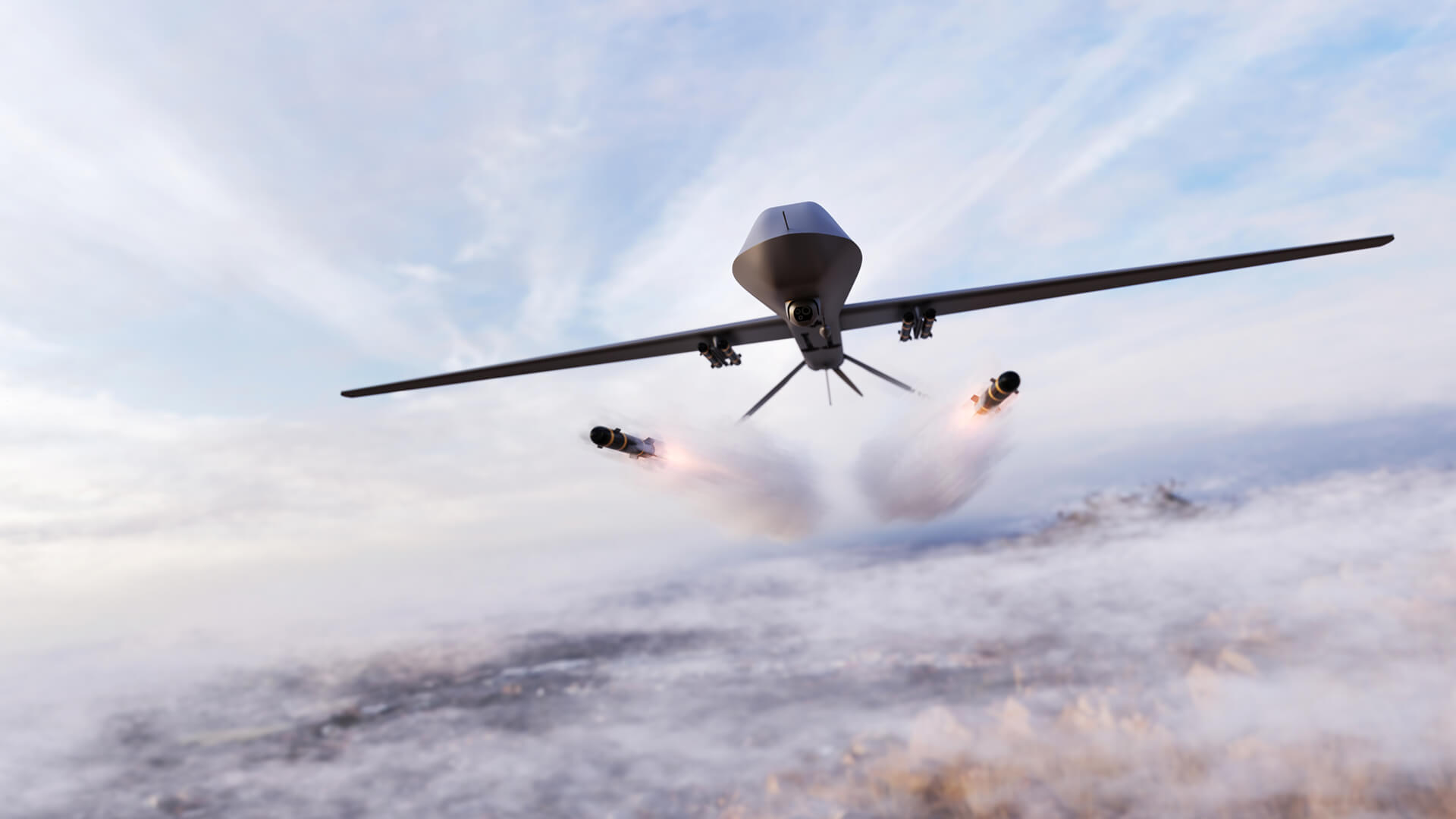
And that’s the idea that part of the reason why the US, went after Maduro is because of the fear that, Venezuela could be used as a military base to attack the United States, particularly with drones. Short version is. No, first of all, there are very few drone systems on the planet that have the range that is necessary to cross the Caribbean. 

You’re talking over a thousand miles here and hit the United States. Of the ones that could, most are American. But the Russians don’t have models like that. The Chinese don’t have models like that. Ironically, the Ukrainians now do. Pretty sure they’re not going to want to attack the United States. That just leaves Iran, which has the showerheads, which the newer ones do have probably barely the range that’s necessary. 

What they lack is decision making capability and real guidance. 

And so when you program a showerhead, you have to tell it what routes to follow and where to drop its payload. And in the open ocean, there’s nothing to follow. So technologically, there really isn’t a weapon system that is set for this task. And even if there was, the first city that you’re going to hit, the only one of size that you’re going to hit is Miami. 

You know, we all have our opinions about Miami, but I don’t think any of us like, oh, Miami. That’s militarily critical. Yeah. No. So, you know, blowing up some hotels on South Beach is not the sort of thing that the United States is going to be intensely concerned about. What it would do, however, is trigger an adverse reaction in the American political system, which would lead to massive American counter strikes on whoever was behind it. 

Because clearly, the Venezuelan government, the Venezuelan economy can’t make a biplane, much less a drone. So not that one. What’s next? 

The Russians have been itching to have an excuse to attack the United States. And this is it. No, the Russians are locked down in a war that has been moving incredibly slowly. At the pace they’re going. They’re not going to conquer Ukraine, this century. And they need to really finish it up before they run out of troops in just a few years. In addition, the Ukrainians recently have been on counter attacks and have reclaimed a number of cities, including, you ask, and there just isn’t any Russian spare capacity to do anything else anywhere. They’ve even pulled a lot of troops out of not just the Far East, but off of the NATO border in order to focus them on Ukraine. And if if they were stupid enough to think that they could do otherwise, let’s say they stage some weapons in Cuba, for example. 

Number one, the Cubans would not go for it after Venezuela. And the Cubans are pretty sure that they’re next, and they’re desperate to find a way to avoid an American attack. Staging Russian weapons all 1963, much less launching them, would guarantee the end of their regime because the Soviet Union is no longer exists, and post-Soviet Russia, in its current form, really can’t do a thing to protect any of its allies, whether that is Iran or Venezuela or Cuba. So no. And if if that were to happen, I can guarantee you that the president not just Donald J. Trump, any American president, would then make ending Vladimir Putin at the very, very top of a very short list of things to do once Cuba was neutralized. And if there’s one thing Vladimir Putin values above all else, it’s his own skin. And every time in the past he has been personally threatened, he has backed down, especially when it comes to relations with the United States. So No. 

One more thing on the Russians. You know, it says doesn’t react well to threats, especially if the threats actually make us bleed a little bit. So if you think back to, say, Sputnik or the Cuban missile Crisis, the US massively overreacted and it caused the Soviet Union a series not just geopolitical defeats, but global humiliation in their inability to counter what the United States did. 

And Putin doesn’t just know this. Putin has lived this, so he will never do something that is intended as a direct strike on the United States. You always work through third parties. He will always work to turn us against one another. That’s one of the reasons why the Russians intervened in the elections. That’s one of the reasons why they both support Trump and oppose him. Russian propaganda is very active on all sides of all ideological debates and especially the culture war. So, you know, careful where you’re sourcing, no matter who you are. And the goal of the Putin administration is very simple to get the United States to lash out, to get it to react badly, to get it to attack, but not Russia, to get them to do someone else. Which is one of the reasons why Greenland is featuring so hot and heavy right now, because the Russians are actively working now to get the Trump administration to attack a NATO ally. Don’t do it. All right, what’s next? 

Okay. Next. Squirrel. The idea that the Russians, the Chinese and maybe others will use, the United States grabbing of Maduro to justify military action in their own theaters. Can’t rule out what people will say, but this is certainly not going to nudge them in a direction. Be purely rhetorical. Let’s start with the Russians again. They’re in a full fledged war where they’ve redirected all of their military assets to one theater, and they’re not doing all that well. 

Also, we’re talking about a war where the Russians have literally set up rape camps and establish a cabinet level officer to assist and coordinate the mass kidnaping of children in the thousands from the occupied territories. We have over 100,000 documented war crimes. It is difficult for me to wrap my mind around what else the Russians feel they need justification to do in the Ukraine war. 

So, you know, it might make it out in a press release, but it’s not going to move any decision that they’ve already made. The second one is China, of course, gets a little bit squirrely, but still, I don’t think it’s going to change their meaning. If the Chinese thought they could do a lightning raid overnight and overthrow Taiwan, they would. 

But that’s not how advanced technocratic democracies work. Also, if they thought they could do it, they probably would have done it already. Keep in mind our discussion of military deployment capability before the Chinese don’t have it. The Russians don’t have it. No one really has it, except for the United States into a much, much, much, much lower degree. 

The French and the Brits, who mostly focus their deployments on territories they already control part of their other colonies of their empires, if you want to call them that. So, keep in mind that every war that the Chinese have fought on land since 1949 comes down to just two basic conflicts. One with the Russians, over an island and one with the Vietnamese where they had their asses handed to them. 

I’m not suggesting that the military of China is incompetent today. I will point out, however, that it is in the process of being massively purged and to think that their order of battle actually matches what they can do is a bit of a stretch. But the bottom line is that, vitriolic, rhetoric against Taiwan is bread and butter to the Chinese Communist Party, especially these last eight years, as she has basically purged everybody in the country. 

So if they start using some North Korea style rhetoric and not only wouldn’t be new, but it also has not shaped strategic policy to this point. Basically, these are authoritarian, expansionist, neo imperialist powers who are not constrained by rule of law or allies. They don’t need justification from anyone to attempt what they want to try to do. 

Their only constraints are physical, of which they have many. What’s next? 

The new president, Rodriguez of Venezuela, said that this was all Israel and the Jews……..What’s next? 

Okay. What else? That Venezuela is a warm up for the real country. Iran, which is clearly next. Probably not now. Cuba. Cuba’s probably next, and we’ve already dealt with that in a previous video. But Iran’s a very different situation. Well, the United States certainly has the military capability of interfering in Iran’s oil shipments, because you could either stop them at Kharg Island, where everything is loaded, or the Straits of Hormuz, which is a narrow passageway out of the Persian Gulf that everything has to pass through. 

That’s a lot different from taking up the political leadership. See, Venezuela wasn’t exactly a one man show, but it was definitely a strongman system with a tight cluster at the top that helped him loot the country. And then very little below. There may be a mass movement, of chavistas, but they’re not organized in the way that say, the Democratic Republican Party is. 

So, like, if someone were to take out the American leadership at the top, even every member of Congress, there’s still the states and localities, and there’s 2 million elites in the United States in the political class. That’s not the case in Venezuela. You had a couple dozen. And that’s certainly not the case in Iran. Two big reasons why Iran is probably not next. 

Number one is that elite, probably 10,000 mullahs are part of the clerical class, and it’s going to take a lot more than some Delta forces guys or a bad flu season to take them all out. So even if you could get the Supreme Commander, you wouldn’t be able to exercise the regime. The second problem is geographic. 

Tehran is definitely not coastal in the way that Caracas is just a few miles from the water. So you’re talking about inserting over a couple hundred miles of desert mountains? No. I’m sorry, I shouldn’t say desert mountains. A lot of these are not desert. It’s populated. 

And as the United States found out back in the 70s during the Carter administration, that if you try to send a bunch of helicopters to pull people out, there’s a really good chance that it’s all going to end very badly, just like it did with the hostage rescue back in 1979, I think. So much more durable regime. Much harder to get to. And I just don’t see that working. Doesn’t mean that there can’t be an angle for American policy on Iran that’s going to evolve because of this and become much more muscular and threatening. All of that is absolutely possible. But this isn’t a dress rehearsal in any way 

It’s a very different economic, political and strategic challenge to go after Iran.

Why on Earth Would We Take Greenland?

Town of Aasiaat (Greenland) during winter season

Taking Greenland is worse than pointless both economically and strategically. As importantly, Denmark is arguably America’s most earnest ally, and for decades has given the United States anything it has asked for.

Transcript

Hey, all Peter Zeihan here coming to you from a very snowy Colorado. We’ve got about seven inches, so far in about three. More is on the way. Because of everything that’s been going on across the world, and everyone’s talking about what the Trump administration is getting next. And because Greenland keeps coming up over and over and over again, I thought it would be a good time to explain why the United States taking Greenland is one of the dumbest ideas that I have heard in my life. And if you think back in the last 30 years, there’s been a lot of dumb, let’s just go through what the people who say it’s a good idea why those things are all wrong. Number one, we need it for defense purposes, because there’s Chinese and Russian ships everywhere. 

The Russian Navy has been in a not so slow disintegration now for 30 years. And because of Ukraine, where they’ve basically lost one of their entire fleets, now their Arctic sea fleet is the best one that they have. But it is a pale shadow of what it was 20 years ago, much less 40 years ago. And the Russian ability to project power to the North Atlantic simply does not exist. And for that, the United Kingdom is a better counter. 

And we already have naval bases there. Number two, have we in militarize that we can protect power? No, 80% of the country is under permanent ice. Another 5% is moving glaciers. The other 10% is, kind of the climate of, say, the Aleutian Islands, but with a worse winter. No good ports at all. So any sort of infrastructure you’re going to build, if you’re trying to project power, is going to have to be some sort of floating platform off the coast, kind of like what the United States tried to do with Gaza, which was a disaster. 

But you going to be doing this for military vessels? There’s also the question of what would that achieve? Some people say that if you control Greenland, then you control at least part of the Arctic Ocean. Right? The ship between Asia and North America. And while that is true, you’re talking about $1 trillion investment to encourage the Chinese to dump product in the United States. 

That’s a really weird value proposition. And then third is money. People like to talk about rare earths, and they say that Greenland has loads. Well, First of all, no one has, prospected functionally in Greenland yet. So anyone who says they’ve got a lot is just making shit up. 

Second, again, 80% of Greenland is under an ice cap, not a glacier, an ice cap. And even if the most extreme version of global warming happens, you will not be able to meaningfully operate in that zone this century. So you might be able to poke some things on the side that is fair. But again, rare earths aren’t rare. They are byproducts of other mining. It’s not like you can go sink a single shaft to the ground and start pulling up your lanthanides or whatever else you want. No no no no no no no no no no. You need a massive complex to process whatever else is there bauxite, copper, silver, whatever. And because this is a country country with under 100,000 people and none of them live in the places that are probably mineral rich. 

Wow. I’m really getting covered here. You’re now talking about either building $1 trillion of infrastructure just to process metals that you can get somewhere else at a 10th the cost, or shipping all the aura, which would mean a mammoth piece of infrastructure to to handle that kind of cargo. There’s nothing about this that is cost effective. 

And then there’s the issue of what we’d be able to get that we don’t need to have, because Denmark is such a firm ally, they allow us to do whatever we want in Greenland pretty much whenever we want. During the Cold War, we had a few dozen, maybe about 30 or 40 facilities there. 

We have slimmed that down to one, just the station at through. They have made it very clear in Trump two that if we want to go back and reopen any of those facilities or build new ones, they’re happy to help. They’re happy to help pay for it. So there is nothing that we would get from direct control that we don’t already have, except for the headache of managing a remote territory that someone else is already managing better. 

All it would do is wreck the United States’s alliance with the country that argue, has been the most loyal and enthusiastic ally we have ever had. Denmark isn’t like the United Kingdom or France, where they have delusions of their own strength. It isn’t like Australia, where it’s kind of remote. This is a country that’s in the heart of where the North Sea meets the Baltic Sea, and has been the plug that has kept the Russians from having a functional navy for decades. And every time we have called upon them, they have answered, you wreck that relationship. 

And it’s difficult to imagine that we have any alliances where we would still be seen as a trusted partner. And then you’re talking about the U.S. going that alone and having to do everything on the global scale by itself, and large scale excision of American power from Europe. And if you know your history, the last couple of times we decided we didn’t want to work with Europe. 

We ended up going back with several hundred thousand men, a lot of whom didn’t come home. So no, not worth it.

Who Needs National Security Guidance Anyways

The pentagon in Washington DC. | Photo by envato elements: https://app.envato.com/photos/982e8cf6-356f-43cd-88b2-6fac5fb7d312

The newly released national security document from the White House is more of a culture-war manifesto than a strategic guide for US foreign policy.

The document makes a series of troubling claims and, despite lacking any coherent guidance, signals two major shifts: an institutional breakdown at home and a strategic pullback from the Eastern Hemisphere.

Transcript

Hey all, Peter Zeihan here coming to you from Colorado. And today we’re gonna talk about the new national security document that was put out by the white House. Now, the whole idea of the document comes out every year, and it’s supposed to be the white House guidance to the rest of the U.S. government. What our goals are and what we’re worried about on an international stage. 

So it’s supposed to be tactical advice for generals and admirals and diplomats and all the rest. That’s not what we got this time. What we got this time was the American culture war in international form. It’s basically a campaign document. And whereas all the national security documents in the past have been designed about around guidance, this is really just a lot of really assertive claims. 

And while in the past it’s all been about the United States, this is one is very much about Donald J. Trump. His name came up almost 30 times in the document. If as far as I am aware, in the decades of the white House has been putting this document together, never once has a sitting president’s name arrived at all. 

Because it’s not about one guy. It’s about the country. That is not the case. And again, this is basically a culture war document taking American domestic political considerations and projecting that onto the international system, something that won’t work very well because in the United States, if you want to run for president of a political faction, you have to rally that faction. 

That’s how Trump became president. So he got the Republican nomination. That’s how he took over the party. Yes, yes, yes. But that doesn’t work on the international stage because there is no vote. This is a document that is basically designed to be red meat for MAGA and provides absolutely nothing for guidance for policymakers. It also does a couple of things that are grossly against American national interests. 

For example, it almost expressly ascribes a specific sphere of influence that no one else should have power. And for both China and Russia, and in conflict with several things that have actually come out of this administration, has actually said that the Chinese should have a right to basically control everything in their neighborhood. Russia barely comes up at all, despite the fact that the Russians have killed more Americans over the last 30 years than any other country, far more than anyone involved in the war on terror. 

Obviously not a lot comes up about Ukraine. No real shock there. But what is perhaps most concerning from an international point of view, if you’re not an American, is the attitude towards Europe. Basically, the Trump administration is now saying it’s an American national interests for the politics of Europe to revert to back to where it was in the 1930s. 

And I’m like, it’s like, just remember what happened in Europe in the 1930s. It was not a pretty place. It says national interests of the United States, involve include the ethnic breakdown of individual European states, which is, I mean, fascist and racist are the two words you would probably want to use. And the Europeans are… 

Let me put it this way. If this really is what the United States wants, then we are basically asking the Europeans to go back to the darkest page of their history and basically kill anyone that doesn’t look like them. And to rearm as part of that process and have an independent foreign and security policy. Every time that that has happened in the past, Europe has gotten really fucking crazy in a very short period of time. 

Most recently, we called it World War Two, and before that, World War one, and then the half dozen major wars we had in the 19th century as well. But let’s put that to the side. Does this mean that this thing doesn’t matter because there’s no real guidance? It’s really just a political stake in the ground, not what I’m saying. 

It matters very much for two big reasons. Number one, this administration, is really bad at building institutions. And to implement the things that are in this document requires a fundamental rethinking of American governance, and especially the American military. For example, one of the things it says it wants to do is use the military to secure the southern border. 

If that is what we want to do, that means no more F-35s, no more Abrams, no more special forces. That means retraining the military to patrol an area that’s 2000 miles from end to end to an indeterminate amount of thickness in order to catch illegal migrants. That is a very different sort of force. And the force we have now is vastly over trained for that. 

And we’d be basically taking people that we’ve invested somewhere like 100 to $400,000 per person based on the job, to basically make them all cops, massive waste of material, massive weights of skill sets, and the time that it would take to build up an institution that was capable of doing that. It’s not something that you measure in months or even years. 

A great example is what the Trump administration is trying to do with Immigration and Customs Enforcement. They’re trying to double the number of agents and for their domestic policy concerns. That makes a lot of sense. But what they’re discovering is when you take the rhetoric of the white House and combine it with the reality of the immigration, pool in the United States, you get a very different situation. 

According to the rhetoric, they’re going after the drug dealers and the rapists. According to the data, most of the people that have been arrested have no record whatsoever or very, very minor infringements. And so when you’re recruiting people for that specific task and the people who start to look at the jobs realize that the drapes don’t match the carpet, you get a very different sort of applicant. 

And so, the Immigration and Customs Enforcement Bureau has had to basically dumbed down their training regimen. They’ve gone from a 16 week course to a six week course. They’ve removed Spanish proficiency, and they’ve basically started to actively recruit from, like, white power gangs because they’re having a hard time getting people who have a sense of what law enforcement is about, who really want to uphold the rule of law, to go into downtown Chicago and get people who are trying to, you know, do yard work. 

I actually have a client who told me a couple of weeks ago that She got hit by a little tear gas when she was out for a walk with her dog, because ice was reading a house where a guy was finishing a bathroom because, you know, the Sinaloa cartel of bathroom finishers. That’s the real threat. 

When the rhetoric is done for ideological purposes, eventually it crashes into reality. And that happens here. And it’s making very hard for this administration to build an institution. They’re pretty good at tearing them down. Which brings us to the next piece. Something that can be done out of this document is a whole scale re shifting of American military power from the Eastern Hemisphere to the Western Hemisphere. 

Very, very clear that that is something that this administration wants to do that can be done. You can shut down the bases in the Eastern Hemisphere. You can reposition your military in this hemisphere and carry out different sorts of activities here. Now, according to the document, they want to do that with allies. 

The problem is, is that the three countries in the Western Hemisphere, that the United States has the strongest links with to battle human migration and to battle illegal narcotics, are the three countries that this administration has gone out of their way to antagonize Canada, Mexico and Colombia. Meaningful trade talks with Canadians are at a standstill at the moment. 

The Mexicans are basically dodging every bullet that the Trump administration can fire their way. And now President Trump himself is down on record calling the president of Colombia a drug dealer. So this is stuff we’re going to have to do ourselves if we are serious about it. One of the advantages of the old system, where the United States controlled the global order and led this vast alliance network, is when the rubber hit the road. 

If shooting never actually happened, the US took control of almost the entirety of the alliances, armies and navies and air forces. Massive force multiplier before you even consider things like basing rights. If we’re going to do this in the Western Hemisphere, if we’re going to do this ourselves. You’re talking about a military budget that’s going to have to at least double, and a massive retraining of everything that we have had the military do over the last 60 years. 

That is a lot of wasted investment in order to do things that would be much easier to do hand in glove with some allies. So overall, what do I think about this document? Well, I don’t think you’re going to find a lot of people with any intelligence or security experience, much less economic experience, who think there’s a lot here that is worth salvaging. But this is only year one of a four year term for Trump round two, and there is a lot of time between now and the next presidential election where things like this can actually dig in 

Until this administration can prove that it can build something as opposed to just tear it down, we’re simply looking at a reduction in the ability of the United States to affect the world around it, and that is something that will reverberate throughout the world for decades to come. 

Trump’s 28-Point Peace Plan to End the Ukraine War

Ukraine solider on a armored vehicle with a split screen of Donald Trump

Both the Ukrainians and the Russians will hate this plan. For Ukraine, the plan bans NATO membership, cuts the military in half, establishes weapons restrictions, and cedes key regions like Crimea, Donetsk, and Luhansk. For Russia, the plan accepts Ukrainian independence, freezes military ambitions in Europe, affirms the post-Cold War security order, and directs frozen assets towards Ukraine and the US.

Transcript

Hey, everybody. Peter Zeihan here, coming to you from Colorado. And today I’m going to pick up on something that the Patreon crowd has been pestering me for for over a week, and that’s to comment on Donald Trump’s 28 point peace plan that he’s trying to impose upon the Russians and the Ukrainians. And the reason that I have held out until now is because it hadn’t been published. 

And so we were only seeing things that were leaked out of Ukraine or Russia about how unacceptable it was. And rather than just repeat what other people were saying about something that hadn’t seen, I figured that wasn’t fair to anyone. So anyway, the full thing is now released. We’re going to go ahead and publish that as an attachment to this video so you can read it yourself. I think Donald Trump is getting a little bit of crap from all quarters on this one for good reason. Not because I think that the document is overly pro Russia or pro Ukraine, just because there’s a lot in it that’s going to piss off a lot of people. It’s probably unworkable. But let me break it down. 

So the core concept behind this fight is that Ukraine knows that its demographics are turning terminal, and it knows it’s going to lose the ability to field a large army to defend themselves against external aggressors, or at least as they define it, external aggressors. And in the post-Soviet settlements going back to 1992, Russia’s borders actually got longer than they were into the Soviet period and were drawn back from a series of geographic barriers that they had counted on for defense during the Soviet time. 

So if you look at the map of the Soviet Union versus Russia, they were anchored in the Baltic Sea, in the Polish plains, and in the Arabian Gap, which is where Moldova is roughly, as well as down in the arid lands of Central Asia. And they pushed right up to things that are hard to invade through the Baltic, the Carpathians, the Caucasus Mountains, the tension and so on. 

So in the post-Soviet settlement, Russia contracted back into open zones on the other side of those borders. And now basically its entire frontier is open. And, the Russians fear that not necessarily going to be invaded tomorrow, but at some point down their line and with their demographics terminal, it’ll be a bloodbath. And that’ll be in the Russia. 

I don’t necessarily agree with that, but it’s a reasonable position for a country like Russia that’s been invaded so many times in its history, and it is the foundation of their foreign and strategic policy. Ukraine is a big, wide open area on the wrong side of those borders. So no matter what version of an independent Ukraine there is, there are parts of Ukraine that are less than 300 miles from Moscow, and there are no real geographic barriers in between. 

So you can have an independent, secure Ukraine or an independent, secure Russia, but you can’t have both. And so Russia’s position is as long as Ukraine exists in any form, it is a threat to the very existence of the Russian Federation, and the Ukrainians feel pretty much the converse. 

So the plan, let’s start with what has been making the rounds more the Ukrainian view of things and why the Ukrainians think the plan is unworkable. It forces them to never apply for NATO membership and enshrine that refusal into their Constitution. It forces them to cut the size of their army by half and restrict the type of weapons that they can develop, and it forces them to permanently give up three provinces the Crimea, Luhansk and Donetsk, Luhansk and Donetsk are the core of the Ukrainian industrial zone. 

And right now the Line of Control goes roughly right down the middle of it. So this would take two territories that the Russians haven’t even conquered completely, give them completely to the Russians, and then freeze the conflict along the line of control everywhere else and make a demilitarized belt in between. 

On the west side, the Ukrainian side of that line of control. There’s no geographic barriers whatsoever. And so it’d be very easy in the future for the Russians simply to amass troops and march on Kiev. It would not be a difficult war, especially if Ukraine was denuded of weapons. So from the Ukrainian point of view, this feels like a guarantee of a follow on war that they have no hope of winning. 

And so the Ukrainians are trying not to reject it out of hand because they don’t want to piss off the United States, specifically Donald Trump. But there’s very little reason to expect for them to like this doesn’t mean it’s better for the Russians. The Russians are expected to treat this as the end of all wars and all military action in the European sphere. 

They are to now say that this is a settled issue and that all existing deals, all security developments in the post-Cold War environment are fine, and they are to codify that under Russian law. They furthermore have to accept that European forces can and will be stationed on rump Ukrainian territory, something that they’ve always been diametrically opposed to and they have to put into their constitution that Ukraine is an independent country. 

In essence, if this deal goes through, the Russians are codifying that. They’re done. They’re codifying that. They have no chance of ever getting back to the Carpathians or the Baltic Sea or the caucuses or any of the rest, and they basically just die slowly sort of dying quickly in a war, completely a nonstarter. But my favorite part of this document is what the United States would do with the frozen Russian assets, which are about $300 billion. 

Some of them would go to help rebuild Ukraine, but a big chunk, over 100 billion of them would go into a fund that the United States gets to direct however it wants. Basically, Donald Trump is hardwired into the agreement. The Russians paying the Americans a bribe of $100 billion. So. Let me tell you what I really like about this plan.  

It actually goes through and puts its finger on all of the issues of contention, which is something that the Trump administration has largely ignored to this point. So the idea that this is a document that was made by the Russians is incorrect, because there’s plenty of things in here to make them furious as well. It’s kind of like a, Ukraine Russia primer, maybe like a 201 course for understanding what the real issues of the, conflict are. 

It is assumes that by giving everyone nothing that they want, that everyone will agree to it. And I think that’s a bit of a stretch. I don’t think this is workable at all, but it does at least acknowledge what the real issues are. And for this administration, that is a catastrophic improvement in circumstance. 

But giving yourself $100 billion bribe for the honor of brokering the deal, that was that was just really rich. So will this go anywhere? Almost certainly not, in its current form. It’ll be rejected by the Ukrainians and the Russians almost reflexively. And if you address the issues that either side is concerned with, it only makes it even less palatable to the other side. 

But the fact that there’s actually an understanding here is a big step forward. The problem is that from everyone who has talked with anyone in the white House in the last week, is that Donald Trump is just done with this. He’s like, this is just too complicated. I just want it to be over. So let’s make it over. that was possible, this war would have never happened in the first place. So we’re nearing the point where Trump, through a exhaustion of commitment of time, is peeling away from this. And that could go just like it has on any number of occasions the last six months, any possible direction. But the only type of guidance I can give you as to specifics is that General Kellogg, who has, his history, of course, in the U.S. military, who has been one of the mediators, is now leaving the administration, meaning that the only person left who has the Ukraine portfolio is kind of a top tier issue is Steve Wyckoff. 

And see if Wyckoff really is fully in the Russian camp and absorbs the propaganda like a sponge. So that’s not great. But beyond that, clearly someone who has some idea of what’s going on Ukraine actually was involved in this. I consider that a win.

Child Care for All? In New Mexico?

Welcome sign for New Mexico

Despite New Mexico’s hot air balloon festival and dramatic landscapes, there’s not much else going for the state. They rank low on economic and social indicators, they have an arid climate, they’re navigating complex racial and tribal dynamics…needless to say, they could use a win.

That win may be coming in the form of a state-funded child care program. Funded through the state-level oil fund, an estimated $600 million per year will go into this groundbreaking program. If you’ve listened to me for any time at all, you’ll know the demographic crisis we’re facing. Programs like this are one of the few proven ways to effectively address this issue.

Sure, there are plenty of details to iron out, but let’s take the good news and say happy holidays.

Transcript

Hey, everybody. Peter Zeihan here coming to you from Colorado. And today we’re going to talk about something that just went down in New Mexico, of all places. Now, for those of you who are not from the United States, New Mexico is a gorgeous state, but it comes in near the bottom of basically all the rankings that you, don’t want to come into the bottom at. 

So, you know, crime, labor force participation, income levels, educational levels, infrastructure industry. It’s had a lot of problems. It’s a it’s a pretty arid area. There are very few places get reliable rainfall. You’ve got two major cities in Santa Fe, which is an old historical town that is now the administrative center in Albuquerque, which is the major population center. 

But infrastructure is difficult because you get the Rio Grande Canyon that basically cuts right through the middle of the state, and you have a lot of desert and a lot of semi-arid. That’s before you consider, racial issues or the fact that this is one of the densest concentrations of Native Americans. And there’s an issue with reservations. 

But anyway, there’s a lot that hasn’t worked out great for them. But the reason I wanted to talk about them is that they just came up with a new policy where everyone now qualifies for state covered child care. One of the problems the advanced world has is that raising a child is a real effort. 

Back in the olden days, when we were all agriculturalists and lived on the farm, kids were free labor. So parents would have as many of them as they could because they helped on the farm. When you moved to town, that economic benefit goes away and you just have the expense without any of the monetary benefits. So over time, we’ve had fewer and fewer and fewer children. 

One of the things Europeans tried when they tried to reverse this is it really matters what type of social program you put into place. So, for example, if you just say that if a woman is pregnant that she gets a extended maternity leave, what that means is that no one will hire a woman. And so women in their 20s are just simply unemployable. 

The places that have pulled this off, getting their numbers back up, it all comes down to child care. Because if you force a woman to choose between being a mother or being a worker, she will then choose one of the two. And that means that some of them won’t have kids or some of them won’t work. 

And you had got a problem with the workforce and with your demographics. But if the state can provide a degree of child care, then parents don’t need to make that choice. And the numbers go the other direction. Now, there are undoubtedly a thousand details that matter in the New Mexico situation. So this is not in me endorsing what they’re doing except in principle. 

It matters how you pay for it matters how you regulate it. The New Mexicans are planning on using income from the oil fund. They basically have a sovereign fund at the state level. And they expect that it’s going to cost them about $600 million a year. We will see if that is feasible. Will you? We’ll see if that is realistic. 

But for the first time in the United States, we actually have somebody at the state level that is thinking about what the future of the demographic profile looks like and what the future of the workforce looks like and is actually putting a fair amount of money behind what might actually work. I call that good news.

Crippling the Kremlin with Russian Sanctions

landscape of the kremlin in Moscow, Russia

The Trump administration’s sanctions on Russia’s energy sector are proving to be more substantive than the other policies we’ve seen.

Transcript

Hey, all. Peter Zeihan here. Coming to you from Colorado. Today we’re talking about the sanctions that the Trump administration has put on the Russian energy sector, most notably on Rosneft, which is a state oil monopoly near monopoly, and Lukoil, which is the largest technically private company, but is really indirectly run by the state as well. A couple weeks back, the Trump administration put punitive tariffs on the two companies, saying that, no one can deal with them at all. 

And, if they do, they can’t deal with the United States or access the US dollar. And since all, crude traded internationally, well, well over 99.9% of it is exchanged in the US dollar. That basically means being shut off from global finance, among other things. We’ve had a few developments. First, a minor one with Hungary, Hungary’s president, Viktor Orban, who is, well, it’s kind of a weird cat anyway. 

He is an anti European anti-American pro Russian stooge, is the very short and to be perfectly honest, not particularly biased view. He’s been, working to sabotage sanctions on all things Russia and embargoes on all things Russian ever since the Ukraine war started, and has actually said that, if the Russian troops were in Kiev, they’d probably be better for Hungary because Hungary wants a piece of Ukraine as well. 

Anyway, he was in the white House and managed to, Sweet talk his way into getting an exemption from the sanctions. Hungary has been basically using and gorging upon Russian crude for the entirety of the Ukraine war and has been trading, exemptions to European sanctions and tariffs and such, in order to maintain access in exchange for letting the Europeans do what they want more broadly with the Ukraine question. 

And he was able to repeat that feat with Donald Trump this past week. I wouldn’t count on that lasting because no country that borders Hungary has a similar exception. So now that the sanctions are in place, there won’t be Russian oil or natural gas flowing through Ukraine to Hungary and even things like nuclear fuel are gonna have to be flown direct, but they’re going to have to be flown around the war zone that is Ukraine. 

And if you have radioactive material in your plane that trigger some other issues anyway. So, the Ukrainians are saying it’s a permanent exemption, that the Trump administration is saying it’s a 12 month exemption. The, the disconnect between the two is pretty typical for Trump’s deals on anything, and how the Hungarians are going to be squeezed out of this. 

It’s not a real problem. There is no alternate infrastructures that comes in through Slovakia or especially through Croatia. So they’re going to be fine. So it’s temporary issue. The broader issue is that Lukoil is actually an international company, whereas Rosneft’s holdings are all domestic. And for Lukoil, who holds assets in the United States, a lot of fuel stations. Or oil fields in Iraq. You’re actually talking about a substantial amount of production and financially viable assets that they’re going to have to now dump. Now, they were planning on selling them to a trading company based in Switzerland called governor. Now, governor was this is kind of funny. It’s a shell game. 

Back in 2014, the first time the Russians invaded Ukraine, governor was set up by a Russian who was affiliated with Lukoil. And then he immediately sold all of his shares to his Swedish partner because he knew he was going to be sanctioned. And it’s been operating as an independent, independent trading, platform ever since. The whole time it’s basically been a front for the Kremlin. 

And so the feeling was that governor was just going to buy all the assets. The Trump administration still hasn’t staffed up. Almost a year into its administration. And if you want to actually have a sanctions regime that is meaningful, you have to have a staff on it full time to deal with all the loopholes that will pop up. 

That’s been a big one. Well, the Treasury Department under Treasury Secretary percent, figure that all do all by themselves or with some help. I don’t really care how. And have already said that they oppose the sale to governor. So the assets are going to have to be split up on a national basis and sold more viably to get away from Russian influence, which is, you know, great. 

This is the first time in any sort of economic policy out of this administration that there seems to have been any awareness of some of the political and economic realities at the ground level. Normally we get a big broad tariff policy and then countries figure out how to get around it. The Chinese certainly have done that over and over and over again. 

But at least on this one point, the Russians have not. And that is absolutely worth noting. And giving credit where credit is due. Let’s see. There was one more. Oh, yeah. Rosneft has is a state monopoly. It’s technically incompetent. It really has very few petroleum engineers, and it’s gotten to where it is as being the biggest company in Russia by absorbing the assets of other people who have, from time to time fallen a foul of the Kremlin. 

Maybe that’s Yukos, which was run by a one time Russian oligarch. Maybe that’s T and CPP, which was a partnership that was part owned by British Petroleum. They just call themselves BP now. Anyway, it’s expansion through government thuggery rather than the traditional methods. Well, that that’s now reached its peak because there are a number of projects that Rosneft is involved in and is technically the operator that it can’t operate. 

It can only run the projects with foreign partners who are doing most of the technical lifting. And the biggest and most important of those is something called Sakhalin. Now that’s an island off in the Russian Far East, just north of Japan, that produces some of the world’s most difficult to produce crude oil in league with a company called Exxon, and which produces liquefied natural gas with a couple of Japanese companies, Mitsu and Mitsubishi. 

Well, now that the sanctions are in place, the Russians are going to have to run Sakhalin themselves, and they don’t know how to do offshore, and they don’t know how to do liquefied natural gas. And they certainly can’t operate in the Sakhalin environment. So here we’ve got a project that is the single largest dollar item of foreign investment into Russia ever. 

That’s probably going to shut down over the next few months because the Russians can’t operate it themselves. Unless, of course, there’s something that weird goes on where Exxon, for example, gets an exemption to the sanctions, which I don’t find likely. Anyway, that’s the money. Russia, most of which is pretty good for Ukraine and honestly, broadly positive for the United States as well. 

So, you know, mazel tov.

Markets Drop After Fed Rate Cut

Stock market chart declining

The Fed just cut interest rates by 0.25%. Instead of the desired boost to a slowing US economy, we ended up with a market drop.

The economy is losing steam, and there’s no one at the helm to correct course. Job market stress is on the rise, manufacturing is shrinking, constant tariff changes have stalled investments, and there’s no relief in sight. With capital from the baby boomers leaving the system, foreign capital is the next place to turn; however, strained trade relations make this risky.

Unless the Fed wants to go full Venezuela and start printing money, we’re going to be heading into uncharted economic territory. And with the current administration, who knows what that could mean.

Transcript

Hey, everybody. Peter Zeihan here coming to you from Colorado. And the news is the Federal Reserve has just dropped interest rates by one quarter of 1%. 

That means it’s a little bit cheaper now to borrow money. And the idea is it’s supposed to, like, boost the economy. But instead the markets have dropped, because the, well, we’re in shutdown, so most government statistics are offline. 

The Federal Reserve has its own system that is self-funded. Totally different topic there. And they seem concerned enough that they’ve decided to do a what’s, historically speaking, a relatively large cut. So what’s going on? What is it the fed sees? How is it going to impact all that good stuff? So number one, the economy is absolutely slowing. 

We’ve got a lot of stress in the job market. And most importantly, manufacturing has been dropping. One of the many impacts of the Trump’s tariffs is kind of generated, this, background of ambient chaos. We’ve had over 540 policy changes on tariffs since January 20th, and they keep stacking up. And so businesses don’t know what the rules are going to be tomorrow, much less a year from now. 

And that tends to discourage investment decisions. And we’ve certainly seen that in the data until the point that the, the shut down, shut off the data. We also have an administration in the Congress that really seems in no hurry to get things back on line. And so we’re going to have to wait until we have something very bad that happens, whether that is for example, many, many, many people stranded, during the Thanksgiving holidays or a general problem with, health care, because we have, announcements on the 1st of November as to what everyone’s premiums are going to be. 

Lots of things are going to get worse before there’s any chance of them getting better. And that is now reflecting in the general ambient chaos that is policymaking out of Washington and specifically out of this administration. So that’s kind of baked in. The bigger problem, much bigger than that, is what’s going on with capital supplies. You see, as a rule, most private capital is generated by people who are in their 50s and early 60s, when their kids have moved out and they’re preparing for retirement or the height of their earnings, but their expenses have gone down and that surplus is put into the retirement accounts. 

It’s about 70% of total private capital. And for the American baby boomer cadre, that’s about trillion, a lot of cash. Well, when you retire, you go into a more conservative portfolio with more cash and more property and more T-bills and less stocks and bonds. 

There’s a thousand ways that’s wrong. But all collectively, they’re like very, very small. 

That’s just the general trend. This is what people do as they get older and retire. 80% of America’s baby boomers have now retired, so about 80% of those finances have been turned into more conservative investments. And we’re moving into an environment where things like goosing interest rates down in order to increase lending doesn’t work because the money just isn’t available. 

And the only other sources of money that are available are, number one, foreign money. Where other countries have been dealing with this faster than the United States has. So it’s seeking someplace it’s more productive. You can only take that so far, especially in a high tariff environment where your economy is actively discouraging the mobilization of capital. And the second issue is if the Federal Reserve just massively expands the money supply, which is massively inflationary. 

So the concern in the mid-term is we might get the worst of all worlds, you might get lower interest rates, you might get a little bit more consumption from that. But in an environment where supply is being constrained because of a lack of business investment, very inflationary, which would force the fed to go the other direction. Now, I don’t mean that as a specific forecast, because we’re entering in kind of the unknown here. 

We’ve never had a demographic transformation like we’re seeing on a global basis or an American basis in modern history, certainly not in the digital age. And so we’re going to be living through this in real time for the first time. But what we understand of macroeconomic laws is that seems to be where we’re headed right now. And barring a significant change in capital availability or government policy, that’s kind of hard wired in at this moment. 

So the fed is in a bit of a box. The white House is part of the problem, and the baby boomers are no longer part of the solution. And that leaves the rest of us in an environment where investment is difficult, where consumption is expensive, and where inflation is rising.

Regime Change for Venezuela

The Flag of Venezuela

The Trump administration is sending the USS Ford, America’s most powerful supercarrier, to the waters off Venezuela. It’s an unprecedented move that could signal a coming regime change. Let’s break down what this means.

To watch our previous video discussing what a Venezuelan incursion might look like, here is the video link.

Transcript

Hey, all Peter Zeihan I’m here coming to you from Colorado. And it looks like the Americans about to knock off a government. The Trump administration has just ordered the USS Ford Super carrier to the waters off of Venezuela, from where it currently is in the Mediterranean. The ford is probably 60%, 100% more powerful than the Nimitz super carriers that have been the backbone of American power for the last 50 years. 

It hasn’t been bloodied in a real fight yet. So this is going to be interesting from any number of angles, but, you don’t send a super carrier somewhere in the Western Hemisphere unless you really have something important to do. The last time an American super carrier was involved in an operation in the Western hemisphere was in 1983, the Grenada operation, where I would argue it was overkill. 

That was an old forester, Forrestal class. This one is much, much, much, much, much bigger. Before that, I mean, let’s see, carriers were involved in the Cuban Missile crisis, but nobody ever shot at anyone there. And, and that’s it. So unprecedented by any number of matters. You could make the argument. Maybe the Trump administration is just trying to intimidate the government of Venezuela, which is led by President Nicolas Maduro. 

There are a lot better sticks for that, I would argue. Keep in mind that over the last few weeks, the United States has not just been going after what the, government of the United States says are drug boats, but is also said publicly that the CIA has kind of been let loose to carry out operations in the country. 

There is already, the USS Iwo Jima, which is a wasp class amphibious assault vessel, which in any other part of the world would be called a supercarrier. But for the United States, these are smaller carriers that also just happened to carry a few thousand Marines. So if you have a supercarrier in order to do strategic overwatch and air bombings, and you have the Marine Expeditionary Unit based on the EO jima, that is going to do, land incursions, this is how you knock off a Latin American government in a weekend, and it probably will only take that amount of time. 

Now, whether this is a good idea or not, push that to the side. Whether Congress is going to be notified, push that to the side. There’s a lot of details here that under normal circumstances, the American political system would be debating and discussing. We are not going to see that this time around because Donald Trump, at least at the moment, still has a lock on the Republican Party in Congress. 

And I really don’t see Congress doing anything unless and until we actually see American soldiers and body bags and this sort of operation. This should not be hard. The government of Nicolas Maduro is really just a couple of dozen dudes, and getting rid of them should be very, very easy. With the assets that seem to be steaming into the region, does that mean the next day will be pretty? 

No. This will probably trigger some sort of civil war and state collapse. The few thousand Marines that are on, I mean, you are nowhere near enough to impose a reality on the ground in Caracas, much less the wider world. We did a video a couple of weeks ago about what it be like to be to impose rule on Venezuela. 

We will share that video again. You don’t want to get involved with that. So this seems like a bomb it and forget it situation. Keep in mind that the Maduro government is so incompetent that they mismanaged selling crude to get dollars to buy food, to feed their people to such a degree that the average Venezuelan a few years ago lost 20 pounds in oil in a year, full on famine. 

You remove the government. That’s probably the only way you could make something worse. So last time that encouraged almost one third of the Venezuelan population to flee the country to avoid famine. We’ll probably see something on that scale again in the months to come. Should this be what the Trump administration has planned?

Bonus Video – Russia: Trump Pulls the Trigger

A Russia and Ukraine button on top of a Ukraine flag

After months of being played by the Russians, it seems US President Donald Trump has had enough. On 23 October the United States has fully sanctioned Russia’s largest oil firms, barring interactions with US firms and corporations. Here’s what it means, what’s at stake, and what’s next.

Transcript

Hey all. Peter Zeihan here coming to you from Winona Terrace in Madison, Wisconsin. Just had some fried cheese curds for breakfast because, duh. Today, it’s the 23rd of October, and we have to talk about what just went down between the Trump administration and the Russians. Trump has been trying to force the Russians into a peace deal. 

It’s not going to happen. The Russians, see the war in Ukraine as the start of a broader geopolitical offensive that they need in order to survive through the century. The right, basically, it’s a border issue and a demographic issue. They didn’t do the Ukraine war on a whim. They didn’t do it to satisfy someone’s ego. 

They did it because they think they need it to survive. Anyway. 

Trump is attempting to put a stop to the conflict. And so the Russians have been stringing him along, making him look like a fool and then going back on everything they agree on. Anyway, Trump has had enough of it, apparently. 

And today Trump put sanctions on the two largest oil companies in the country. One of them is Rosneft, which is the state owned monopoly or near monopoly. And the other one is Lukoil, which is technically a private firm but takes its cues from the government. 

Full sanctions, which basically means that any American national cannot do business with any of these companies. The impact on the United States is going to be limited to Lukoil at the moment. Lukoil has a number of gas stations, service stations throughout the country, about 150, and supplies crude and gasoline to the U.S. market in a limited way. Rosneft is different. Rosneft is does all of its business in Russia. It’s not particularly sophisticated company. 

It just happens to be large and it’s absorbed pretty much all of the activity in the former Soviet Union that it could, So direct impacts on, Rosneft are somewhat limited. There are some projects that Rosneft and Lukoil have with American firms in the former Soviet Union, however, not Russia proper, primarily in Kazakhstan. There’s a super field called Crouch Cannot that does natural gas, oil and condensate. 

And then there’s the super field of Tengiz, which is on the shore of the Caspian that ExxonMobil is very involved in. If these actually get shut down, you’re talking about multiple billions of dollars of loss for American companies. In the case of Lukoil, they’ve put over $20 billion of investment in this thing over the last 30 years. Now, I would argue that all of this was going to go down anyway sooner or later. the Kazakh crude that was coming out of Kazakhstan was always going to go away. The route is just to secure this, you have to go through, not just difficult parts of Kazakhstan, but then through Russia to get to the Black Sea, to load on a shuttle tanker, to get out to sea, Istanbul. 

Eventually you get to the Mediterranean, we can get on a bigger tanker and eventually go around Africa or through Suez and eventually get around India. You know, it’s just it’s a crazy route. It only works in a fully globalized, safe world, and that’s not where we are anymore. So this was all going to fail anyway. But at some point you rip off the scab and it looks like we might be there now. 

This is not enough to even remotely make the Russians consider changing their point of view. The only thing that might, might, might get their attention is a full embargo by the United States and the Europeans that prevents any crude and any natural gas from leaving Russia whatsoever. That’s going to require a lot more than just this. But it is the first time that the Trump administration has done anything that isn’t even marginally inconvenient for the Putin government, and it’s going to be interesting to see how the Russians respond to that the next stage, because I don’t think this is going to generate the effect that Trump wants is to look at something called secondary sanctions, which is something that the United States kind of has a bad rap of with the wider world. Basically, we don’t like you, so we’re going to sanction anyone who does anything with you. Iran has always been the key target of that. And secondary sanctions have often targeted a few, European companies here and there. Well, the Europeans really don’t like the Russians right now. 

So if we get secondary sanctions, they’re probably going to go against countries like India and China. And then we’re in a very different environment. We’re not there yet. But this result is, from the Russian point of view, relatively minor. And it’s not enough to seriously get their attention. And so if Trump is serious about pressuring the Putin government, that is the next step. 

The question, of course, is whether Trump’s cabinet and institutions can handle that. We still haven’t seen Trump build out the government. It’s still be cleared out. The entire government. When he came in, he still hasn’t replaced most of those positions. And implementing the secondary sanctions requires a lot of legwork in a lot of places. Unless you just want to say, I’m sanctioning everything in China, which would be, you know, notable. 

So he’s probably gonna have to find some sort of hybrid approach, and he’s probably gonna have to create it from scratch with minimal input from a team that largely doesn’t exist. So we’re seeing in real time some of the weaknesses of the Trump administration’s ability to implement policy. But again, we’re not there yet. That’s probably a challenge for next week.