
Will the Swiss Cap Their Population?

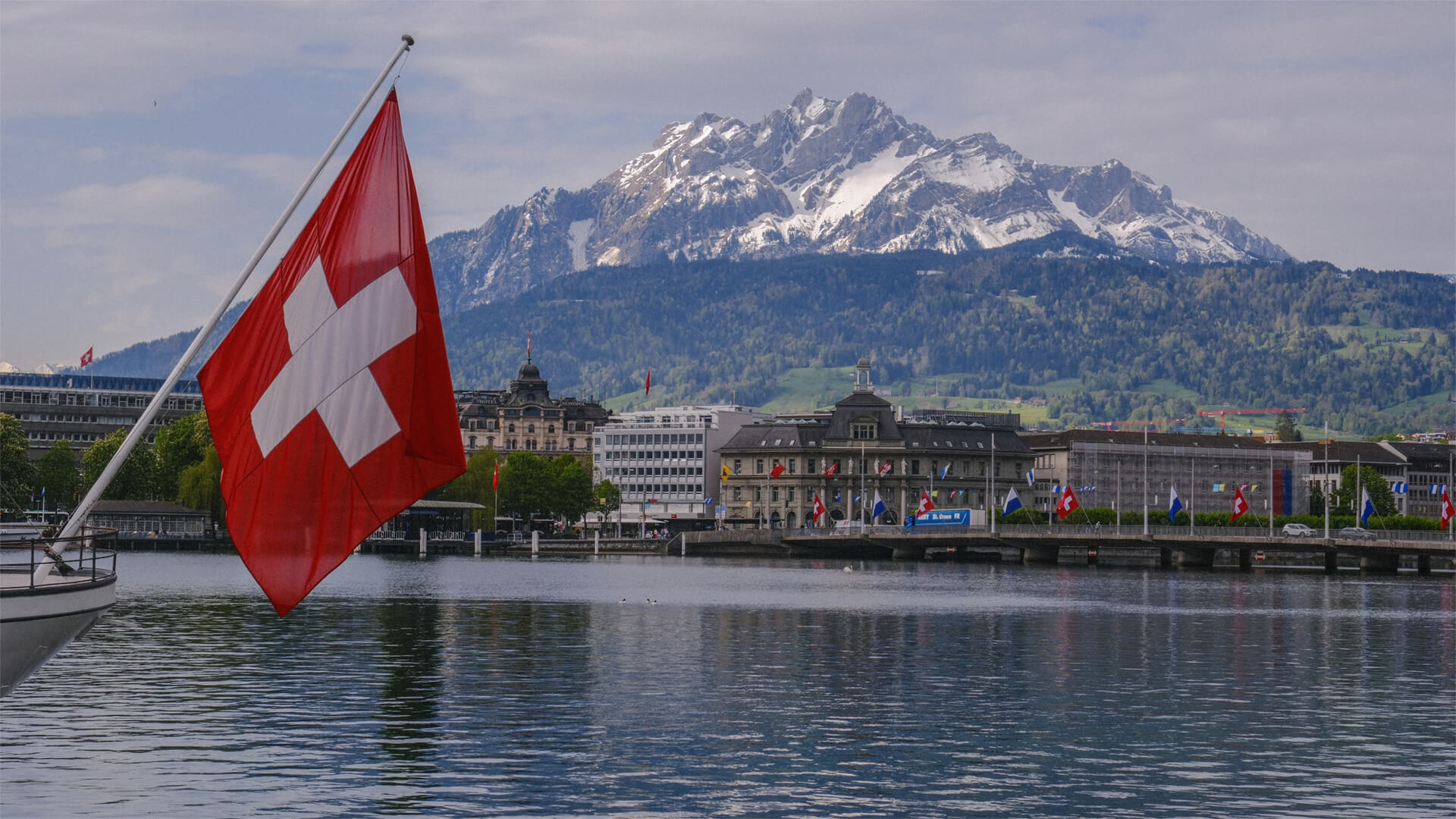
A swiss flag over the water with a city in the background

On June 14, Switzerland will vote on a referendum to cap its population at 10 million. Current projections don’t put the Swiss population crossing that number until 2035 or 2040.

This proposal would sharply restrict immigration once the population hits 9.5 million, followed by automatically withdrawing from EU freedom-of-movement agreements at 10 million. This represents the rural-urban divide in Switzerland; the more rural areas remain skeptical about immigration due to fear of cultural and demographic change, and the urban areas rely on immigrants for high-skilled labor.

The Swiss confederal system enables votes like this to happen. While this proposal may have meaningful support, Switzerland’s economy would be severely damaged in the process.

Transcript

Hey, all. Peter Zeihan here. Coming to you from Colorado. Today we’re talking about Switzerland. We have a referendum that is coming up on June 14th, where the Swiss will vote to limit their population of the country to about 10 million. Right now, the population is just a hair over 9 million. And at current rates of population growth and immigration, they anticipate they’ll probably hit that 10 million number between 2035 and 2040. 

The issue is twofold. Number one, the Swiss very, very, very jealously guard the right to have citizenship, and are notoriously, strict about it. So if you are from elsewhere and you want to become Swiss, it’s a very long, long, long process. There’s really only two routes these days. Option number one is family reunification. 

For someone who happens to work in Switzerland and has achieved, citizenship. So somebody who’s gone it the hard way can then bring in their family. And then second, of course, is immigration via asylum claims. This is going to sound a little blanket, but as a rule, when you’re talking about Germans, they’re really, really not into outsiders. And when you talk about rural people, they’re really, really not into outsiders. And the population demographic overlaid with geography in, Switzerland means that the Germans, have a lot of rural territories in the north of the country, whereas the French, who live in a single corridor, it’s mostly urbanized. And the Italians who live up in the mountains, don’t really have much of a rural section at all. 

So the cities think this is a horrible idea, because the Swiss economy basically is a services economy that deals with some of the most skilled labor in the world, and a population of 9 million is really can’t support that. So they really are dependent on high tech, high skilled labor coming in. And family reunification is a piece of that. 

The rural regions see it more as a population swamping issue, because they’re not the ones who decide what happens day to day. Also keep in mind that this is not unique to Switzerland. This is a real issue across the entire world, especially in Europe. Despite what you might hear in the United States from the far right. 

The Europeans are deeply, culturally wed to their, superiority. Which is a nice way of, say, kind of racist. 

What is different about Switzerland versus the rest of Europe? Is most of the countries in Europe have what we would call a unitary government, where all the decisions are made in the national capital and that capital can impose their views upon the entire country. And so it tends to be more urban, tends to be more evenhanded. And from the point of view, if you happen to be on the hard right, tends to be a little bit more liberal. 

You do have some countries that are federal, like, say, Germany. The U.S. system, by the way, is federal, where you’ve got a balance of regional and national powers, where you can have a more patchwork. But that’s not Switzerland. Switzerland is Confederal, and that means that the regions and sometimes even the individual cities actually have more power in many cases than the national government. 

And this is why the Swiss are always, always, always, always having plebiscites like this. Because it’s really easy to get on the ballot and the federal government can’t do much to stop it. You also have to have a degree of unanimity among the cantons whenever something is up for debate. And in this case, that means the plebiscite really has an uphill path ahead of it. 

But it only takes one canton to really make something a national issue. And that’s exactly what we’re seeing here. Support for this, plebiscite is reasonably strong. It has a decent chance of passing. That doesn’t mean it would be a good idea for Switzerland from an economic or political point of view. Part of it is the lack of details in the text of the plebiscite itself. 

It says that when the country hits 9.5 million, the, government needs to simply remove, asylum as an option for even coming into the country. Now, that doesn’t have necessarily a national disaster in it. That’s more of a political issue. But if the country hits 10 million people, then Switzerland is supposed to automatically withdraw from all freedom of movement treaties it has with the European Union, which means overnight, the entire Swiss advance industry, banking system, research system, medical system would basically crawl to a halt because they wouldn’t be able to get the stuff that’s necessary to maintain the economy in its current form. 

Also, this is a plebiscite. So it’s not like a 14,000 word document. It all fits into a couple of paragraphs. And that has the problem of basically throwing the ruling council of Switzerland to into a bit of a tizzy, because if this passes, they then need to come up with legislation that would pass them all the current ones. 

So, its opponents have called it the plebiscite of chaos because it would basically absorb all political bandwidth of the country between now and when they hit 10 million. And there’s really no clear way to have their cake and eat it, too. If this was pass, it is the end of Switzerland as an advanced economy over the long run. 

Now, over the long run doesn’t start until they actually hit that number. That number will probably not be met until after 2035. So it isn’t flipping a switch. But this is a great example of how populist pushes, especially on things like migration, don’t necessarily match very well with a policy that can allow the economy to continue at the growth rates and the wealth levels that they’ve enjoyed for the last century. 

So I’m going to be watching this very, very closely. It’s a fascinating example of how political structures deal differently, based on how the constitutional order functions. 

Yeah. June 14th, big day.
The Swiss Are Screwed

Swiss flag over snow capped mpuntains

The Matterhorn, Nestlé Chocolate, and a long-standing history of neutrality, Switzerland has it all. However, the Swiss were too busy enjoying all those comforts and fell asleep at the wheel for the past few decades…

Since the Cold War, Switzerland has assumed that its stockpile of weapons and insulation provided by the EU would protect them. With the Ukraine War creeping closer, the Swiss are realizing much of what they’ve relied upon has been eroding. Their military is weak, banking secrecy has collapsed, trade competitiveness has suffered, and now Trump tariffs are crippling industry.

The Swiss have a couple paths forward, but all options require them to abandon some core component of their belief system (or face economic decline).

Transcript

Hey, all Peter Zeihan here come to you from the Lost Canyon in the Lost Creek Wilderness in Colorado. And today we’re going to talk about Switzerland. Switzerland has some really tough decisions ahead of it in the next few months. Very, very short history of Switzerland, has been a neutral country for quite some time. Has been armed to the teeth quite some time. 

But in the period, especially after World War two and especially after the Cold War system ended, Swiss defense has kind of withered away. You can basically buy an exemption to the draft. Their military recruitment has basically fallen off, and they’ve shut down most of the bunkers that they used to be once famous for. They’ve done this because in the post-Cold War world, we all got along in the European Union, literally surrounds them completely. 

And they fear no invasion from their near neighbors. The Ukraine war was a rude awakening to them, just like all the other Europeans. And now they’re part of the coalition that’s supporting the Ukrainians. But they don’t have enough national defense right now to really be worthy of the name in the traditional sense. It’s number one. Number two, because they’re neutral. 

They have always followed laws their own way. And this made them an offshore banking center. You wanted to launder money, you’d put it there. You were tin dictator. You put it there. No one would ask you questions until a little guy by the name of Barack Obama said, no, we’re not going to do that anymore. We want to tax that money. 

So the Obama administration leaned very, very heavily on the Swiss government and played a part in something called the Financial Action Task Force. And basically, Zurich shut down as international money laundering center. So financial center, but if you want to do something illegal, you probably need to go to Cyprus or Dubai or something like that. So that’s another major industry gone third. 

Now, if you guys have been paying attention the last 30 years, but the eurozone hasn’t had the best time versus the other major economic blocs in the world and Switzerland, their number one trading partner is the collective European Union. And so we saw the Swiss currency gradually go up and up and up and up and up versus the euro, which in trade weighted terms has gone down, down, down, down, down until very recently. 

That means that Swiss industry is broadly uncompetitive, especially in things like agriculture. So that leaves the Swiss with two choices. Number one, subsidize the crap out of it, which is what they do say for their dairy industry. 

It’s beautiful. The farms are amazing, but they’re definitely subsidized and, not cost conscious. Let’s just say that, and then second, the manufacturing has had to get better and better and better, in order to move up the value chain so they can swallow the higher currency. 

So their products are a luxury goods that people will pay for regardless of what the prices. So Swiss watches basically became a national strategy. This led them in the last 30 years to really go into biotech, especially drugs and medications. And that brings us to the current day. Donald Trump has put tariffs on countries that are not based on trade practices, but are based on how much you sell to the United States versus how much the United States sells to you. 

That’s the only fact. Well, that’s one of two factors. The other factor is whether Donald Trump likes you or not. He doesn’t like Switzerland, and the Swiss sell a lot medications and things to the United States. They also sell gold. But Trump loves gold, so he made gold. Carve out. There’s no tax on Swiss gold. 

Anyway, what this means is we now have a 39% tariff. It’s one of the highest out there. And Swiss industry is scrambling and in some cases shutting down because it’s just not viable for them anymore. So the Swiss basically need to do one of three things. Number one, they need to find a way to make Donald Trump like them. 

They couldn’t find a way to make a Barack Obama like them. So I don’t think that’s going to work. Number two, they have to relocate all of their drug manufacturing somewhere else. Trump would obviously like to come to the United States. He has said that we are going to have tariffs on medications coming soon. 

No idea what those numbers are going to be for sure. But the numbers that have been leaked out of the white House suggest somewhere in the 30 to 100% range. So, It’s not clear that the Swiss have an interest of putting in the United States, because that’s only one of their markets, and the sales for each individual market don’t really justify putting it all there. And it you’d lose all your economies of scale if they put some in the EU and some in Japan and some of the United States. 

They’re not sure what to do there, and I blame them. Or third. Shift the political alignments. single largest chunk of Swiss trade is with the European Union. The European Union is a larger entity and can stand up to Trump’s Berlin a little bit better, can get it negotiated a better trade deal. So if, if, if, if the Swiss were to join the EU, that would solve some of their problems. 

Now the Swiss really do not want to do that. They value their neutrality. They value their independence and the independence as not just Switzerland is a state. It goes down at the local level, like the United States has states. They have something called cantons and almost all major decisions in foreign policy and trade and immigration, everything have to pass through approval of each individual canton. 

I mean, this is a country that did not make it legal for women to vote until 1991 because one German canton was holding out. And so for them to join the EU, they would first need to amend their constitutional structure so that this is not how decision making happens in Switzerland, because the EU will never let them in. 

If the Swiss just gum up everything just by being Swiss. So either the Swiss are going to have a catastrophic reduction in their standard of living is industries basically can no longer function in the new environment, or they have to get in bed with the monster that is at the door. And that’s the European Union. Not a great position to be in, but that’s where they are.