The U.S. Navy Goes Down Under

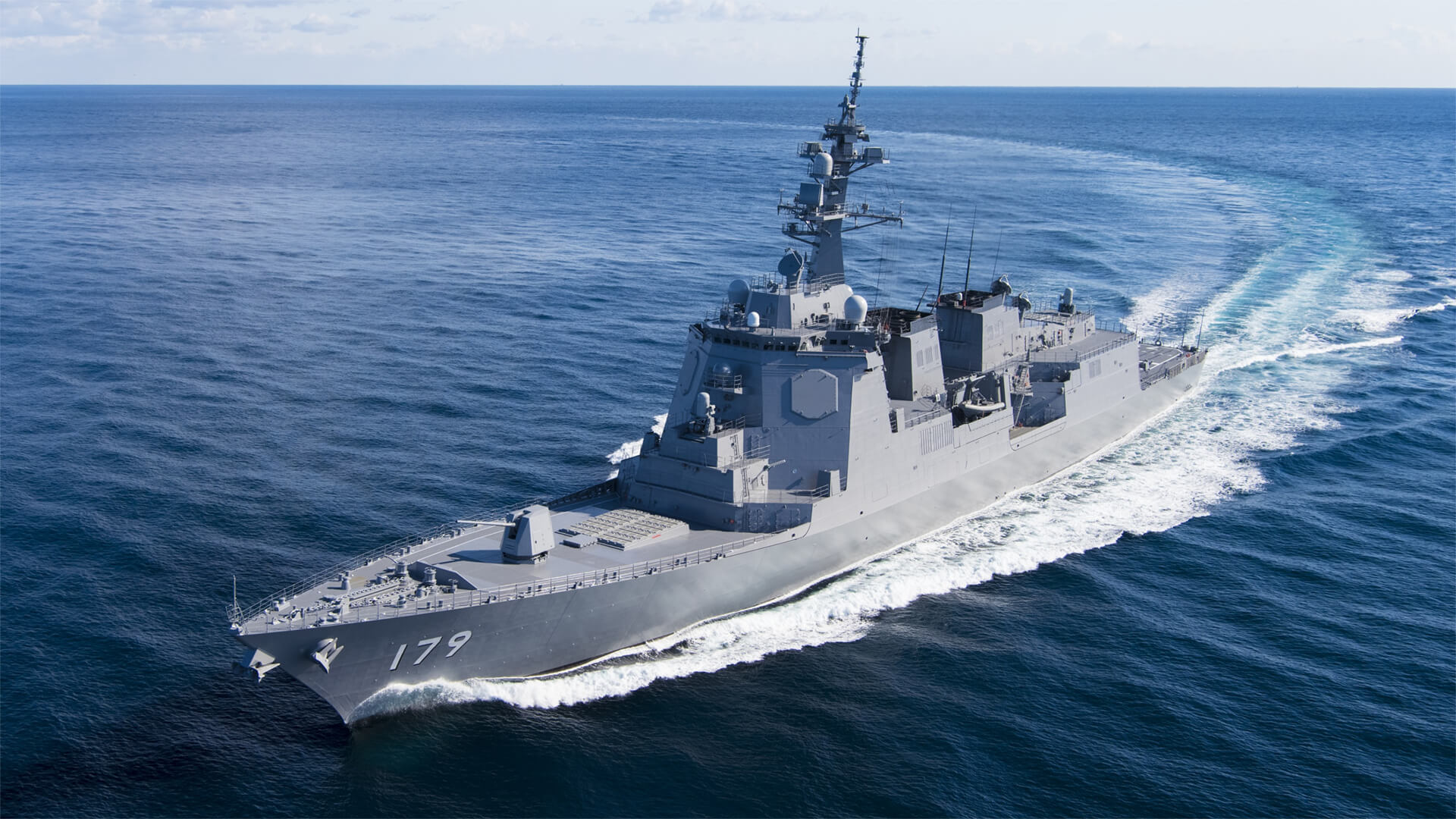
A US Navy battleship

The U.S. is turning to the Aussies for some help with stationing four American submarines at Stirling in a hedge against potential future conflicts with China.

This is done in an effort to help the U.S. reduce reliance on Guam should the Chinese strike, giving the U.S. options other than Hawaii. This move has some pros and cons. Stirling is outside China’s striking range, but it’s incredibly isolated. So, the U.S. couldn’t project power directly against China from there, but China’s trade routes in the Indian Ocean and Strait of Malacca would be vulnerable. The forces based at Stirling would also be on their own if anything boils up, which isn’t ideal.

Beyond this plan being good or bad, its just outright unsettling. This move signals the U.S. is preparing for a world where our current global trading system will be irreparably broken.

Transcript

Hey everybody. Peter Zeihan here coming to you from Colorado. And today we’re going to talk about the U.S. Navy deployment plans for the Pacific. Specifically, the U.S. Navy has announced that it’s going to be working with the Australians to expand their naval facility at the Stirling base, which is on an island just outside of Perth. For those of you who don’t read or know Australian geography, almost everybody in Australia lives in the southeastern kind of crescent, but all the way in the far west all by itself is Perth. 

So it’s kind of in the middle of nowhere, both the city and the base. And that’s from the Navy’s point of view, kind of the point. If, if, if there is a meaningful military conflict with the Chinese, the Navy’s concern is, is its current forward military base at Guam could come under missile attack. And if the Chinese get a few shots through the missile defense at the island, then the ability of using Guam in order to project power in the direction of the Asian mainland would be destroyed, and they would have to fall back to Pearl Harbor. 

So the idea is, if you permanently station four of America’s submarines out in the Indian Ocean near Perth, then that is well beyond any range possibility that the Chinese have. So this is both very smart and perhaps a little dumb. First, the smart anytime you can disperse your forces and maintain a reach would be really a robust idea. 

So the overall concept of having a second facility in that corner of the world makes perfect sense. The Australians are about the best allies and most loyal allies. We have hard to come up with a better spot if your goal is to have it beyond the range. Second, the dumb part. It’s really beyond the range. Perth is near nothing, and there is no way you could use naval forces in that area to project power to strike at China directly. 

What it could do is you could strike Chinese shipping in the Indian Ocean and up into Southeast Asia to the Strait of Malacca. And so one of the things that I’ve been saying for a very long time is that any war with the Chinese, I’m really not overly concerned because they’re dependent on international trade. We’re not we have a global navy. 

They don’t. You put those two together in any hot war. The easiest way to destroy China. Not not not the military of China, China, the country. Let’s just stop the shipping of the stuff that doesn’t go to the United States, which obviously would be shut down. About 80% of their energy flows come through the Indian Ocean basins from the Persian Gulf. 

About half of their food flows and about 80% of their manufacturing good flows goes through the same route. So if you put some naval assets in sterling in case of a hot war, we now have a Ford missile base. It could shut it all down in a matter of days and weeks. Just keep in mind that this is a different sort of conflict. 

If you’re going to put subs to do it, you are not taking over the oil tankers or the cargo ships. You’re just sinking them. That would be really, really colorful anyway. The other other problem is that, if Guam is taken out, then there really isn’t. A series of stepping stones to get to Perth. So whatever is operating there is going to be more or less on their own unless they decide to go quiet and cross the Pacific the long way. 

So any assets there will be exposed. It’s not that this is a bad plan. It’s just it’s laying the groundwork for a very specific sort of action that assumes the global system is broken beyond repair. I would argue we’re getting there anyway, but starting to put teeth in a place where it would force that to happen gets my attention in a way that I’m not entirely excited about.

The End of Nuclear Arms Control

nuclear bomb with a mushroom in the desert

The last remaining US-Russia nuclear arms control agreement has expired, which means for the first time in decades, we’re in a world with no active nuclear arms control.

To be fair, it’s not like the Russians were honoring those deals even when they were in place. And given Russia’s war in Ukraine, negotiations for a new deal were a moot point. So, that leaves the world’s largest nuclear powers without limitations on their nuclear arsenals. Which means any other nuclear-capable power will be looking to expand or acquire its very own nuclear arsenal ASAP.

There’s a long list of countries eager to bolster security through nuclear armament, so a long period of nuclear proliferation is right around the corner…

Transcript

Hey everybody. Peter Zeihan here coming you from Colorado today is the 4th of February. You’re gonna be seeing this in the morning on the fifth. And it’s a big day because for the first time in several decades, for the bulk of my lifetime, there is no active nuclear disarmament or arms control deal. In effect, the last one to start deal with the revised start deal, expired today. 

And there is really no appetite within the administration of the United States or the Russian Federation to negotiate a new one. What this means is we’re now in a situation where both sides have between 1000 and 2000 warheads, and there are no longer any legal restrictions on them expanding those arsenals. Now, some people try to put the blame for this on the Donald Trump. 

And I will not say that the Trump administration is really a champion of arm control in any form, but this is really mostly a Russian thing. You see, the The Russians know that they’re the strategically inferior partner in these deals. And the only reason that they were originally negotiated back in 1979 and 1985 is that they faced just a crushing, overwhelming American superiority in technology, reach and alliance structure. And so they knew that if there was a conflict, the United States had a bomber fleet, they had a missile fleet, it had a sub fleet, and they really just only had the missiles. 

And they were not confident that they could survive a first strike in order to deliver a second strike. So arms control back then was largely designed as a way by the Soviets to deflate tensions and eventually set the stage for a lasting detente that eventually ended the Cold War. Things really picked up after 1986, when Mikhail Gorbachev, who was really the only economist to ever run the Soviet Union, and he realized that the system was breaking and there was a limited amount of time. 

And so talks accelerated. And then in the post-Soviet system, under Yeltsin, we were no longer enemies. So getting rid of the thousands of warheads made a lot of sense to everybody. But in the time since that, we’ve had 20 years of Vladimir Putin and the Russians, rightly or wrongly, feel that the West has betrayed them time and time and time again. 

And the only way that they’re treated seriously as is if they’re threatened, the destruction of the human race with nuclear weapons. To that end, we’ve had two big trends that have happened in the last decade. Number one, bit by bit, the Russians have abrogated or cheated on every single one of the treaties in order to prompt the Americans to be the ones to cancel them. 

And Trump one did cancel a couple and others have expired. And so, you know, you can blame Trump if you want to. But the real fact was, is that the Russians were testing and fielding new weapons that were explicitly barred by the treaties and did it anyway, saying that they were still abiding by the conditions. The second issue, of course, is more recent with the Ukraine war. 

They’re in a hot war. And the idea that the Russians are going to voluntarily abide by any sort of meaningful arms control when they’re actually in the process of shooting a lot of people, is a bit rich, just like back in the late 70s and into the 80s, the reasons that the Russians thought they needed to do this is because they didn’t think that they could win on a field of battle. 

And unless and until they feel that way again in Ukraine, the chances of them going into any negotiations with good faith are pretty, pretty weak. Also, again, keep in mind that the Russians have abrogated or cheated on every single arms control treaty, nuclear or conventional, that they have ever signed. So any meaningful deal has to involve invasive inspections by both parties onto the other side in order to confirm these weapons are actually being taken out of service, dismantled, and eventually spun down. 

So they can’t be used, for weapons again, that requires a degree of intervention in the American military complex that we’ve done before. It would require a degree of intervention in the Russian complex that they have done before. it also would require a degree of trust on both sides that at the moment just simply doesn’t exist. 

And again, again, again, they are in a hot war. The Russians are in a hot war right now. So the idea that you can have American military and civilian personnel poking around into the Russian nuclear complex, it’s not feasible. 

So next steps. As to arms control, there really aren’t any, because until there’s a substantial change in mindset in Moscow, the idea that they’re going to negotiate with anyone in good faith simply evaporates. That leaves the situation open for everybody else. Now, the Americans and the Russians combined have over 90% of the nuclear weapons that are available in the world today. 

But they’re not the only ones. Israel has some, France and Britain have some. And the Chinese, of course, have a significant arsenal. Although it’s not merely in the same class as either Russia or the United States, unless and until we have some sort of deal between the Russians and the Americans and what a ceiling might look like, other countries not only don’t have an incentive to limit their own production of weapons, they have a very strong incentive to build more and more and more, not just to get to bigger tables, but to secure their own existence. 

And that is as true for China as it is for Israel and Pakistan and India and unfortunately, now true for Korea and Japan and Poland and Germany and Sweden and Finland as well. So we are not simply at the end of the great era of arms control that literally took tens of thousands of weapons out of circulation. We are now at the dawn of a new era of massive proliferation, because we no longer have a structure to limit it. 

And the changes to the international strategic environment basically demanded. Because if you’re a country that has been on the sidelines for the last 50 years and relying on the bilateral system between the Russians and the Americans to kind of keep a lid on things, and all of a sudden that is gone. You no longer have the time that is necessary to build up conventional force. 

Building up a nuclear force is the fastest way to get to a degree of security, where you actually hold some cards. And we are now going to see that in country after country after country after country for at least the next 15 years.

Electronic Warfare Innovations and Exports

Laptop with green coding and a server

Let’s talk about the current state of electronic warfare in the Ukraine War and how Iran is fitting into all this.

Drones are all the rage. You’ve got fancy autonomous systems, short-range with remote pilots, and fiber-optic tethered. The next logical step to countering drones is to beef up jamming capabilities; Ukraine has done just that. However, the Russians have taken this logic one step further. They’ve created a tool called the Kalinka. The Kalinka is a mobile detection system that listens for signals. This gives them an early warning for drone strikes and other signal-based attacks.

Electronic warfare innovations are spreading quickly, and this tech is already appearing in other regions. For instance, Iran used the Russian Kalinka tech to locate Starlink users during the protests, allowing them to shut down comms and suppress dissent.

Transcript

Hey all, Peter Zeihan here. Coming to you from Colorado, I hope everybody who is east of the Rockies is enjoying the cold front because, Canada worst. Anyway, today we’re talking about what’s going on in Ukraine and Russia and Iran from a technical point of view, specifically electronic warfare. Drones basically fall into three general categories. Number one, you got autonomous ones that can make decisions on their own. Those are incredibly rare and incredibly difficult to maintain because the chips themselves are unstable when there’s vibration or heat or cold or humidity or anything. So really, aside from a few here and there that are very expensive, not a lot of play. The second are those that you fly first person, and for that you have to have a connection to them somehow so that the telemetry can come back and forth and you can control them. 

Now, the United States does that with things like Reapers through satellite connections. The Ukrainians primarily do it on a shorter range, and the Russians also on a shorter range, typically no more than, 20km. And the problem with that is they can be jammed. And so both the Ukrainians and the Russians have gotten very, very good at here. 

I mean, I would argue that right now, today, Ukraine’s jammers are by far the best in the world, probably an order of magnitude better than America’s. Once you consider in cost. And then the third type is to do, fiber drones, which have a thin fiber optic cable that they drag behind. Now, these don’t have nearly as much range as a rule, but they can’t be jammed because there’s a hard line. 

And these, as a rule, are five kilometers or less. Although there are now some models where the fiber optic cable is light enough. You can go more than ten. Anyway, so those are kind of what’s going on there. But there’s another aspect to countering drones or any sort of electronic battle platform, that doesn’t involve jamming, but it’s still electronic warfare. 

And in this, the Russians have definitely, cracked the code on a new tech that is really interesting and has a lot of applications. So they call it the clinker. It’s basically a electronic warfare detection system that is mounted onto a truck or an armored vehicle. You basically drive around, find a place to park, and then you just listen and you pick up signals whether this is a cell phone or a drone connection or more importantly, in recent terms, as we’ve discovered, a, Starlink terminal. 

So one of the things that the Ukrainians have been doing is taking mobile Starlink terminals and putting them on things like drones, and then they go out into the Black Sea and blow up something that’s Russian. And the Russians don’t like that. But if you’re having a constant link in from a Starlink terminal and you can detect that, then the Russians finally have a way of knowing that it’s coming. 

I’m not saying it works perfectly. The range is only about 15km, and one of the CBP drones, they’re pretty quick. It’s not a lot of time to react, and it doesn’t jam the connection. It just detects it. So the Ukrainians have learned to turn things on and off every couple of minutes so that the Clinkers can’t, link up. 

But one of the things you have to keep in mind is that we’re in a fundamentally new type of warfare here, and when drones first appeared on the battlefield in a meaningful way that was not American. It wasn’t in Ukraine. It was in Armenia. We had a war back in 2020 between Armenia and Azerbaijan. And the as a region has had, Turkish drones that they basically used to completely obliterate the entire armed forces of Armenia in the disputed territories and would go on a crowbar. 

The Armenians weren’t ready for it. And so what we’re now starting to see is Ukrainian and Russian technology coming into other theaters and just completely wiping the board. So, for example, in the last couple of weeks, we have we’ve had those big protests in Iran, and people were wondering how the Iranians were able to shut down communication so effectively. 

Well, it now looks like the Russians gave the Iranians a few clinkers, and they basically just drove them around town, identified where all of Starlink’s were kicked in the door, shut the people involved, or brought them in for beating or imprisonment or whatever it happened to be. And lo and behold, the, situation from the Iranian point of view was diffused. 

So we now have a technology that has very, very strong implications for use in a civilian management system. We’re going to be seeing more and more things like this of technologies from a hot zone where they’re iterating every day and every week suddenly pop up in a theater that you wouldn’t expect, where it completely outwits maneuvers outclasses the preexisting systems. Iran is just a taste of what is to come on a global basis.

Purging China’s Central Military Commission

Chinese soldier outside of a building

Xi Jinping has removed yet another senior official from China’s Central Military Commission (CMC). After 14 years of eliminating officials, prioritizing loyalty over competence, China’s institutions are hollow.

The seven-member CMC only has two people left, Xi and a loyalist (neither of which have any military experience). This leaves China’s armed forces leaderless and unable to operate effectively. Sure, Xi Jinping may have achieved personal control, but he’s destroyed China’s institutional capacity.

Transcript

Hey all, Peter Zeihan here, coming to you from the Denver airport. Today’s news is the Chinese premier, XI Jinping, has just dismissed a member of the Central Military Commission by the name of Zang, Russia. Very, very, very short version. The Chinese premier has been launching the most intense purge in human history. Something that really even dwarfs Mao or Hitler. 

And it’s basically spent the last 14 years removing anyone competent from any position so that all that is left is personal loyalty to himself. For those of you who really like Trump, take note. It’s gotten to the point that China has become functionally ungovernable if your goal is to actually achieve meaningful change. And now, in the case of the military, that the CMC is functionally like the American Joint Chiefs of Staff. 

But now of the seven man commission, you’ve got G. You’ve got a political crony who is basically an inquisitor, and everyone else has been suspended or is under investigation and is no longer sitting. So the entire military leadership of China is now two people, neither of which had any meaningful military experience. So I’m not going to tell the U.S. military not prepare for a fight, but we now have a completely decapitated structure in China that is completely incapable of instituting reforms or making strategy that is worth a damn. 

So political purges might make you feel better about yourself, but they are guaranteed to absolutely collapse the institutions that you’re trying to reform. If your goal is really just political control. And that’s what we’re dealing with here. So, if you’re anyone but China, this is amazing news because it means that today, functionally, their military doesn’t work. That’s kind of fun.

The End of U.S. Military Deployments?

A group of Marines loading into the back of a C-130 aircraft

Just because the US intervened in Venezuela doesn’t mean that America will be abandoning its global military posture.

The US maintains military deployments in Japan, Germany, and South Korea. Don’t think of this as imperial overreach; think of it as a low-cost force multiplier that prevents bloodier conflicts down the road. Should the US withdraw from these positions, things would likely get ugly…and quick.

The US is the only country with the ability to project power globally, and these optimally-sized deployments help extend that reach.

Transcript

Hey everybody. Peter Zeihan here. Coming to you from Colorado, avoiding the crazy winds out there. Through with you inside. We’re taking questions from the Patreon crowd about the Venezuelan intervention and the rest of Nicolas Maduro, the former current. I’m not sure how that works out now. Venezuelan president. Anyway, he’s going to go in jail. We’ll never hear from him again. 

The question is, is, is this a prelude to a general disengagement from the Eastern Hemisphere and closing down all the bases we have there? He’s like, oh, let’s let’s not get ahead of ourselves. First things first. The United States currently has fewer troops stationed abroad than at any time since the since World War two. We had a surge with the war on terror. 

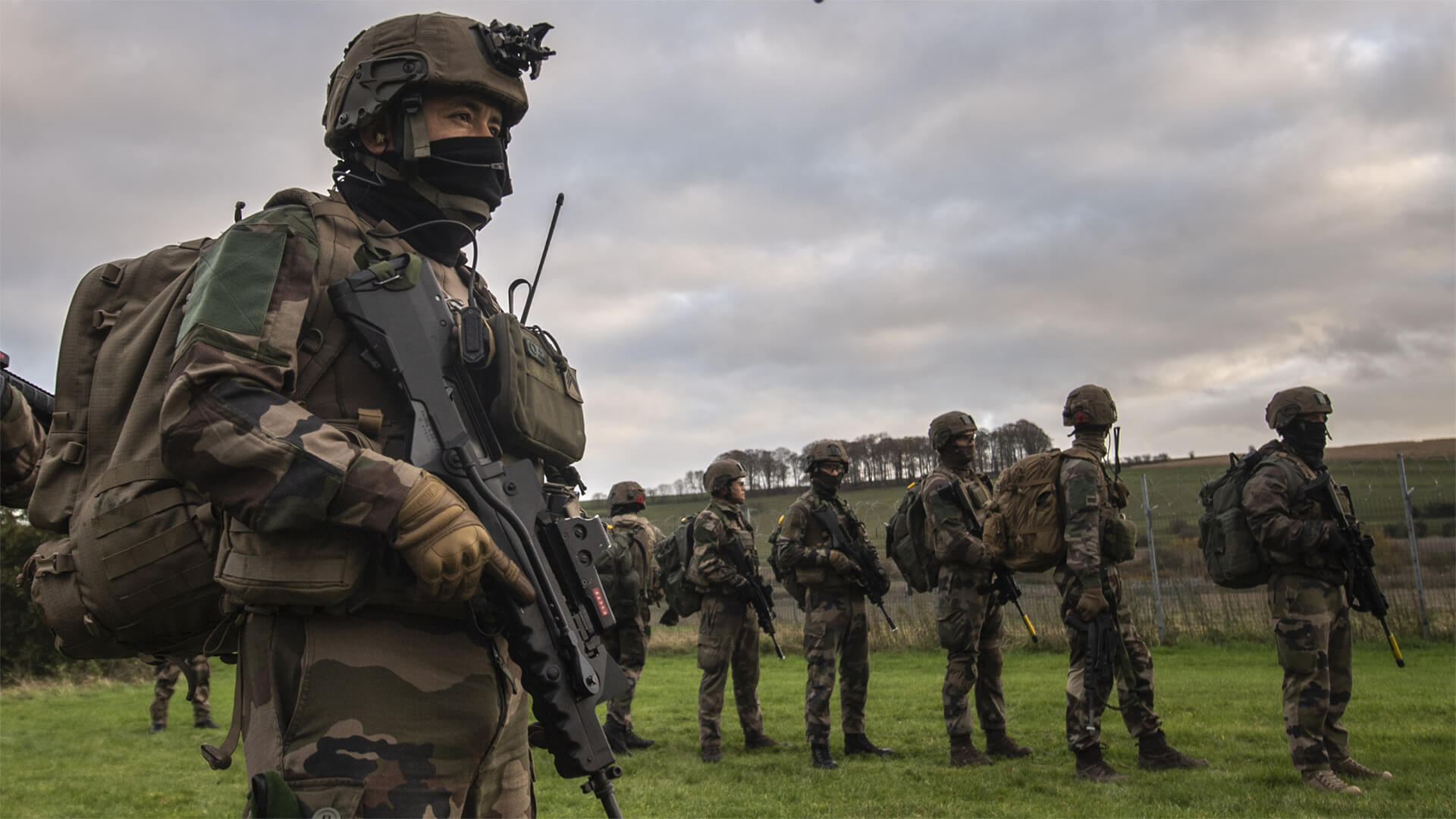
We’re back down to a pre, like the lows that we had in the early 2000. And it’s important to understand that the United States footprint globally is actually quite limited. Right now we have about, let’s called 100,000 troops abroad. Most of those are concentrated in three areas. You’ve got the largest contingent, which is in Japan. The second largest. which is in Germany and the third largest, which is in Korea, especially closer to the DMZ. All of these serve as force multipliers for the United States. Everything else is a very small contingent, maybe a naval base here and there that has a few hundred to a couple thousand people that are basically there to help the carriers operate. 

But the way World War Two ended, we already have places like midway, for example, which is U.S. territory or access to the United Kingdom, which has their own naval bases that we just kind of rent. And so the, the need for the United States to maintain a far flung Imperial style military deployment just doesn’t exist. If you see the United States back away from the deployments we do have, it means that we have made a very clear strategic decision as a country to foment a war and so that we can participate in the next one. 

And lose a few tens to hundreds, thousands of troops. So, for example, if we walk away from Japan, Japan is the anchor. And because of the way that the islands in the Pacific are position, it means that we basically give up the ability to influence the Asian mainland and the western third of the Pacific, which includes Japan and Korea and Taiwan and China and Singapore and Indonesia and Australia. 

And if we decide to walk away from that, we’re basically saying that this whole area can evolve on its own, maybe generate a new hegemon, that we will then have to come back and deal with decades from now, basically setting up something similar to the rise of Japan in World War two. If we walk away from Germany. 

Oh my God. Oh, God. Okay, so every time the Germans are responsible for making their own decisions, they start acting like a country or something. And as a large country, the largest of the European states by population, economy set in the middle of the continent, it will naturally try to influence the areas around it. And that is exactly what set everybody on the course to World War One and World War Two. 

And so to do that deliberately, to set up a repeat of the world wars in Europe, strikes me as something that would not be in American interest. And that’s before you consider the fact that the Russians have been pointing nukes at US my entire life, and I’m now 50, 52 birthday coming up. That strikes me as immensely unwise. 

One for the low, low cost of 30,000 troops stationed in bases that are nowhere near a front line. You can basically control the strategic destiny of a continent that’s cheap. Third, Korea, you draw those troops back. Forget about the likelihood of a war in the peninsula, which is would be very likely at that point. North Korea has nukes pointing at us, with the range to reach us. 

So your permanently now putting Minneapolis, Denver, San Francisco, Los Angeles under a nuclear threat and defending against that would require an order of magnitude more cost, than simply maintaining 20 to 25,000 troops on the Korean Peninsula. So really, the three big deployments we have right now are there for very good reasons, mostly in terms of controlling the strategic environment, and because not having them there would require us to take a defensive position in our hemisphere, which would be extraordinarily more expensive and set up the situation for war down the road. 

Okay, so that’s the United States. Now let’s talk about everybody else’s deployments. 

Okay. That’s all of them. Here’s the thing that most people forget. Deploying troops in the thousands, much less tens of thousands a continent away, is very difficult, requires specialized logistics and decades of practice and infrastructure development. And so we are the only ones in the modern era that does that. The last time any countries did it at scale, it was before World War Two when we had the Japanese Empire, which we, to be perfectly honest, modeled some of our stuff, and the British Empire, which of course we modeled some of our stuff off besides that in the modern era, and nobody does it now. 

Part of this is policy. The whole idea of the Cold War globalized system was that we will pay to create a world that keeps you safe is an exchange. You allow us to write your security policies. And that has been the basis of the American alliance going back to 1946. But the other part is just the sheer expense. 

By creating a globalized system, we gave everyone access to the globe and all the economic goodies that come from that. And trade and access to commodities and markets the world over. And they didn’t have to have the military for it. So most of them never even bothered to try. And so the world’s second and third largest navies are the Japanese and the Brits, both of which work hand in glove with the United States. 

And if we decided to withdraw from the Eastern Hemisphere, those two countries, as well as a number of others, would have no choice but to develop that capacity. Now, they wouldn’t do it in two years or five years. This is a generational thing, but eventually we’d have a half a dozen navies that had regional, maybe even global reach, and it would look a lot like 1929. 

I would argue that’s something that we don’t want to do, because doing it the first time was really expensive in men and lives in the United States honestly got off cheap because it was most of the fighting was over there rather than over here. Okay, let’s talk about the the big countries, more specifically China. People keep pointing to the fact that they’ve got a large Navy unit, and they do and they do have about, 50 ships that are capable of operating more than 600km from the shore. 

But even if you ignore the first island chain, which really hems them in, that doesn’t give them very much, because the Chinese don’t have basing rights in places that are useful to them. So when you look at the United States, we’ve got Japan’s second most powerful naval power on the world. Where we stage ships, we have midway, we have places that are allied in the North Atlantic basin, whether it happens to be Italy or Spain or the United Kingdom or Iceland. 

We have global power projection, in part because of our territories and in part because of our allies. The Chinese have no allies, so they’ve gone out trying to build what they call a string of pearls model, where they develop friendly ports along the route that they want. And so they get along okay with Malaysia. They basically bought Cambodia. 

And even though it has a coastline, they’re trying to build port there. They’ve got some friendly relations with Bangladesh and Myanmar, Sri Lanka and Pakistan. And so the idea is they can use their short haul ships to hop from base to base to get all the way to the Persian Gulf, where they, where the oil is. 

And of course, everybody, because of pirate reasons, has a small base in Djibouti. But here’s the thing. If one of those gets broken in a hot war, every ship west of that is lost. The Chinese have tried to do it on the cheap, and that means it’s really easy to unravel. And so even if the United States were to find its vessels, say, stuck in the Indian Ocean, they have enough range to get out. 

The Chinese don’t. And so I’ve never really been worried about the Chinese naval build out. Let’s talk about the Russians. The Russians aren’t a naval power. They’re not an air power. They’re losing their space capability. Within a decade. Pretty much everything that they have that’s not ground base is going to be gone. They just lost the manufacturing base to maintain it, much less expand it. 

But they still have a large army, over a million men under arms. And every month, they’re bringing them another 20 to 40,000 men into the fight. That’s awful. If you’re on Russia’s border. And that’s the situation that the Ukrainians are struggling with right now. But if you’re not on Russia’s border, it’s actually not all that bad because you have standoff distance where you can use drones and air power. 

If you’re another country back, you know, you really don’t have to worry about the tanks coming either. By the way, the Russians have almost run out of tanks, which is crazy. They started this war with 20,000 armored vehicles. They’re down to probably less than a quarter of that now anyway. Bottom line is that their their exposure is huge, but their ability to push back that exposure is very, very limited. 

And their ability to use naval forces to protect power is basically zero. Now, they still have a handful of ships, but they’re split into four different bodies of water the Black Sea, where they can’t get past Istanbul unless the Turks allow them, and everything that does get passes. Relations with the Turks go south. That’s lost. They’ve got the Baltic Sea, but that is now completely a NATO lake. 

At this point they’ve got the Arctic Sea, which is their their most powerful fleet is up there. But the problem is it’s a long way from anywhere. And they have to get by Norway and Iceland and Scotland and the United Kingdom, the United States, all of which are superior naval powers on that, but one that Iceland doesn’t have a military. 

But everybody else could probably do it by themselves at this point, even without the United States. And then they have the Pacific Fleet that is based off of, Petrobras, which is basically a city you can only fly to on the peninsula. And of course, the Japanese are there. They could potentially be some things in the code Vladivostok, but that is literally surrounded by Japan, world’s second most powerful navy. 

And even if all of the Russian ships were in the same place, the Japanese could still easily take them out because they’ve done that before. So the ability of the United States to project power is huge, in part because of its geography, but also because of its allies. The Chinese are blocked in by geography, the Russians are blocked in by geography, and neither of them have allies. 

So we’re in this weird situation where the United States is considering a full scale withdrawal from everything, which will guarantee higher defense costs and longer, long term security challenges. This is one of the things that the people who are really pro isolation tend to miss the the footprint that we have right now is almost perfectly optimized to not have to spend money or lives. 

As an added benefit, you also get to control the security architecture a huge part of the planet. You pull back all that goes away.

The Beginning of Venezuela’s End

A person walking draped in a Venezuelan flag against a desaturated background

The first domino of regime change in Venezuela has been toppled, as the Trump administration has imposed a naval blockade on the main oil export ports.

No oil exports mean Venezuela’s income vanishes. That means food imports stop. Food shortages will give way to unrest, which will give way to regime collapse. So, what kind of situation will we be looking at once the final domino falls and Maduro relinquishes power?

It’s not going to be pretty. We’re talking about a grim humanitarian outlook, a scary security picture, and an ugly transition of power.

Transcript

Hey, all. Peter Zeihan here coming to you from Colorado. It is the 17th of December. You’ll see this on the 18th in the morning. And we are. Go for regime change in Venezuela. The Trump administration has started a formal blockade of the ports, specifically to prevent the state of Venezuela from generating any foreign currency, which is used to not to support the regime but hold the country together. 

There are three ports. There’s one just off of Caracas, which is the really minor one. There’s two larger ones, to the west, and east of the country. There’s no interconnection of the oil pipelines among the three. So you basically have fields in the markova region that generate somewhere between one fifth and one third of the country’s crude, very easy to block. 

There’s a very narrow network. Basically, you can do that with one ship and you’ve got to Port Jose out on the east side, which is where about two thirds to three quarters of the exports flow. That’s a little bit more difficult. But again, for the US Navy, this is very, very, very minor. Not hard to do at all. 

And so Venezuela is now going to go from a country that exports about a million barrels a day of crude to one that exports none. And this is something like 90% of the hard currency earnings of the country. And that money is what is used to maintain the regime and to purchase the roughly 80% of the country’s food that is imported. 

So within a matter of days, we’re going to be having food riots because they really don’t have much stored up. And then without the currency, you we’re probably going to see the regime start to crack. A couple things to keep in mind. First, locally in Venezuela and then the broader world. Number one, this is a country that is armed to the teeth. 

That doesn’t mean that I think that it helps the government. But back under Chavez, over a million ak47s were handed up to the population. And so any force that goes in or any force that’s local that tries to assert authority, regardless of their political backdrop, is going to have a horrific time. And we’re not so much looking at a civil war or a civil breakdown, in a country with over million people. 

So the outcomes for Venezuela are beyond dire, and we should expect a general breakdown of civilization here over the course of the next several months, unless the Trump administration changes its mind really aggressively. You’re not going to have a foreign force that can put this right. You’re not going to have a local force that can maintain authority. 

There just too many weapons in too many hands for that to be one of the reasonable options. Which brings us to the second thing, that the oil that comes out of Venezuela is going to go away for at least several years. Right now that’s only a million barrels a day. But something the Trump administration has shown is that we can now have a sovereign state going specifically after oil tankers of the shadow fleets. 

And a lot of these tankers don’t just service Venezuela, they also service Iran and Russia as well. And we have now broken the Seal and other countries, or maybe the United States as well, is probably going to start going after those other shadow tankers as well. A 1 million barrels per day disruption out of Venezuela for a market that is at the moment probably oversupplied is not a big deal. 

But then you add another million from Iran and perhaps as many as 4 or 5 million from Russia. And you’re talking about a very different world. So we are at the start of a very significant international shock in energy. And calendar year 2026 is going to be a wild ride.

War Crimes, Drugs, Venezuela, Pardons…and Dancing?

Unclassified footage of the first airstrike (1 September)

When the US starts publicly admitting to war crimes, we ought to pay attention. So, let’s look at what’s going on with Venezuela.

Trump has announced imminent strikes on Venezuelan territory. Our most powerful aircraft carrier is already sitting in the region, so things could move very quickly. However, the administration still doesn’t have clear objectives for this operation. If cutting off drug inflows to the US is the main goal, how does pardoning the former Honduran president, Juan Orlando Hernández, who was convicted of orchestrating major cocaine trafficking routes, fit into that goal?

The inconsistency coming from the White House on drug-war priorities is indicative of the broader chaotic nature of this administration. It looks like the new year is poised to be an…interesting one.

Transcript

Hey, Peter Peterson here, coming to you from Colorado. Today we’re going to talk about what’s going on in Venezuela in the world of Coca Cola. This is going to be a little all over the place because reality is a little all over the place. First of all, war crimes investigations are in play is a short version. 

According to the white House, according to the Defense Department, according to Donald Trump, according to Defense Secretary Hegseth, one of the things the U.S. military has been doing is after it blows up a boat that is allegedly, smuggling cocaine from Venezuela to the United States. If there are any survivors that go in and strike it again, under every treaty the United States has ever signed regarding war crimes, this is a war crime. 

I mean, that’s flat out, going after somebody who can’t shoot back, who’s already been defeated and is basically executing them. This is a lot of what the Russians have been doing in the Ukraine front. This is one of the things that the United States decided back in the 40s should never be allowed to happen again. 

And now we have public admission that this has been happening. The only question is at scale. Now, once it was explained to some people in the administration that this is actually a war crime, there’s been a lot of backtracking, where this will go that’s entirely up to Congress. Which brings us to the second piece, land invasion. 

Trump has now publicly said that strikes on Venezuela on shore are imminent. In fact, they might have happened by the time you see this video. We still have not had the administration present any information on the drug smuggling, on potential actions to Congress. We’re very clearly in violation of the War Powers Act, which was something that Congress put together in the aftermath of Vietnam to make sure things like this could never happen again. 

And Trump is very clearly violating that. But until and unless Congress decides to stand up for itself, there is no functional check on executive power on this topic. We still, according to Republicans in Congress, haven’t had the administration produce any meaningful information on the strikes that have been happening so far on any of the intelligence suggesting that these strikes were against vehicles, were actually smuggling drugs, or really anything about the operation. 

And we already have, America’s most powerful aircraft carrier in the region. As for what the administration’s goals are, they are now deciding what those are. On Monday, we had a national security, meeting in the white House that included, among other people, the secretary of state and the secretary of defense, the Joint Chiefs, where Trump started to discuss, started to discuss what the end goal might actually be. 

It looks like the United States has concentrated force in the region before even coming up with a general approach, much less a goal. We have had a conversation confirmed by the white House between Donald Trump and the Venezuelan president, who was Nicolas Maduro, where he basically told Maduro to leave. Maduro said no. And so now Trump is left deciding, you know, this. 

Do we go in and take him out? Do we then install a government in the aftermath? Keep in mind that Caracas, the capital, might look like it’s close to the, coast on the map, but it’s actually on the other side of a thin mountain range. And so an occupation there would be at least as difficult as something like we did in Iraq. 

And this is a country that already imports over 80% of its food. So a mass famine event without massive American logistical support would almost be baked in at this point. We don’t know if you’re confused. You’re not the only one. The administration really hasn’t made any decisions or provided any information. It’s just acting, which is in general how you get into big, drawn out, nasty in broad clios. 

If you think I’m defending Maduro. Nope. The guy’s a nut job. So Maduro is a former bus driver who was appointed by Chavez Chavez as kind of the Chavez as kind of the Venezuelan version of Trump. To be exact, his successor. So we have a former bus driver as president. And after his call with Trump, he went on the air and pledged his undying loyalty to the Venezuelan people and then started dancing. 

Because apparently that’s what you do in Venezuela now when you’re a former bus driver. On the drug front, back in the United States, Donald Trump has pardoned a guy by the name of. Let’s see. What is it? One, Orlando Hernandez, who is a former president of, Honduras. Now, Hernandez has been convicted, not not accused, convicted in U.S. court of law of being the single most consequential person in Western hemispheric history for establishing routes for smuggling cocaine and other illicit narcotics into the United States. 

He was sentenced to 45 years in prison and is now he’s out, free. He and his wife are among the most corrupt people in Western hemispheric history, which is saying something. And he used the tools of the state to establish multiple trafficking routes in collaboration with the Mexican cartels. The difference between him and Maduro is that Hernandez has been convicted. 

I mean, there’s really no doubt at all as to his guilt, whereas Maduro is merely accused. And, Hernandez said nice things about Trump, and that got him the, the pardon. So we have this bizarre mix of policy indecision, rudderless leadership and a rhetoric against drugs, but a practicality that’s actually encouraging them. Now, about the only good news I have on this general topic is that Congress passed and Trump has signed into law, something that puts a couple billion dollars into opioid and opiate, recovery for people, 

But the net effect is that one of the most effective things that U.S. law enforcement has done against narcotics in the last 15 years was just undone by a pardon. And instead, were focusing on a country that is. Let’s to be perfectly honest, a marginal player in drug smuggling to the United States, not saying that Venezuela is not part of the problem, but, if you really want to go after drug smuggling, you start with where the stuff is produced. 

That’s Bolivia, Ecuador and Colombia. And then you collaborate with the Mexicans to break down the cartels. Venezuela is a sideshow. Hernandez and Honduras, of course, were part of the court system. Okay. If that’s a little all over the place, it’s because the world is all over the place right now. Apologies for that. I will try to get the world into order for the next video.

Ukraine Targets the CPC in Recent Drone Strikes

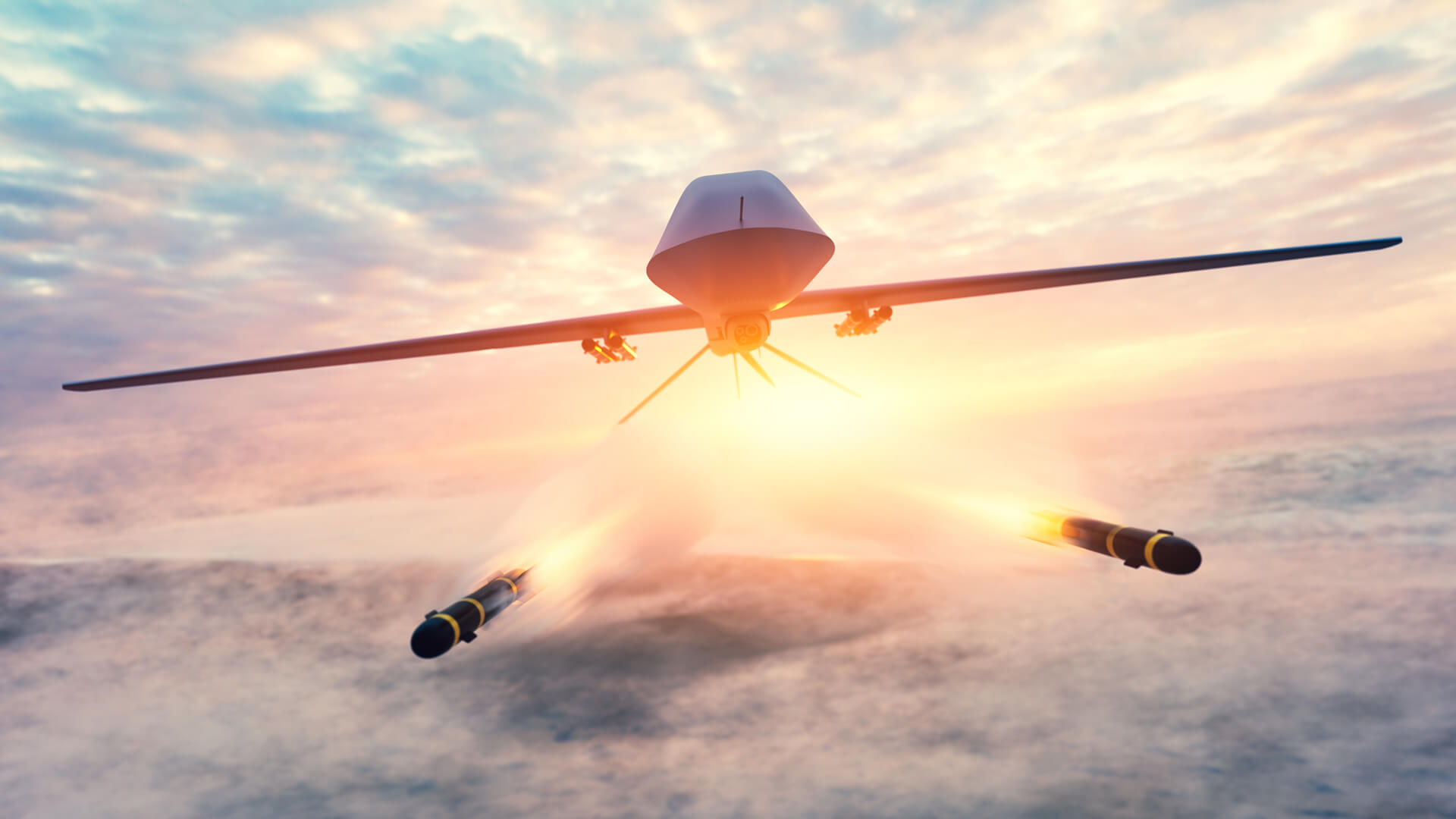
Image of a drone firing missiles

Over the weekend, Ukraine expanded its attacks on Russian energy infrastructure to include facilities tied to the Caspian Pipeline Consortium (CPC), as well as the shadow fleet of tankers that Russia uses to bypass Western sanctions. All told, roughly 2.5 million barrels a day of Russian and Kazakh oil exports are now in mortal danger.

The Baltic Sea is the next-best route for the shadow fleet, and if any European powers decide to help Ukraine…that could be shut down quickly as well. That would leave the Pacific (out of Vladivostok) as the only viable route for the shadow fleet.

Sure, the world is currently in an oil oversupply, but if both the Black AND Baltic routes went down, the global system would be pushed to the limit.

Transcript

Hey. Coming to you from Colorado. We got snow. Finally. A couple things happened over the last few days and the Thanksgiving holidays. We’re going to start with Ukraine. All energy related. So, the Ukrainians obviously have been using heavier weapons and, bigger drones and rocket drones and naval drones to attack Russian energy assets across the length and width of all of western Russia. 

They’ve now done a couple of things that are not necessarily unprecedented, but added together are going to really challenge what’s going on in global energy markets. The first is the port of Novorossiysk. Now Novosibirsk is a major naval base and has been a major Russian loading facility for crude for some time. And over the weekend, the Ukrainians hit it again with some naval drones. 

But most notably, they hit something called a loading booey, which is exactly what it sounds like. It’s an offshore Bui that a tanker comes in, docks with, and then loads up with crude. But this time the, Bui doesn’t belong to the Russian government. It belongs to a group called the CPC, the Caspian Pipeline Consortium, which is a consortium of international companies that operates the Tengiz super field on the northeastern coast of the Caspian Sea. 

Tengiz Chevron was the original company that founded. This dates back to the Soviet periods. It was the first real foreign direct investment by Western companies, in the former Soviet Union. And eventually, Chevron became the functional operator, along with some Kazakh and some Russian companies. Anyway, CPC is responsible for about 75 to 80% of the total exports of Kazakh oil. 

But because the pipeline has to go through Russia, because the Russians were just dicks when all of this was being negotiated, the Russians throw a lot of crude in the pipeline as well, and sometimes even crowd out Kazakh crude. So the Ukrainians see it as a viable target. So, Tengiz, is a big deal. The CPC consortium is a big deal, but overseas is really where it’s at, because that’s not just an export point for Kazakh crude, but a lot of Russian crude as well. 

Now it’s under regular direct attack as specifically CPC, aspects. So you’re talking about, just from CPC, roughly 1.4 million barrels a day is under a degree of threat, and then another million barrels a day of purely Russian crude. So if the Ukrainians can keep this up and it is kind of the next target in the crosshairs, that is a significant reduction in potential flows. 

That’s part one. Part two is the Ukrainians deliberately, again, using naval drones, went after a pair of shadow fleet vessels in the Black Sea that were coming in from Istanbul. They were empty at the time, which is probably the only reason that the Europeans haven’t screamed bloody murder, because if you actually had an oil spill in the Black Sea, all of it has to flow through downtown Istanbul on the way to the Mediterranean. 

It would be a mess. But we now have the Ukrainians actively, deliberately targeting the shadow fleet, which basically means that the between targeting overseas on the front end in the Shadow fleet, on the back end, the entire Black Sea is now a no go zone, for the Shadow fleet tankers and for Russian oil experts in general. 

And we’re going to lose somewhere between 2 and 3 million barrels a day of flow just from that. That is a big deal in of of itself. But it also brings up the next stage of this Russian shadow fleet. Tankers only depart from three locations near, Saint Petersburg, on the Baltic, near and over a sea on the black, andnear Vladivostok, on the, the Pacific coast. 

One of those is now functionally shut off. The next one to go is going to be the Baltic. And the question will be whether the Ukrainians do that themselves. It is further away it would be harder to do, or whether the Europeans assist, because every tanker that flows out of the Saint Petersburg region has to go through EU and NATO members Estonia, Latvia, Lithuania, Finland, Sweden, Poland and Denmark, as well as Norway and Germany. 

So, you know, if there’s any one of those countries that decides to assist the Ukrainians in any meaningful way, whether it’s time on target information, intelligence, information targeting, going after themselves, allowing the Ukrainians to fly through the airspace or dock at their ports, whatever it happens to be, then you’re talking about roughly two thirds to three quarters of Russian oil exports from a pre war point of view being gone. 

And we’re now in a position where we can talk about what that’s going to look like in just a few months. Now the global energy supply is at the moment in oversupply. So losing one to maybe even 3 million barrels a day of Russian crude is not something that’s going to break anybody. Except for Russia, of course. 

But once you start talking about the black and the Baltic being off at the same time, we’re already up against the upper limit there of how much flow you could probably remove from global systems without everybody, like having a CS. You combine that with more and more targeting of the shadow fleet itself so that there just aren’t tankers available. 

And then we get into some really interesting positions. It looks like calendar year 2026 is going to start off with a bang, and I am here for it.

China’s New Ship: Enter the Sichuan

LHD Sichuan Class Aircraft Carrier | Photo by Wikimedia Commons: https://en.wikipedia.org/wiki/Type_076_landing_helicopter_dock#/media/File:LHD_Sichuan.jpg

Let’s talk about the Sichuan. And no, we’re not ordering take-out. We’re talking about China’s newest Type 076 amphibious assault ship, similar to the US Wasp-class.

Through the lens of global power projection, this falls short; it doesn’t have the range or speed necessary. However, this ship isn’t meant to cover too much ground. It’s designed for near-coast, amphibious assaults within 1500 miles of China. You know what lies within that range? The first island chain.

If all China wants to do is bully its smaller neighbors, the Sichuan will do the job fine. Should it find itself caught in any real naval combat…I hope they have enough lifejackets.

Transcript

Hey all Peter Zeihan here coming to you from Colorado. Today, we are going to talk about the newest vessel in the Chinese navy, the Sichuan. It is a 40,000 45,000 ton carrier. And it’s roughly analogous to the US wasp class, which are the core of our expeditionary units. And so, of course, the core questions is, is this something from a military point of view, the United States should worry about, big problem that the Chinese have always had with all of their vessels is while they have teeth and they’ve got decent missiles, and those missiles have reasonable ranges. 

The ships themselves don’t have long legs, and the Sichuan is no exception, that it’s probably maximum emergency speed is less than 25 knots, probably closer to 20, which means that even three days in full sprint, it’s just not going to go that far. From the point of view of global power projection. It does have a wet deck. 

It is designed to help with amphibious landings. But it just doesn’t have the range or the speed to compete with anything that the United States has put in the water, really since the 1960s. It does that mean that it’s a pointless platform? Not what I’m saying. What I’m saying is it’s no good for power projection at distance. 

It can’t operate in the Central Pacific, much less the Indian Ocean or anywhere else. But that is not the strategic environment that the Chinese would like to contest with it. They’re concerned primarily about the first island chain, which are at the line of archipelago, starting with from Japan in the north to Taiwan to Philippines, to Indonesia and Singapore. 

That is the line of islands that basically block in the Chinese and mean that the Chinese are ever, ever, ever going to be a, naval superpower. They need to have a navy that’s at least five times as powerful as the US Navy, because they have to get through all these potential interdiction points or conquer them first before they can even pretend to be a global naval power. 

And the situation in that context is a step in that direction. Basically, if you’re within 1000 1500 miles of the coast, the system can operate, and it’s designed for insidious assaults. So you use those against islands in particular, most notably Taiwan and the Philippines. And for that specific task, this is probably the right ship for their needs. But if it comes up against any capable naval power and I’m talking here, Australia, Japan and the United States, of course, in this theater, want to look elsewhere. 

You’re looking at the United Kingdom or France or Turkey. This ship will go down fast. It’s not quick. It doesn’t have long legs. It requires a massive logistical train, which is something that the Chinese aren’t very good at at all. So in a hot war against a country that actually has a meaningful navy, this thing is almost useless. 

The Chinese aren’t planning on using it against somebody who has a navy. They’re planning on using it to intimidate the weaker powers immediately in the periphery. For that, it’s okay for anything else. It’s a reef.

Ukraine’s New Drone Killer: The Octopus

Photo of a military drone

Yet another innovation has come from the Ukraine War. We’re talking drone-on-drone warfare. Codename: Octopus.

The Octopus is designed to hunt and destroy other drones. Ukraine sees three main aerial threats from Russia: missiles, glide bombs, and Shahed drones. The last on that list is the real nuisance for Ukraine; these cheap, pre-programmed drones are volleyed into Ukraine by the thousand. Enter the Octopus.

The Octopus drone is a cheap, mobile hunter drone that intercepts the Shahed drones mid-flight. If this new tech proves to be effective, it could change the way drone warfare operates, and a new phase of the drone arms race would commence.

Transcript

Hey, all. Peter Zeihan here. Coming to you from Colorado. Today we’re going to talk about a new drone technology that you’re probably going to be hearing about pretty soon. It’s called the octopus. It’s a Ukrainian design and unique among drones to this point. It is designed to hunt drones. So the situation that Ukrainians are in is they basically face three kinds of threats from the Russians when it comes to the air. 

Threat number one, our missiles, primarily a mix of hypersonic and, ballistic, which can be and are intercepted by a variety of air defense systems up to and including the American Patriots. And it’s not that the Russians don’t know how to make good missiles or anything, but what we’ve seen in the last three years that even their best ones, even their supersonic ones, can be taken down by a patriot. 

Pretty reliably. It doesn’t mean that anyone should rest on their laurels or anything, but that threat has, to a degree, been addressed. The second category are something called glide bombs, and they’re just what they sound like. A Russian jet drops the bomb from over here. It is. Has a thin kid on it, and the bomb glides upwards of 15 to 20 miles. 

So that you can’t really intercept. It doesn’t have a lot of guidance, if any, on it. So from the thins, and the only way you can stop those is to push back the envelope where the jets are dropping from. In this, the Ukrainians have had some degree of success. They’ve got their own jets. 

They’re getting F-16s from a number of NATO countries. And every once in a while, they regularly put their patriots on the front line to shoot down jets that come too close. It’s not a perfect system, but it is something that’s been partially addressed. And the third and most problematic category are cheap mass produced drones, specifically the Shaheds that are, designed in Iran used to all be made in Iran and shipped to Russia. 

Now the Russians have their own assembly and manufacturing capacity. Out further east, away from the front. Shahed cost somewhere between. Oh, based on the model and the number that they’re making $20,000 to $90,000, for the most part. And the problem with your Shahed. Well, pros and cons. First, the cons of the Shahed, there’s so cheap that they really don’t have much for optics or sensors or compute power at all. 

So what happens is the Russians program in specific coordinates, and the head flies there and crashes at those coordinates. So, whenever you see that the Russians have hit a school or a mall or a hospital or an apartment complex, they actually programed in those specific coordinates. So every strike is a war crime. Second, because they’re so cheap, the Russians can field at first a few than a few dozen, and now more recently, a few hundred. 

And the understanding is that by the end of this year, the Russians will be producing these things in the, the thousands of units per month. And so very soon, the Ukrainians are going to be dealing with thousands of these at a time in a single assault. And defending against that is almost impossible with all the technologies we have right now. 

Because if you’re going to use an anti-missile missile that is expensive, each missile costs significantly more than the Shahed does, and you now need hundreds, if not thousands of them. And most countries don’t even have that kind of volume in their arsenal. So that leaves you with things like machine guns. And while there are a couple things out there that work great, their point defense, and they can’t roam and hunt. 

So what the Ukrainians are doing with the octopus drones is an attempt to build a small, cheap drone that can go out as the Shaheds are on their way in and basically work through the way through formation. Pick them off one at a time. And the idea is that the Shaheds, cost more than the defensive drones, than the octopus. 

That’s the theory will work. We’ll see. The Ukrainians, because this is an operational weapons system, are not providing really much of anything in terms of details as to the range and the cost and all that good stuff, but a few things that we know have to be true. Number one, unlike the Shaheds, which don’t have really a processing memory at all, you’re going to need both a GPU and a microprocessor in the octopus drones, because they have to be able to perceive and hunt. 

You need the GPU for decision making capacity. You need the microcontroller for low latency. Those two chips together probably cost, call it 40 bucks for the GPU and probably another 20 bucks for the microprocessor. These are things that Shaheds don’t have because they’re stupid drones. 

That’s still not very expensive. And if you’re talking about something with a relatively limited reach that can hunt something that’s flying 120 miles an hour, it’s theoretically possible that you could drop the cost of that to below the Shahed, because a Shahed has to fly several hundred miles before it gets to its target. 

So a very different profile for the type of weapon system it has. Also, if you have a decent yes, we’re talking 14 nanometer don’t get crazy decent ish GPU along with some, some Dram memory, for probably Nand memory. Ukraines. Yeah, let’s go with Nand difference. Dram is faster and can store more, but it loses all of its memory when it’s powered down. 

Nand doesn’t store nearly as much. It’s not nearly as quick, but you can leave it in the on the shelf for a couple of months, and nothing’s going to happen to the data on it anyway. You throw a bunch of these against a fleet of incoming  Shahed, and if they miss the first one, they just go for the second one and so on.  

Anyway, according to the Ukrainians, these are already in mass production, producing over a thousand units, a month. And if this is true and if it works, it is going to change the face of warfare in the drone age. At this point, drones fall into two categories. Those that can self target kind of like the  Shahed. 

But because GPUs are very subject to vibration and heat and moisture, they’re not hard. You can’t get a good GPU in it to do any real decision making. Just basically they get to the point of arrival. They look around the first thing that they see that hits the target set, they go for that. That’s it. That’s as smart as it gets. 

Or you have a live link back to a controller or a data center, and someone else is making the decision and, programing it step by step. In the first one, you don’t get a lot of accuracy. In the second one, you might get great accuracy, but it’s very easy to jam. So to this point, aside from shooting it down, the only defenses that the Ukrainians or anyone has is to be really good with jammers. And the Ukrainian jammers are now the best in the world, far better than American jammers. 

If you can have a counter drone drone that’s inexpensive, that changes the math. Again, provides an entirely new type of defense that countries can use to protect against drone onslaughts, and probably changes the math of these cheap, mass produced drones that the Russians and the Iranians are doing. 

Anyway. We’re going to know before the end of the year whether this thing works or not. And then we start an entirely new sort of drone race with a fundamentally new type of defense.