Panama Boots China from the Canal

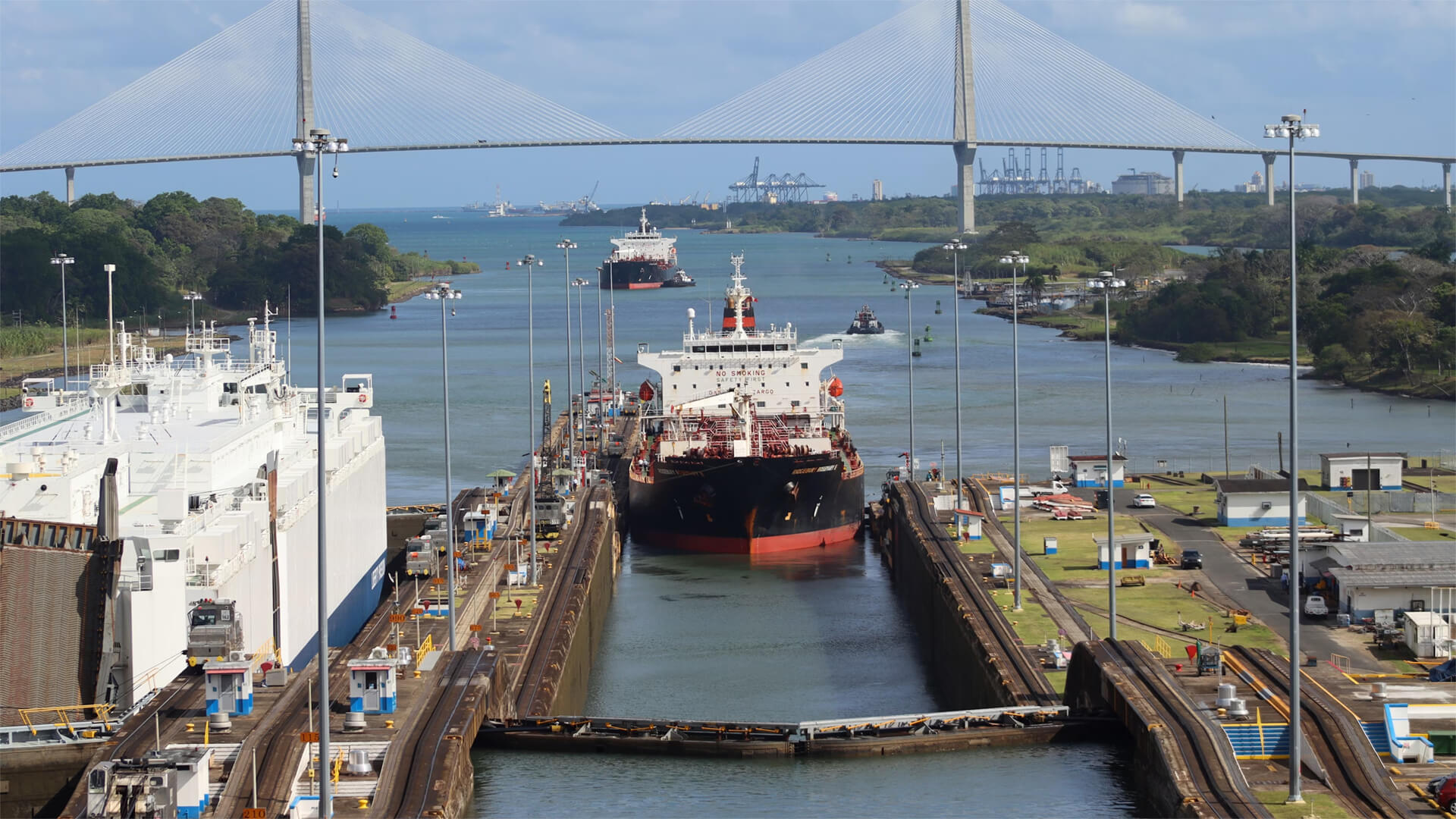
Photo of a ship in the panama canal

Panama has taken control of the port facilities previously run by a Chinese company after the courts ruled the original contracts were secured through bribes. This move reaffirms U.S.–Panama relations, as a U.S. ally is now operating the ports.

While the ports weren’t a direct military threat, they are strategically significant. So, removing China from the equation makes Chinese activity in the region that much more difficult, especially as the U.S. Navy begins to step away from its role as global protector of the sea lanes.

This move is a great example of using legal pressure to reshape outcomes and affirm U.S. soft power. While I’m not sure this administration can replicate this success elsewhere, let’s see how well the U.S. can sustain and expand power across Latin America.

Transcript

Hey all, Peter Zeihan here. Coming to you from Colorado, today is the 24th of February. And the news is that the government of Panama has just formally taken control of the series of ports that used to be run and owned by the Chinese. This is something that has been an irritant in US Panamanian relations for a few years. Basically. The Chinese subsidize their shipping system and then go into places to buy up infrastructure. 

There are a lot of people in America who feel this is a security risk. It really isn’t. These facilities didn’t have the ability to hold military assets of any meaningful size, but that doesn’t mean that they’re not strategic anyway, because the Panama Canal is the primary connection between the Pacific and the Atlantic, and unless you’re in a really big ship, that’s just how you’re going to get from A to B, and for cargo that is destined from the East Asian Rim to the U.S. East Coast, pretty much all users Panama. 

Anyway, the Trump administration threw a bit of a fit, shortly after it came into office, started legal proceedings within Panama. Last month, the Panamanian courts basically ruled that the Chinese bribed their way into getting the contract, which is absolutely true. And so therefore, it was void. Today was the day that the Panamanian government took formal control of the facilities from the Chinese. 

The Chinese a bitch and moan and bitch and moan. But at the end of the day, under legal consequences, they were shepherded out of the building and it is now under the operational control temporarily of a company called Maersk, which is based in Denmark, which is a country that, despite all of the problems between the United States and Denmark over the Greenland issue, remains an ally. 

Fun, fun, fun. 

Anyway, the question is, what’s next? China’s entire position in the Western Hemisphere is based on one very stupid assumption that the United States will actively keep the seas safe for Chinese shipping and allow the Chinese to establish whatever economic footprint they want in the Western Hemisphere. This is dum dum dum dum dum, but it has always been the basis of all Chinese decision making. 

The idea that we don’t have a global navy, we just have a lot of little ships that are close. The Americans have a global navy, so it’s up to the Americans and their global navy to allow us to penetrate into the wider world. It’s always a stretch, and this is a great example of showing how it all falls apart with nothing more than a little bit of legal action. 

The question now is, what is the United States going to do with this? It’s not that Panama isn’t important on its own, but it’s only one piece of a broader environment in the overall region. We’ve seen a military side of the strategy now with Venezuela. We’re seeing basically a functional boycott in places like Cuba. But really, if you want to talk about American power projection in the Western Hemisphere, the Panama example is far more important because it’s one thing to knock off a government you don’t care about, it’s another to get a government to do it for you to reshape its policies in your direction simply because you asked. 

Soft power is not dead, apparently. Not even in the Trump administration. But the presence of Maersk tells you that it’s always easier to do it if you’re not a dick about it. So future topics are absolutely going to be Mexico centric, because that’s where the real money is in the American economic relationship in the hemisphere. But we’re probably also going to see things in Ecuador, Peru, Argentina and Brazil, all of which have, for various reasons, butted up to the Chinese in order to get the cash. 

Whereas the United States is the strategic guarantor of everything that matters in the region. We’re not there yet. The big problem that we’re facing is that when the Trump administration came in, it gutted the National Security Agency or, excuse me, the National Security Council. It gutted the State Department. And it winnowed down a lot of things in the Defense Department as well. 

And then the Commerce Department was not simply winnowed down. It was then given the task of enforcing the most complicated tariff regime in human history. We’ve now had over 6000 tariff changes in the last year. And a lot of this is going to be based on diplomacy and economic activity. And there aren’t a lot of personnel in the United States to craft, to advise, and then ultimately to carry out the policy. 

So strong start on Panama. The question is, how deep can this go and how much can it be replicated? As for the Chinese, their options are kind of limited here. The screenplay screenplay screamed, but at the end of the day, it was a domestic court ruling. And if the Chinese pressure a Latin American country to go against its own courts because it might be pro-American or anti-Chinese, you know, that doesn’t exactly resonate in Brasilia and Buenos Aires and the rest, it doesn’t mean that the U.S. policy couldn’t use a lot of work and a bit of a facelift when it came to diplomacy. 

But hey, when you’ve got the tools, you’ve got the tools.

Critical Water Levels in the Panama Canal & MedShare Match

Thank you to everyone who has already contributed to MedShare International over the past two weeks!

We have some exciting news to share today. In addition to the $80,000 match we’ve already announced, another subscriber has added $10,000 more to the pot –  making the total match a $90,000 donation. So, any donation you make is essentially getting doubled!

If you haven’t donated already, we encourage you to click the link below and help us (and our other gracious donors) hit our match goals.

Water levels in the Panama Canal are critically low, and the effects could be devastating. The canal represents one of the world’s most important trade routes and plays an essential role in the US trade system.

Ship traffic in the canal has already fallen by 25%, and throughput capacity has been cut in half. This drought will only worsen as an intense El Niño winter rolls through.

Although there aren’t any great short-term solutions, this should be the kick in the ass the US needs to reshore processing. Outside of mitigating future disruptions, everyone using the Panama Canal will just have to ride this wave (or use longer and more expensive routes).

Here at Zeihan On Geopolitics we select a single charity to sponsor. We have two criteria:

First, we look across the world and use our skill sets to identify where the needs are most acute. Second, we look for an institution with preexisting networks for both materials gathering and aid distribution. That way we know every cent of our donation is not simply going directly to where help is needed most, but our donations serve as a force multiplier for a system already in existence. Then we give what we can.

Today, our chosen charity is a group called Medshare, which provides emergency medical services to communities in need, with a very heavy emphasis on locations facing acute crises. Medshare operates right in the thick of it. Until future notice, every cent we earn from every book we sell in every format through every retailer is going to Medshare’s Ukraine fund.

And then there’s you.

Our newsletters and videologues are not only free, they will always be free. We also will never share your contact information with anyone. All we ask is that if you find one of our releases in any way useful, that you make a donation to Medshare. Over one third of Ukraine’s pre-war population has either been forced from their homes, kidnapped and shipped to Russia, or is trying to survive in occupied lands. This is our way to help who we can. Please, join us.

Transcript

Hey everybody. Peter Zeihan here coming to you from above Denver. And today’s topic is the Panama Canal and the impact on trade now that it’s largely shut down or partially shut down.

It hasn’t rained really in Panama in several months. They are in the middle of the most intense El Nino on record. And unlike most canals that, you know, go up and over and therefore have on continental lands and so have lots and lots of water to draw from, Panama is going for ocean to ocean, sea level to sea level.

It has to go up a few hundred feet. And which means that aside from the first and the last lock, which touch the ocean, everything else is water that comes from the sky and it is an isthmus. And so there’s not a very large water catchment issue. And that catchment issue also has to supply all of the water for the city of Panama, which is about home to three quarters of the population of the country.

So you get a prolonged drought event like they’re in the middle of and things are bad. If anything, it’s worse than it sounds because we’re supposed to be in the middle of the wet season right now. The dry season starts in about 6 to 8 weeks. And so they know that this is going to get worse before it gets better.

And they’re probably going to have to wait till the next wet season, which isn’t going to start until the beginning of next summer. In the meantime, the number of ships transiting the canal has already dropped by over a quarter. And of the ones that are still going through, they’ve had to reduce their draft by about a quarter, which means that the amount of weight that they can carry is reduced by about 40%.

So the bigger ships aren’t going in at all. The smaller ships are carrying less, and it adds up to very, very roughly a 50% reduction in the throughput capacity of the canal. Now, for the United States, it’s kind of a big deal. This is the piece of international infrastructure that we use by far the most. Even more than that big bridge over the Great Lakes going to Canada, about 6% of global trade transits the canal.

Most of that trade is from the United States. Very heavy in the commodities space, energy and especially foodstuffs going from the Mississippi in the East Coast into Panama and then across the Pacific. The alternate route is a few thousand miles longer. It crosses the Atlantic into the Mediterranean, through Suez, around India, and then up to East Asia. A much more expensive route takes a couple of weeks of extra.

It’s not the best solution even once you consider the extra cost. Keep in mind that really it all it takes is one Filipino crew on a container ship throwing a party at the wrong time in the middle of a canal and a ship can get stuck. And then that shuts down, too. There’s not a lot that anyone can do here.

Building up the alternative infrastructure to ensure a backup water supply would require a few billion dollars in several years, and you would still have to wait for it terrain to fill up those reserve reservoirs. So really, all we can do here is wait. About the only thing that I could suggest, and this is something that I think it’s high time we do anyway, is for the United States to massively expand its production footprint in the processing of the raw commodities that it exports.

Not only would you then have a much denser, high value ratio to wait in bulk for the things that you export, but there’d be a lot more economic activity generated within the continental United States as well before you even get to the export component. Anyway, that’s my $0.02. That’s all I got for day. Everyone, take care.