A Reckoning for Pakistan

On Duty Pakistan Air Force Wing Commander

The recent deadly clashes along the Pakistan-Afghanistan border have less to do with current events, and more to do with the fractured ethnic and political foundations of the countries. So, let’s look at the mounting instability threatening Pakistan’s internal cohesion.

Remember that the turmoil facing Pakistan is a broader trend. As globalization unravels, countries that rely upon foreign funding or have entanglements with outside powers will face a painful reckoning like this one.

Transcript

Hey, all Peter Zeihan here. Coming to you from Colorado. Windy day today. Sorry about the sound quality. If it’s not great. Anyway, today we’re going to talk about what’s going on in Pakistan. We’ve had a number of clashes that have killed quite a few people on the border between Afghanistan and Pakistan. And to understand what’s going on, we need to look at the wider South Asian region to understand kind of the origins of this and how it’s likely to unfold. 

So, step one. Once upon a time, there was a people called the Punjabi who lived along the banks of the Ganges River in the Indus River and in a low saddle, a fertile land in between. But at one point an invading horde came through and converted half. Well, less than half some of the Punjabis religion, and so the majority, along with the Ganges, remained Hindu, and the minority over on the Indus became Muslim. 

And that subtle and in-between kind of got split down the middle. Time went by and eventually the Brits came, as they tend to and conquered the area as they tend to, and loaded everybody into the same political, unit, because that’s what the Brits do. They won. The British Empire fell apart after World War two, and independent India now had to deal with the consequences of these different religious groups being under the same roof. 

We almost had a Civil war, and it was solved with the territory of the force known locally as partition, in which independent Pakistan emerged from the old British Raj of India, giving birth to the two states that we now know today, more or less. Basically, the best way to think about it is that the Indians and the Pakistanis, especially the Punjabis, are all part of one family. 

And as we all know, family arguments are the worst. I can already hear my Indian and Pakistani friends like, no, we’re not family. But you know, it’s like saying American. So we’re all family. Democrats and Republicans are all family. And so of course, we argue the loudest with the people we know the best. Anyway. 

In independent India and smaller post partition, India, the Hindu Punjabis are far and away the largest ethnic group. And so while it is still a multi-ethnic state with different religions and different ethnicities, the Punjabi Hindus have pretty much always been large and in charge. And I don’t mean to suggest that it’s perfect. From time to time. 

Somebody from one of the minorities kills a prime minister. So it’s not a perfect setup, but for the most part, India has managed since partition with a surprising grace and has managed to keep their democracy mostly intact, which is quite an achievement in my opinion. Hasn’t gone that way in Pakistan because in Pakistan, well, the Muslim Punjabis of Pakistan are the most powerful group and the most numerous group. 

They’re not a majority. There’s somewhere between 40 and 50% of the population. And so they think that they should be in charge all the time, but they lack the numbers to achieve the sort of regular electoral victory that, the Punjabis and India can generate. So you get these bursts where they try democracy for a bit, and then it gets a little too rowdy with all the minorities. 

You get a military coup because the military is pretty much controlled by the Muslim Punjabis. And so you have this in and out, and it’s one of the many reasons why Pakistan is much less stable and has not grown economically nearly as much as India since partition. All right. Here’s the backdrop. Now, within Pakistan. 

we have a different problem because it’s a plurality, 40 to 45, 50% of the population. It’s also geographically concentrated. You’ve got sins in the south, you’ve got Baluch. She’s out west. And most importantly for today’s story, you have pushed to or Pashtuns, that are in the northwest part of Pakistan, in the rugged area up against the border with Afghanistan. 

Now, some of you may remember push to. As part of the Afghan story and you’re remembering correctly because about a generation after partition, the Soviets invaded Afghanistan. And the push to of Pakistan made common cause with the push to of Afghanistan and fought alongside American support, the Soviets in Afghanistan. 

And for those of you who want to come across a really good historical documentary of how that broke down, I would point you towards Rambo three. Anyhow, a few years later, the Soviets were gone and the Americans decided it was their turn to be in Afghanistan. And once again, the pashtu of Afghanistan, popularized by the group known as the Taliban and the past. 

Who of Pakistan, who had their own group called the Pakistani Taliban really creative. They’re made common arms against the Americans. They did a quite a good job of it, in part because America’s supply lines into Afghanistan just go through Pakistan. They went through the push to part of Pakistan. Real logistical nightmare. I’m going to cut until we get out of the wind. 

Where was I before? The women are up to. I can’t stand. So, less than a generation after the Soviets got kicked out, the Americans went in, tried to reshape it to their whims. And once again, the push to on the Pakistani border came to the aid of the brethren on the Afghan side. And by the way, the, pashtu on the Afghan side, a lot of people know them as the Taliban and the Pashtu on the Pakistani side. 

A lot of people know those folks as the Pakistani Taliban. You can see how they get along so well. Anyway, eventually they were successful for a number of reasons, a number of ways, with a lot of contact and history and baggage getting the Americans to leave, too. So during this entire process, going all the way back to partition, the Punjabi Muslims of central Pakistan, you know, the powerbrokers, the people who control the military have always tried to use the Pashtun as a lever to extend their influence beyond their own borders, not just against the Soviets and the Americans. 

It’s an ongoing strategy. But the thing is, is, unlike the Democrats or Republicans, these guys are not family. These are different ethnic groups with different interests who see the world through different lenses. And the primary difference is that the pashtu, see themselves as divided by an artificial border, whereas the Punjabis of Pakistan see themselves as large and in charge, and their brethren on the other side of the Indian border have their own state. 

So it’s a different sort of clash. 

Well, what’s happening here is what you would expect to happen when you have deliberately militarized and agitated one of your minorities for use in a war on the other side of an international boundary. When that war ends, the people stay radicalized and armed. And so we’re now in a situation where the pashtu of Pakistan and the pashtu of Afghanistan are cooperating against what they see as a colonizing force, which is at this time, instead of being the Soviets or the Americans, it’s the Pashtu Pakistanis own code nationals within Pakistan. 

And if they had their way, we would be seeing another partition here with Pakistan being split now, is that going to happen? Who knows what can happen in history, especially history that hasn’t been written yet? And the Punjabis certainly aren’t going to go down quietly. But what we’re seeing now is the built in tension of the Pakistani state, finally being laid bare for all to see because the colonial wars, at least for the moment, are now over. 

Does this matter beyond Pakistan and Afghanistan in the short term? Not really, but in the long term, you need to consider a couple of things. Number one, we are moving into a globalized world where the rationale for states is going to evolve and the economic models are going to change and trade patterns are going to mutate drastically, which means that every nation state in the world, every government in the world, is going to have to recalibrate and re justify or change the circumstances of the social contract by which their population infuses with their state. 

In Pakistan, that’s probably gonna be pretty rough. And we’re seeing the early stages of that right now. But that doesn’t mean that’s the only place that’s going to happen. Any place where the economic, social and political order are based on broader international conditions. You’re going to see this sort of shift. And I would expect it to be most dramatic in places that really benefited from the old system. 

I put Germany at the top of that list. Iran might be up there two, moving forward, we should expect to see a lot more Pakistans than we do India’s places that are more consolidated. Keep in mind that India never bet its economy on globalization. It was, if anything, on the Soviet side. And so it doesn’t have nearly as far to fall when globalization goes away, whereas Pakistan has basically been paid by someone, most recently, the Americans, to exist in its current form in order to succeed in a war in a different territory that’s over Pakistan now has to figure it out on its own. 

And not all Pakistanis are of the same mind as to how that should go.
Saudi Arabia and Pakistan Sign A Mutual Defense Treaty

Shaking Hands after Political Negotiation | Photo licensed by Envato Elements

Saudi Arabia and Pakistan signed a mutual defense treaty last week. And no, you’re not the only one thinking, “Hmmm, why would two countries with mismatched security concerns enter into a defense pact?”

The idea that Pakistan would ever launch a nuclear strike on Saudi Arabia’s behalf is far-fetched to say the least. However, buying some influence with a nuclear power and keeping a clear path to acquiring a nuclear weapon from the Pakistanis (should that need ever arise) isn’t the worst idea for the Saudis.

This pact is the first of its kind, breaking from post-WWII norms of only US-led “all for one” alliances. With the US pulling back on its security commitments, more of these pacts are likely to follow. This means we’re entering a period more reminiscent of pre-WWI commitments and alliances, and that should scare the s*** out of everybody.

Transcript

Hey, all. Peter Zeihan here. Coming to you from Colorado. Today we’re going to discuss something that happened on the 17th of September. The Saudi Arabians signed a mutual defense treaty with Pakistan. Now, these two countries do not border one another. And the countries that they consider their number one foes. In the case of Saudi Arabia, it’s Iran. 

In the case of Pakistan, it’s India. Don’t line up. But they have basically tried to convince everybody that if somebody threatened Saudi Arabia that the Pakistanis will nuke them. Well, that would be interesting. A couple things to keep in mind here. Number one, in many ways, Saudi Arabia subsidizes the existence of Pakistan. They provide them with debt relief. 

They provide them with below market prices, oil supplies, most people, myself included, has said that, to some degree, this is to ensure that at the end of the day, if Saudi Arabia really needs a nuclear weapon, that the Pakistanis will be open to the conversation of just selling them one. I don’t think that logic has changed, but the idea that Pakistan will just nukes someone on Saudi Arabia’s behalf. 

That fits with the arrogance of Saudi society, especially the ruling House of Saud, probably does not match reality. Second thing to keep in mind is the relatively unprecedented nature of this. If you remember your history, you go back to World War One. Cross linking alliances of mutual defense were kind of the norm. And if somebody attacked country A and country, he had a alliance with country B, country B would then attack the attacker. 

And that led to World War One being a lot nastier than it needed to be, because a lot of these countries had alliances with one another that they didn’t tell anyone about. So when the defense classes were activated, it was kind of a surprise to everybody. Italy definitely fell into that category since then, people take alliances a lot more seriously. 

Number one, World War one sucked. No one had a good time. And number two, we are now in the nuclear age. So an attack on one on this attack on all has a lot more consequences. So in the world since 1945, when the Second World War ended, no countries have initiated or participated in any sort of all for one, one for all alliance, unless it was initiated by and headed by the United States, which remains the only country in the world that really has large scale global deployment capability. 

Saudi Arabia can barely deploy within its own country, and Pakistan. Everything is obviously on the eastern side of the country, facing down India. Neither of them could get troops to the other in a situation where there was real shooting. So the idea that the first meaningful mutual defense pact with a nuclear angle is between two countries with non-overlapping security concerns. 

I don’t find that very serious. And if nukes were not involved, I wouldn’t even bother talking about it. But nukes are involved, and the United States is getting out of the mutual security business. So places especially like Saudi Arabia that have money suddenly are looking for some alternatives, especially since just a few days ago, the Israelis launched missiles over Saudi Arabia to strike a different Arab country. 

Gutter balling to that here. So you know what that is all about. So we should expect to see more and more things like this. And I’m not saying that any particular one of them is serious. What I’m saying is everyone is experiencing it with things that are new and that under normal circumstances, would just be tossed out out of hand. 

We’re not in that world anymore, and we need to think a lot more about like, what things were like in World War one, when you might have a security deal that you don’t tell anyone about because behind the scenes it gives you some chits. It’s a very different system and one where wars will happen a lot more.

Did Trump Just Wreck US-India Relations?

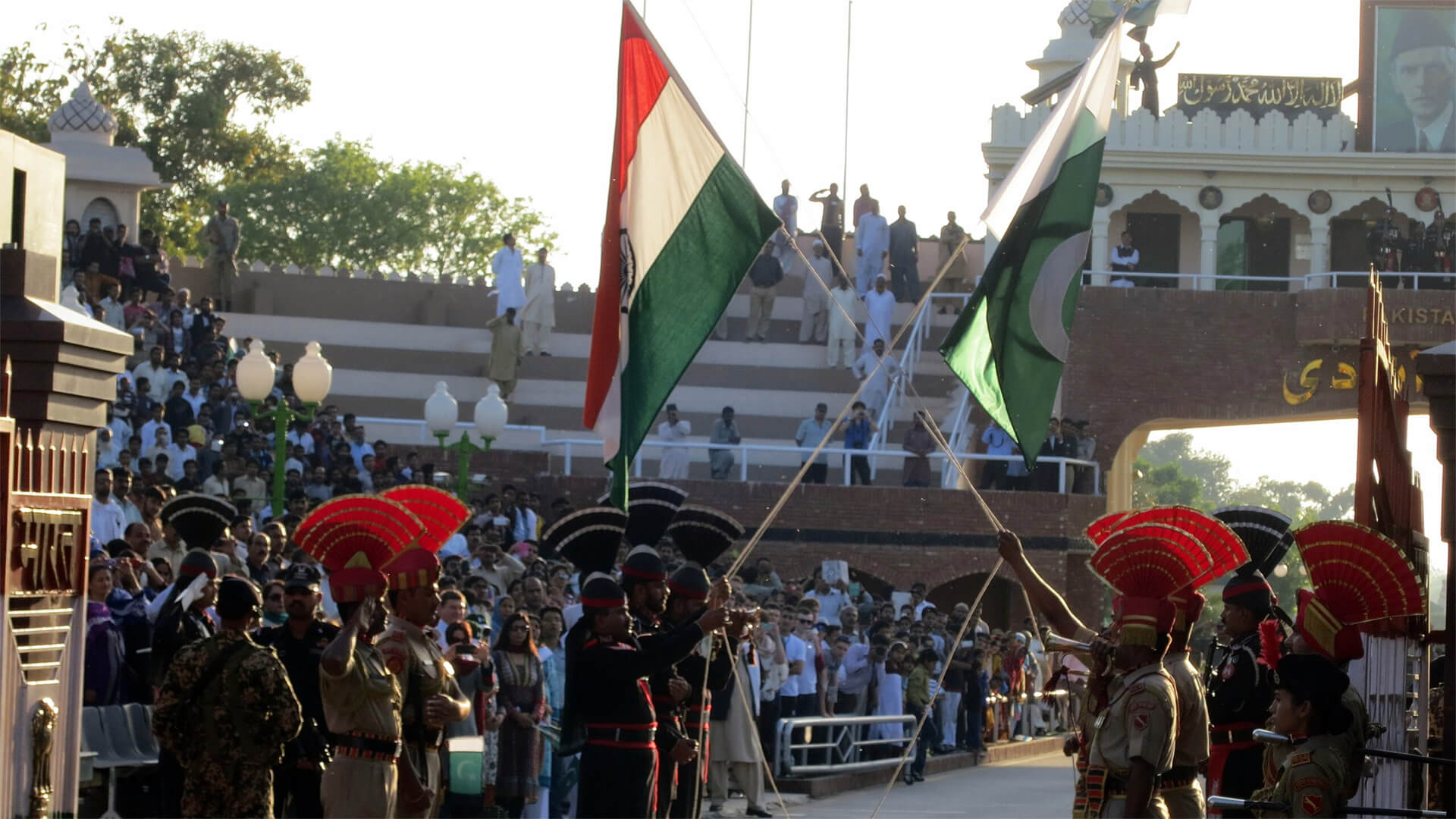
The Attari–Wagah border ceremony at the border crossing

With tensions rising in India and Pakistan, it was only a matter of time before Trump had to step in and put his foot in his mouth. Basically, what happened is the Trump administration announced a ceasefire and peace talks between India and Pakistan…seemingly without consulting either side.

The tit-for-tat military exchanges between India and Pakistan were bound to end in peace talks anyways, but having a third-party (i.e., the US) step in, goes against everything in the “how to engage with India” handbook. And given the extreme disparity between India and Pakistan’s demographic and economic situations, external mediation undermines the Indian position. So, feelings were hurt.

And when feelings get hurt, relations and policies will suffer. That means US-India relations are at their lowest point in decades, and all those years of developing a closer relationship with India went up in smoke.

Transcript

Hello, Peter Zeihan here. Coming to you from Canyonlands National Park. And today we’re going to talk about India and Pakistan and how it intersects with what the Trump administration has recently done. Specifically, India and Pakistan recently had a near war exchange. Some Pakistani militants who may or may not have been loosely affiliated with the very weak Pakistani government, launched an attack inside Indian territory in Kashmir and killed a lot of people, and took their time about it. 

It showcase the general security incompetence of the Indian government. So the Indian government felt that it had to respond. And it hit some targets in Pakistan, some of which were military. And then we got tit for tat back and forth attacks that were just gradually escalating, hitting more and more sensitive issues. Until such time as we got peace talks, brokered by the Trump administration. 

Now, Trump being Trump, he made peace talks all about him. And he announced that there was now a ceasefire without really consulting either the Pakistanis or the Indians. I made it very clear in the situation to come that all three parties would be involved in the talks, blah, blah, blah, blah, blah. Nothing that sounds too incendiary unless you know anything about India. 

The Indians have had the firm position for over a half a century now that any negotiations between Pakistan and India should be that negotiations between Pakistan and India, with no third party involved at all. And so the very involvement of the Americans was something that New Delhi saw as an insult. And the reason is pretty straightforward. 

India has a population that’s roughly nine times the size of Pakistan, an economy that’s closer to 12 times the size of Pakistan. And that’s probably being overly favorable to the Pakistanis. So in any real negotiations on anything, the Indians feel that they should hold all the cards because they do hold almost all of the cards. And if you bring in a third party, they’re going to tilt towards some degree of equality between India and Pakistan, which India rejects on principle. 

And that’s exactly what has gone down. And so we now have arguably the worst relationship between India and the United States that we have seen in the last 30 years. Now, that might seem grossly overexaggerated, but think back to what we’ve been doing for the last 30 years. In the aftermath of the September 11th, 2001 attacks, the United States found itself needing to be involved in a ground war in a landlocked country. 

And the United States is a naval power. So we found ourselves doing things that we don’t like to do in places we don’t like to do them, and we had to rely on countries for transit. And Pakistan was the most important of those. During the Cold War, it was okay to side with Pakistan against India because India was relatively pro-Soviet. 

But in the post-Cold War environment, we found ourselves dealing with a jihadist government that was fighting a jihadist insurgency in order to transport gear through jihadist territory, to get to other jihadist territory to fight different jihadis. It was a pain in the ass, and we had to do it for 20 years. And at every step of the way, we found ourselves at odds with the government in Islamabad as Pakistani militants were attacking every aspect of the American operation, oftentimes in league or at least informed by the Pakistani government. 

We hated every single second of it. And so, as the United States has gradually removed itself from Afghanistan over the last 15 years now, we’ve been bit by bit by bit, edging towards a better relationship with the country that we would rather have the relationship with. Not Islamist Pakistan, not weak Pakistan, not militant Pakistan, but a democracy in India that has a lot more shoreline and is a much more logical partner for us long term, and holding off China and protecting sea routes and making a partner with the country of the future that has a much bigger market. 

Or that’s how it was until this week. Basically all of that work has now been unwound, because we took the one thing that the Indians cared about and basically took a big steaming dump on it. So this is something that the Trump administration would have known if they had talked to people in the CIA or the NSC or, the State Department. 

But all of those people have been fired. And so we basically now have a new foreign policy that has partnered with the wrong side and the partner that we have been trying to get away from since 2002. Blehhh.