Colombia Avoids War with the U.S.

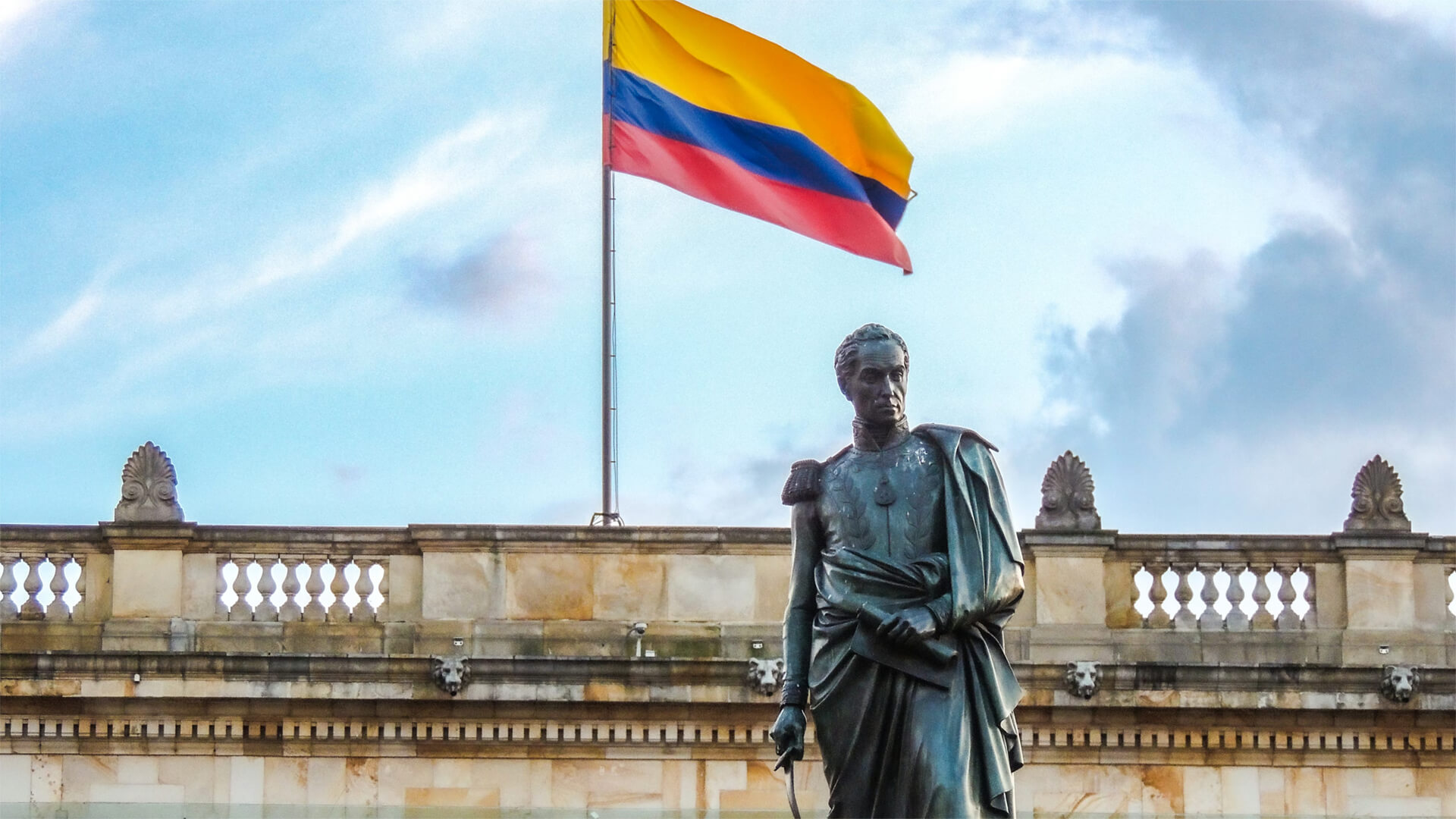
the statue of Simón Bolívar standing before Colombia’s National Capitol, with the flag waving

Colombia looked like it was in the hot seat following Maduro’s capture, but tensions seemed to have eased following a call between Trump and President Gustavo Petro.

Colombia has been America’s most reliable partner in Latin America for decades, thanks to shared security interests. So, it’s looking likely that cooperation between the countries will continue.

With the civil war wrapping up and a free trade agreement in place, Colombia is poised to integrate more deeply into the North American economy moving forward. As long as they can resolve the drug violence and infrastructure issues.

Transcript

Hey everybody. Peter Zeihan here. Coming to you from a snow day in Colorado. It is the 8th of January, and the news looks like the United States is not going to invade Colombia, so. Hooray! In the aftermath of the United States moving into Caracas with special forces and snagging Venezuelan President Nicolas Maduro, the Trump administration, Donald Trump himself. 

Rubio, who is the secretary of state, Hegseth, who is the secretary of defense, and several others all started opining openly about what the next steps would be with topics like Cuba coming up. And the president specifically brought up Colombia. Now Colombia’s President Petro and Trump, they, well, they just absolutely loathe one another. They’re both populists, just one from the left and one from the right. 

And Trump has on multiple occasions accused Petro of being a drug lord, which, of course, is ridiculous. But, you know, we have a nonstandard president here and they have an non standard president there. But yesterday, apparently the two of them had a direct phone call for about an hour and it was all smiles. And it ended with Trump actually inviting Petro to the white House to discuss issues of mutual concern. 

And you usually don’t do that for someone you actually hate. Is there room for a deal, to put it in Trump’s parlance? Of course. Colombia has been the country in the Western Hemisphere that the United States has gotten along the best with for the last 60 years. And that’s for a mix of reasons. So let’s start with the, strategic, then go down to the economic. 

So strategically, it abuts Panama. It separates the Caribbean basin in the Atlantic from the Pacific. And as such, any sort of power based in Colombia has the opportunity of mucking around in both basins, just like the United States does. Because of the cocaine situation, the United States has worked with government after government, after government in Bogota to try to contain cocaine situation and tamp it down. 

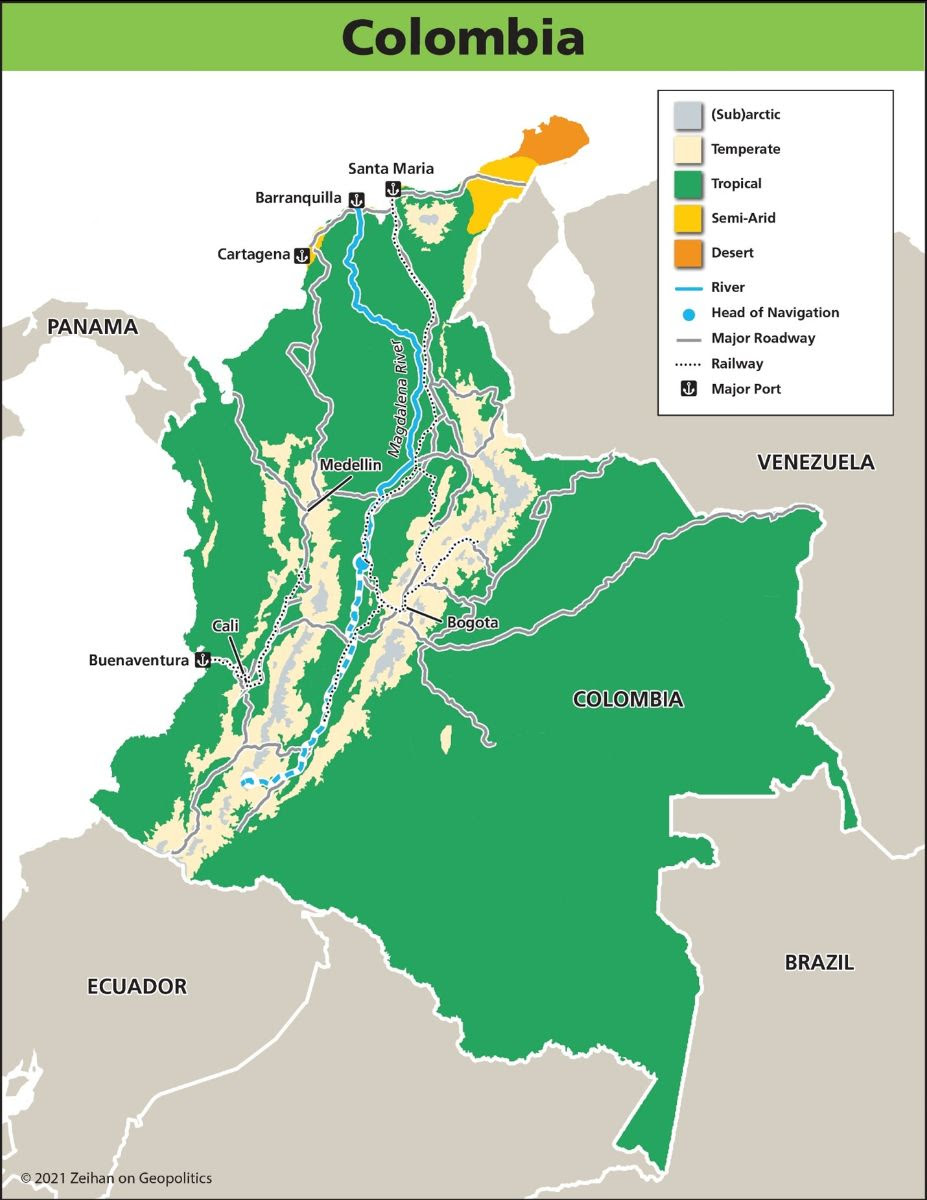
The folks in Bogota have been thrilled for this because they don’t much care for the cocaine either. The problem is it’s smuggling issue. You see, Colombia is not like a normal country. It doesn’t have a large chunk of flat land that the Colombians are from. Everyone lives on the sides of mountains, so they can be high enough to be out of the tropics, but not so high. 

They’re up in the tundra. When this makes infrastructure very difficult, makes national unification rather difficult. And it means that if you’re in an area that has the climate to grow cocaine like Colombia has, you’re always going to have an undercurrent of rebellion. That rebellion has traditionally identified itself as more leftist or even communist. And so you’ve got cocaine, communists, basically, that have been running around the country since the 1950s. 

And then their primary market is the United States. So Bogota doesn’t like those people. The United States doesn’t like those people. And there’s always been that degree of alignment. Also, because Colombia has lived in a degree of civil war for the bulk of the last three quarters of a century, the population is significantly more conservative on security issues than anyone else in Latin America, because the rest of Latin America hasn’t seen a real war in over a century. 

These are people who understand that guns are sometimes necessary. As a result, they are the odd man out throughout Latin America, where you generally get more pendulum like activities in their politics, swinging between the extreme right and the extreme left. Not in a social sense, like the way we think of it here in the United States. But in a land sense, people who own the land versus those who don’t. 

That pulse is not nearly as strong in Colombia as it is everywhere else. And as a rule, until very recently, it’s been the center right, that has ruled the country. And so, again, tends to get along better with the United States more recently economically. 

As part of a reward, a couple of administrations go under. George W Bush, I believe, decades long cooperation with the United States was rewarded with a free trade agreement. And the Colombians, in bits and pieces, are working on operationalizing that agreement. The reason it’s been so slow is because there was a civil war, and it really only ended about a decade ago. And the country is really in the process now, today of defining what it wants to be in the future. But the fact that the hard work on the negotiations has already been done, and there’s already a free trade agreement in place, bodes very, very well. 

The issue, for both sides and the opportunity is Mexico. Mexico has become so successful over the last 30 years because of NAFTA that it’s moved up the value added scale to the point that the Mexico of today needs a low cost manufacturing partner that looks a lot like Mexico in 1990. And that’s exactly where Colombia is. 

So you’ve got a country with an above average education level and worker quality, for their income level, who now also has a trade deal with the United States. And basically we’re probably going to see if relations don’t blow up in the next decade. Is Colombia being formally or informally folded into the North American trading bloc, which is something that would benefit everybody hugely. 

Are there obstacles? Of course. But if we get the politics right, the obstacles are primarily geographic. Like I said, most of the population of Colombia lives on the sides of mountains. That means building road and rail infrastructure is difficult. But a couple things to keep in mind. One of the few navigable rivers in the Southern hemisphere is actually the Magdalena, which cuts right through the middle of that V. 

So if Colombians can snake down to that river, they have an easy access to it. And they can ship things out to the Caribbean basin and to Houston, Miami, beyond. So there’s a lot to work with. And as the Civil War is now over and we’re entering a new phase of drug interdiction, hopefully the Colombians and the Americans can continue to work together. 

The current picture of the cocaine situation is undoubtedly a little ugly. The issue is that during the Civil War, the government couldn’t fight everybody. So a lot of militias formed up that were loosely allied with the national government, while Fark, that’s that’s leftist communist druggie thing when a different direction and tried to basically run an independent state. Eventually fark was disabled, disarmed, and is no longer really a factor. 

But then those right wing paramilitaries that used to be allied with the government are now basically becoming their own insurgent groups on their own smuggling groups. So it’s ironically allies of Bogota that Bogota once armed, that the United States, once armed, that are now at the core of the drug problem doesn’t mean it can’t be combated, just means it has to be done differently.
Trump and Petro Revive the Colombian Cocaine Industry

Trump just cut off military and economic aid to Columbia, because of…you guessed it…a political clash with President Petro. Bonus points if you guessed that this move would have some adverse effects, like reviving the Colombian cocaine trade.

Colombia’s geography is divided between the fertile lowlands (ideal for coca cultivation) and the populated highlands. Naturally, a divide between the two formed; that fueled a civil war, until the US stepped in to help defeat the militias and fund new programs to replace coca, with coffee, flowers, and cocoa.

President Petro—a former M-19 guerrilla member turned political malcontent—has been alienating allies and as US support fades, these once successful programs will collapse. Leaving coca as one of the few alternatives available to these farmers. And it just so happens that the US is likely to see a shift away from fentanyl and back to more traditional drugs…like cocaine.

Transcript

Hey all, Peter Zeihan here. Coming to you from Madison, Wisconsin. And I thought this would be a great backdrop to talk about cocaine. For those of you who have been following the increasing drama that we’re having in American foreign relations with Latin America, Colombia is the new country that is in the Trump administration’s crosshairs. Specifically the president of Colombia. 

Petro and Trump have had a personal and professional falling out, and the United States is now withdrawing military support as well as economic aid. And I think it’s good to put this into context so you can see what’s coming. The reason that two thirds of the world’s cocaine comes from Colombia is really straightforward. It’s got the climate for it. 

Colombia is basically a series of lowland tropical zones, either on the Pacific or in the, Amazonian basin, separated by a couple of really high mountain ranges. Now, people not liking it too hot or humid tend to live in the middle of those ranges. So below the tundra line, but above the tropic line at high elevations, not too hot. 

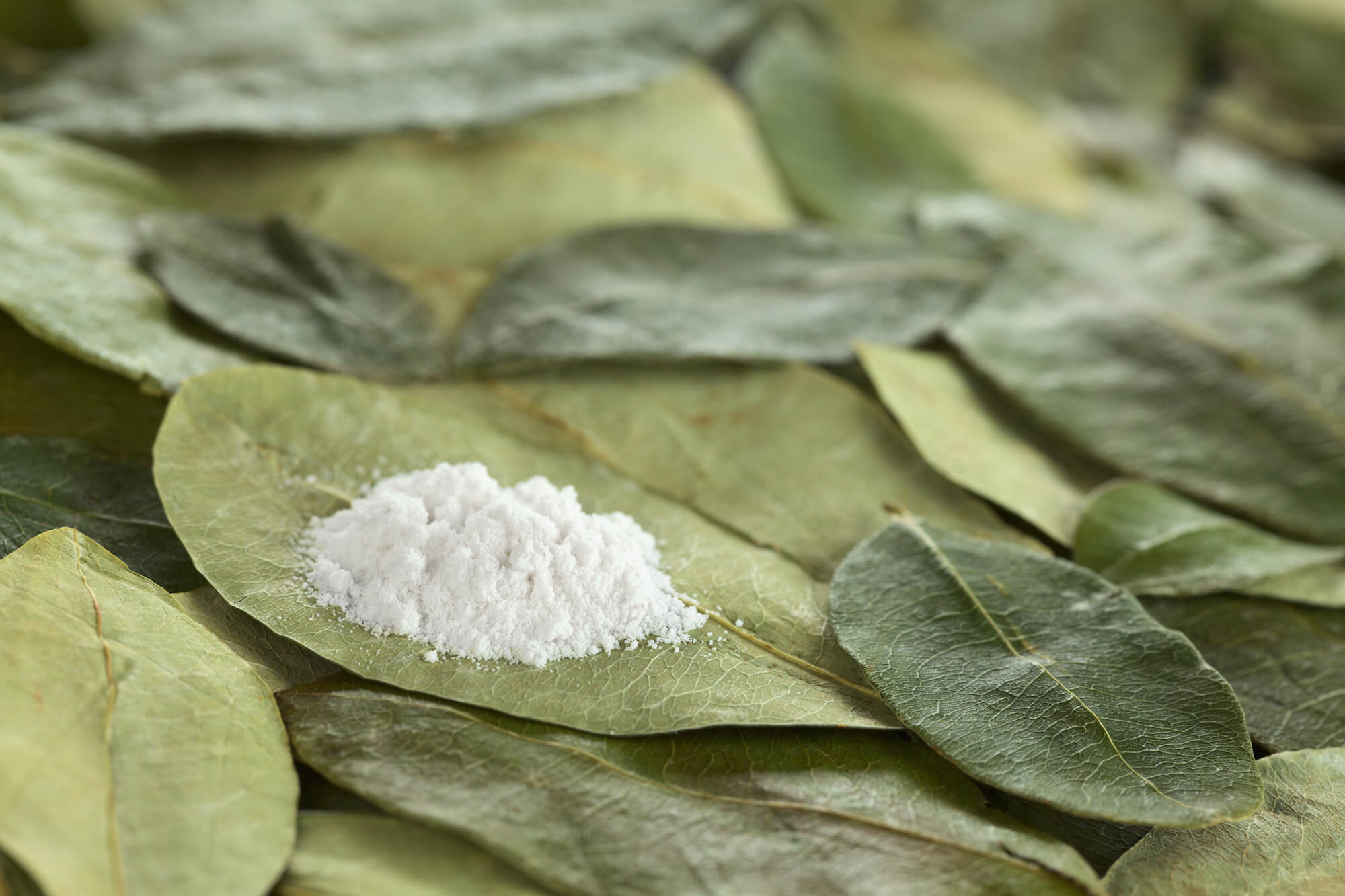
That way the heat gets cut. The humidity gets cut. Cocaine doesn’t like it there. Cocaine doesn’t like frost. It likes to be lower down more in the foothills between like 1000ft. Maybe 7000ft. It likes a lot of sun 12 hours, a sunny day would be great. It likes a lot of humidity, but it doesn’t like a lot of wet. 

So growing on the sides of mountains where there’s a degree of fertility, further down is what it’s after. And once warmth, but not too much heat. What humidity, but not too much wet. Never never, never once cold. Well, if you put an illicit narcotic with a preferred geography in one part of a country, and you put the people with a preferred climate in geography in a different part of the country, what you get is a parallel economic system, one based on smuggling and drug production and one based on more normal things. 

So it’s a perfect recipe for a civil war. And basically, starting about a century ago, we got one in Colombia, eventually the lowlands, the Midlands, where the cocaine could grow, developed an illicit economy that was based on narcotics smuggling, whereas the uplands where most of the Colombians actually live, where most of the mineral economic activity was, when a different direction and these two zones clash and in time, eventually ideology played a part with international leftism being more powerful in the coca producing regions. 

And more laissez faire, semi capitalist, conservatism and normal economic activity playing a higher role in the higher lands. Now, by the time we get to the 2000s, the 80s were behind us. Miami Vice is behind us. United States realizes that cooking’s a real problem, and the 

Colombian cartels were a real national security threat. So the United States engaged in a $30 billion program of partnership with the Colombians to build out their military to basically win the Civil War. And by the time we got to the early 20 tens, that basically how things had played out far had been broken. They had been reduced to a much smaller footprint. And by the time you get to about 2015, they were basically spent as a military and a political force. 

But the cocaine didn’t go away because cocaine had a very different geography than where most Colombians lived. And so you had new forces that rose up to take place, specifically, the more right wing paramilitaries that were formed near and partnered with the government to fight before they all of a sudden moved into the old dark zones and started trafficking the cocaine themselves. 

So as often happens in a war, the victors then split and now we have a different problem. So the US government shifted tact because this was no longer a civil war in the traditional sense. The U.S. started to invest in economic programs in Colombia so that the small farm holders would have an option for their own economic wherewithal that was not dependent on narcotics. 

That’s flowers. That’s coco for chocolate, that’s coffee. Colombia still produces some of the world’s best coffee. Those three things together supplied by American Aid to help with infrastructure and development and planting and financing for farmers, was wildly successful. Until four years ago, we had a split in the Colombian political establishment. You see, until that point, pretty much all of the presidents of Colombia came from that kind of center, right? 

Laissez faire economics, strong national security point of view, because they had been in this civil war for so long. Well, four years ago we got a new guy by the name of Petro, who had a different view and had more political loyalties in some of these more outlying regions that had been somewhat disadvantaged by the civil war in the transition since, Petro is not the greatest politician, he calls himself a center left, as he calls himself, sometimes a socialist. 

A lot of people call him things that are worse, but really, he’s a populist. He believes that the institutions of Colombia are dead set against him and trying to, disrupt his presidency. He’s not a very good leader. He hasn’t selected very good people to be on his cabinet. He thinks that tariffs are a great economic policy to encourage domestic industrial development. 

He’s not really big, big fan of a rule of law, because it’s often on the opposite side of what he wants to do. And he focuses on his personal charisma to drive things through instead of building coalitions to get policies adopted. Does any of this sound familiar? I mean, he’s basically the Colombian version of Trump, just with some different political coloring. 

Anyway, as you might guess, you get two charisma forward non technocrats who, are very larger than life and bombastic with their personal politics. And the two of them have not got a lot. Trump and Petro. So we had a falling out very recently because Trump’s policies a little bit further to the east, have been blowing up ships outside of Venezuela. 

Colombia is a neighbor, Colombia. In Venezuela, they have never really gotten along. It’s not like the rallies or anything like that, but it has gotten a little bit too close to home. And Petro said that the last vessel that got blown up was actually Colombian fishermen. Now, no one on either side has provided any data or proof to their claims or their counterclaims.  

Was it Venezuelan drug smugglers don’t know us, hasn’t provided the US hasn’t provided any information. Was it Colombian fishermen? Don’t know. The Colombian government hasn’t provided any information, but it provided the spark that caused this current blowup between the two countries. And so the Trump administration has ended all military assistance and is in the process of ending all economic assistance. 

Now, whether this is a good or bad idea for foreign relations, I’ll let you decide that for yourself. But I can tell you exactly what it’s going to mean for cocaine without the military assistance. It’s arguable that the Colombian government doesn’t have the ability to impose rule of law through the coca growing regions, and without that economic system, it’s absolutely impossible for farmers in an outlined Highland area like this to economically viably grow things like the basics for chocolate and coffee and flowers. 

And so they’re going to turn back to growing coca to make cocaine. So is Petro a good leader? No. Absolutely not. And we’ve got elections next year. Hopefully he’ll be gone. But in the meantime, the Trump administration established the perfect environment to make sure that cocaine acreage explodes. And now that Americans seem to finally be turning away from fentanyl to more normal drugs, cocaine is there to fill the gap.

The End of the World: Colombia

My fourth book, The End of the World Is Just the Beginning: Mapping the Collapse of Globalization is scheduled for release on June 14. In coming weeks we will be sharing graphics and excerpts, along with info on how to preorder.

Globalization peaked at some point in the 2010s, a decade when global populations were in balance, security for transport was a non-concern, and there was sufficient capital to finance anything and everything. But between COVID and a trio of populist American presidents and the Ukraine War and rapidly aging populations, the world is moving on. Or arguably, it is reverting to something similar to what existed before large-scale global trade.

Such (d)evolutions will benefit and harm any number of countries. The NAFTA trio of Canada, the United States and Mexico will certainly do well. Collectively, the three check all the boxes: limited security concerns, ample energy and refining capacity, massive agricultural surpluses, in-place infrastructure, and the world’s most balanced demographics.

But perhaps the country that will benefit most in relative terms isn’t even in North America: Colombia. Energy self-sufficient? Check. Proximate to the North American market? Check. Broadly educated population? Check. Great labor cost-points? Check.

Colombia’s biggest weakness is its local geography. Most of the population lives on the slopes of its V-shaped mountain ranges. That necessitates significant infrastructure to push goods up and down the elevation bands. Check out the below graphic from the manufacturing chapter of my upcoming book, The End of the World is Just the Beginning.

Normally, such rugged topography would be a deal-killer, and indeed in the globalized era Colombia’s value-added manufacturing sector hasn’t been…great. But the global economic geography is changing. Traditional manufacturing centers like China are imploding, would-be replacements like India are a world unto themselves, while Mexicans have become so skilled that they are no longer competitive at the lower skilled work that once dominated the maquiladoras of the US-Mexican border. To put it bluntly, Mexico now needs a Mexico, and Colombia is by far the best candidate.