U.S. Trade Talks with the UK

US and UK flags with a selective focus on diplomats shaking hands. Licensed by Envato Elements

We haven’t seen any real negotiations over the past year because the Trade Representative’s office wasn’t staffed. All that’s been discussed are tariff levels, not full agreements, and nothing has been ratified. However, the Mother Country is the main exception to this lack of trade talks.

Since Brexit, the UK has been on the hunt for a major export market. With the US as the only viable option, the Americans aren’t afraid to demand regulatory alignment and force the UK out of the European trade orbit. AKA – the UK might not have to switch to the imperial system, but they would have to accept just about everything else.

The UK doesn’t have much leverage either, as going it alone isn’t viable. So, the Brits will have to bunk up with Brussels or Washington, and it’s a painful path forward regardless.

Transcript

Hey, everybody. Peter Zeihan here, coming from a snowy Colorado. Today we’re talking about trade talks. Most of what has been going on this last year is not what I would consider to be an actual trade discussion. If you remember back to April of 2025, Donald Trump announced tariffs on really everybody and then said he was starting trade talks with all of them, 200 different countries at the same time. 

But at the same time, the US Trade Representative’s office, which is the office that handles trade talks, was never staffed out. So from the point of view of how we negotiated every trade deal to this point, no real talks had begun. Trump did not personally oversee any of them. He subbed them out to say the Treasury secretary, the Commerce Secretary, who were usually not involved in trade talks. 

And so basically all it was was a negotiation about that specific number that was announced back in April of what the overarching tariff would be, and a couple of side things patched on to it. And at this point, none of those deals have been ratified by anyone. So we really haven’t really started. There is one exception, and that’s the United Kingdom now, the United Kingdom, ever since Brexit, which is almost a decade ago, has been desperate to get some sort of trade relationship with the United States that is more formalized. 

The reason is pretty simple. The demographics are aged. They’re losing consumption based. They need an export market. And they used to have the European Union, but they don’t have it anymore. The question then, is if it’s going to be the United States, because it’s really the only large economy that’s close enough to matter. What does the United States want from the United Kingdom in order to get that? 

And as the Brexiteers have discovered, the United States takes a very hard line in meaningful trade talks, especially if you’re like the United Kingdom and you really don’t have any other options. So the news that has come out in just the last few days is something that the Brits are really cheesed off about, and that the United States is striking an uncompromising position under Donald Trump on regulation. 

And this isn’t new. The Trump administration did this the first time around. The Biden administration held at that position the idea is that if you have regular regulatory unity, you basically achieve market capture, because all of a sudden your country is now measuring everything and regulating everything in the same way as the country you’re trying to partner with. 

And that makes it harder for other countries to have trade deals with you. So this is about pulling the United Kingdom out of the European Alliance of Trading Countries and locking them into the NAFTA system. The Brits are resisting this, particularly around things like food safety, because they realize that once you go down that path, you’re pretty much locked in. 

And the Brits would prefer to keep their options open. But at the end of the day, the Brits are a mid-sized economy trapped between two major blocs, one of which has long range consumption options because it’s the younger population in Mexico and the United States, and one of which doesn’t because the European Union is much further along in the aging process demographically. 

So if there is going to be a meaningful US UK trade deal or a NAFTA UK trade deal, this is part of it. Now there are other things the United States is going to insist on. For example, in aerospace, the United Kingdom is going to have to leave the Airbus family and join Boeing on agriculture. They’re going to have to accept US agricultural exports in volume, which will probably drive most farmers and producers in the United Kingdom out of business. 

On automotive, they’re going to have to go with American emission standards instead of European and so on and on and on and on. And then, of course, on finance. London, just goes away and New York absorbs it all with maybe a little bit for Toronto. So there’s a lot to swallow here. But the United Kingdom has come to this negotiating table with very little on offer. 

I mean, yes, it’s a market of 60 million people. Yes, that is significant. But at the end of the day, the Brits are going to have to bend to either Brussels or Washington and it’s not going to be comfortable. But their alternative is to try to go it alone. And that is something that is just not going to fly.

France Hits the Demographic Point of No Return

A French flag ribbon with an axe on a chopping block

The Americans and Kiwis are the last of the developed countries still holding onto growing populations. France is the most recent victim to have fallen into demographic decline, so let’s see what the future has in store.

France has a sizeable working-age population to help ward off any serious economic strain for two to four decades. Germany, on the other hand, has been in decline for 50 years and is running out of workers, meaning the Germans must reinvent their economic model.

The US isn’t far behind France, though. And China is a whole other topic. The broader issue is that as more and more countries reach the demographic point of no return, the world still hasn’t found a sustainable economic path forward.

Transcript

Hey, all Peter Zeihan here coming to you from a snowy Colorado. Got a fresh inch overnight. Today we’re talking about, demographics, specifically in France. French statistics were released in the last couple of days, indicating that France is the latest country in the world to now have more deaths than births. France has long been the country Europe with the highest birth rate, with the most prone policies. 

And now they have slipped into, population decline as well. This means that every country in the first world, with the exception of the United States and New Zealand, are now in this position where they are in demographic decline. The Germans are among those that are furthest along. They actually hit this point back in 1972 or 1973. 

So short version. This isn’t the end for France, but it is the beginning of the end. Germany’s great example. They’ve been in this situation for about 50 years now, but from the point that you have more deaths than births, you then have to wait for everybody to kind of leak through the system. That literally takes an entire human lifetime. 

In the case of Germany, what this means is for the last 30 years, they really haven’t had many people under age 20. And so most of the economic growth comes from high productivity, workforce and exports. You can only have a consumption led economy if you have a lot of people aged 20 to 50. Those are the people who do most of the spending. 

France still has a lot of those. It’ll be another 20 years before those numbers start to decline. So France, in whatever the world evolves into next, still has at least two, three, four decades. But in the case of the Germans, this next ten year period is when they simply run out of working aged adults they have to invent a new, economic model, for the United States. We’re going to hit that point, where France is today in about five years, is the estimate. We’ve seen smaller and smaller generations for the last, 30 years. And now with the Trump administration turning so gung ho against migration, which is the one thing that can buy you time, we’re looking at probably the United States being a net zero growth population last calendar year. Full statistics aren’t in yet, but, we will hit that more deaths than births, by natural causes, by 2030. And then we will start that decline till now, as again with the German example. That doesn’t mean it the end is nigh. But something to keep in mind is. Whereas the Germans aged out during a time that there was a lot of young people on a global basis, and there was someone to export to the United States, and France will be aging out in a period where that is no longer true, because we already have a large number of developing countries, ranging from Chile to Colombia to oh, Thailand, that have already crossed this Rubicon. And so you can’t export to the world if the world is not young enough and rich enough to buy from you. So while we still do literally have decades left, it’s going to be a more compressed experience. And what happened in, say, Italy or Germany or Korea or Japan? One other note. 

China officially, according to their own statistics, hit this point about five years ago, the statistics aren’t very good. They probably hit it more like 15 years ago. Also, the, Chinese birthrate, just this last calendar year dropped by 17% in one year in a time where there wasn’t an economic crisis. So just because you have more deaths than births doesn’t mean that you’re gone already. 

But it also means that countries age at different paces and the Chinese don’t have nearly as much time. So we really are looking at an economic dissolution in the German situation within a decade, because they’ve been moving this way for a half century, and also with from the Chinese system in this decade, because they are aging so much more quickly. 

All right. That’s it for this one. Talk to you guys later.

Canada’s China Option

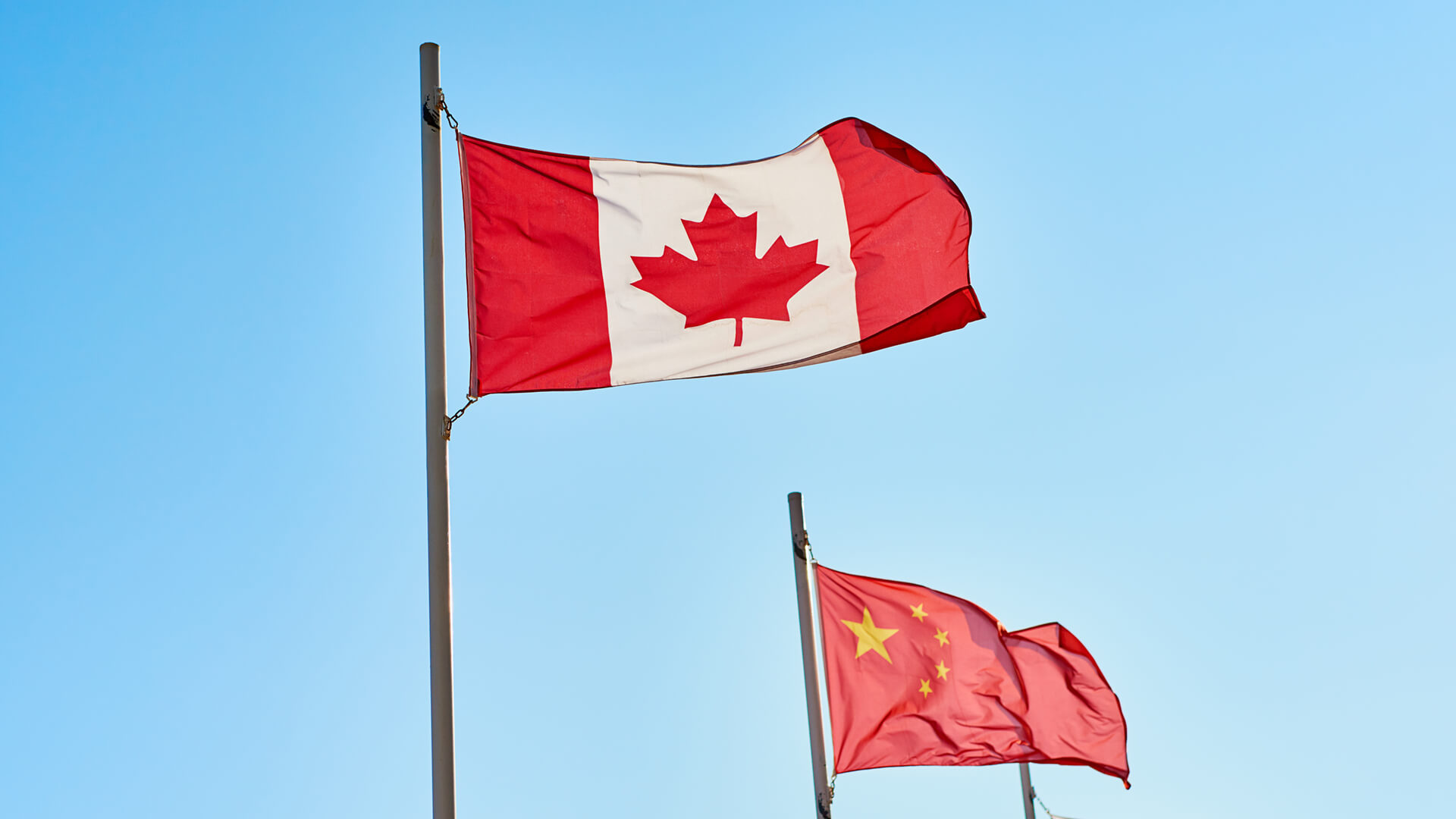
Flags of Canada and China

Canada’s prime minister, Mark Carney, recently visited Beijing. This trip sparked rumors that Canada was ditching the US and buddying up with China instead. Let’s pump the brakes a bit.

On paper, all that came from this meeting was China lifting punitive tariffs on Canadian canola and Canada easing restrictions on Chinese EVs. Canada knows that it can’t replace the US with a distant partner like China, but it could be stacking chips for the upcoming NAFTA renegotiations.

With Trump signaling indifference to NAFTA’s future and possibly favoring bilateral deals instead, it’s smart for the Canadians to have some bargaining chips when the time comes. Especially with how messy these negotiations might be.

Transcript

Hey all. Peter Zeihan here. Coming to you from Colorado. Today we’re talking about our northern neighbors, the Canadians. Prime Minister Kearney recently completed a trip to Beijing. And in the aftermath of the Trump administration, going off the rails a little bit when it comes to trade in the alliance and threatened to invade Greenland, which is a territory of an allied, nation. 

A lot of the talk out there is about Canada finding alternatives, and a lot of people are talking about Kearney’s trip to China. In that light, and they’re not completely off base. But we need to keep a sense of perspective here. While there were lots and lots and lots of documents and memorandums, signed, on everything from agriculture and manufacturing detect IP. 

Really, there are only two takeaways from the entire trip. The first one is that Beijing will stop charging exorbitant, punishing tariffs on Canadian canola exports. Canada is by far the world’s largest exporter of that sort of thing. China has always been the single largest consumer. And so in the past, when Canada has done things like help out the Americans with sanctions regimes or, say, arrest somebody who’s violating Iran sanctions, the Canadians have been punished by Beijing as an arm of the United States. 

So at least that one piece now is undone. Second, if you remember, back during the Biden administration, the entire world put massive tariffs on Chinese electric vehicles because the Chinese were subsidizing their production and then dumping up on the market with the intent of bankrupting everybody else’s, production. That has now been scaled back. The Canadians will allow, instead of having 100% tariff on all Chinese vehicles, will allow about 50,000 in, this coming year, at a much lower tariff rate, something like 6%, and then ramping that over five years to 70,000. 

Not a huge opening, but for the Chinese who have basically have oversupply across the market, getting every little bit out helps and that’s it. And you know, I hate to break it to you, if you’re looking for me to make a mountain out of a molehill here, but the future of Canadian canola and Chinese EVs, when they’re already banned in most countries isn’t what an alliance or an economic relationship is going to turn upon. 

But there is an angle of to this that is, of course, Trump, because we’ve now had a year of all Trump all the time. And it’s really pretty straight forward, this calendar year 2026, the Americans, the Mexicans and the Canadians renegotiate the NAFTA two treaty. If you remember, NAFTA started back in the late 80s, was ratified and implemented in the 90s under Clinton and then was renegotiated under Trump, won. 

Now it’s time for the five year review where everything’s up in the air again and nations are starting to lay out their opening positions. Overall, the NAFTA accords of all variations have been very, very good for the United States and most of the growth we’ve seen in manufacturing over the course of the last 30 years has been because of NAFTA. 

And it integrates Canada, Mexico and the United States into a single manufacturing space, especially for automotive. In fact, you would really not be able to make any vehicles in the United States right now without that integration. Basically, think of Canada as a partner to Michigan and Auto Alley, where parts are going back and forth across the border all the time. 

Anyway, the Trump administration. Let me rephrase that. Donald Trump personally has said that he doesn’t care about the future of NAFTA, although the Canadians, of course, want it. He might just want a bilateral deal with Mexico or a separate bilateral deal with Canada. That is a potential form that this could all take. But the bottom line is that countries are starting to get their chips in order for the talks. 

And you should look at Carney’s trip to China in that light. It’s not that Canada has really any other options for a big trading partner like the United States. There isn’t one all provinces, but two in Canada trade more with the United States than they do with one another. 

And the two exceptions. One of them is Prince Edwards Island, which is basically a retirement community that lives on government handouts from Ottawa and the other one is British Columbia, where its primary trade partner isn’t the rest of Canada. It’s the East Asian rim, and they serve as the import point for everything that flows into the rest of the country. 

So there isn’t an option here for Canada to go anywhere else. It’s the tyranny of geography writ large. But the same is true for the United States. Right now, the United States gets access to the workforce in Canada and the infrastructure in Canada without having to pay for any of it, which is about as good of a deal and a trade deal as you can get. 

I mean, it’s pretty awesome. They pay for all that weird socialism they have up there. We get all the manufacturing benefits. It’s great. But that doesn’t mean that is how the American administration sees it. So Carney is trying to find some things that he can trade away. And at the end of the day, with the Chinese facing demographic mortality, in a way that is historically unprecedented, combined with the general anti-Chinese position of Washington, it makes sense that you get some Chinese chips that you can trade away because you don’t care about them. 

And it’s a reasonable strategy whether it’ll work or not, of course. Depends upon how the negotiations actually go. On both sides of both borders. The big problem we’re going to have here in the United States is that the US Trade Representative Office still hasn’t been staffed out to carry out normal operations, much less the 200 plus trade agreements that the Trump administration is trying to simultaneously negotiate. 

Hopefully, NAFTA will rise to the very top of that to do list when the time comes. But at the moment there is a very real bandwidth problem. All right. That’s it for now. See you next time.

Rolling Back Regulations in the U.S.

A gavel and law book on a desk

Trump’s pledge to roll back regulations isn’t inherently bad, but the way he’s going about it is problematic in just about every way.

Trump’s second term has brought about a new level of bureaucratic hollowing, leaving no capacity to manage regulations already in place. So, we’re left with a backlog of outdated policies, with an admistration who has no intention of enforcing them. Imagine the nightmare this creates for anyone trying to operate under those circumstances.

What we need is a functioning government with experienced staff who can regulate these systems and give clear guidance to those who need it. The bar is low, but the current administration is still trying to play limbo.

Transcript

Hey all, Peter Zeihan here. Coming to you from Colorado. Taking a question from the Patreon page today, specifically about regulation in the United States. Donald Trump says that he’s going to strip out ten words of regulation for every word that gets put in. This is up from his first term when he said the ratio was going to be 5 to 1. 

And will this have a meaningful impact? The person was asking the question, was quite circumspect about this. And he realizes that some regulations are good. So it’s just a question of whether this is a pro or con at large. Overall it’s con, but probably not for the reasons that you’re thinking, the two most regulatory heavy administrations that we have had in modern history are the Biden administration and the Obama administration, and by far the most administrations we’ve ever had are Trump one and Trump two. 

But they’re very different beasts. The Obama administration stacked itself with people with no real world experience. There was only like five years total of people who’ve had a real job. Most of them came from academia and ideologues and think tanks and people who had never actually participated in the real economy. So a lot of their regulatory structures existed because the president hated to take meetings. 

And so he never went to Congress for anything. And so they made up what they thought the ideology would demand and try to force that on corporate America. And needless to say, it made a lot of mess. The Biden administration was kind of the opposite, and that most of the people who were in the administration had real world experience, either as mayors or governors or corporate titans. 

And so while there were still a lot of regulation that went in, it wasn’t nearly as crazy. 

Trump very different beast. In Trump one, the Trump administration, we’re all going to be right back that up. President Trump didn’t think he was going to win in his election with Hillary Clinton. And so when he became president, he tapped the Republican brain trust very heavily in order to build out his cabinet. 

And all the senior positions in the bureaucracy. And in doing so, a lot of people with corporate experience became bureaucrats. And in doing so, when they came across regulations that they knew from personal experience were stupid, they stripped them out or modified them to make it less onerous for the business community. And so, as a rule, the business community was broadly pro-Trump throughout the bulk of his first administration. 

That’s not where we are with Trump. Two, President Trump spent his time out of power during the Biden administration, purging the Republican Party of anyone who might ever come across as knowing anything, because he wanted to make sure that everybody knew he was the smartest person in the room. And the easiest way to do that was to dumb down the room. 

So he comes in to president the second time around. There’s no longer a brain trust and the Republican establishment, for him to tap. And then he goes into the bureaucracy and fire the top 1500 or so people, but doesn’t necessarily replace them. So what we have is this weird dichotomy. And yes, the regulatory frameworks, the the system that builds out new regulations that has been frozen in very, very, very, very, very few new regulations have gone into place under Trump. 

Two, however, these institutions are not staffed out, so they’re also not going through the old regulations and purging them or trimming them or amending them or getting rid of them or whatever it happened to be. So in some ways, we now have the worst both worlds. We have this massive regulatory hangover that dates back to the first Obama term, a lot of stuff that still hasn’t been cleared out. 

At the same time, we now have an administration that isn’t putting any brain power whatsoever into cleaning up that system. So yes, we’re not getting new regulations. And broadly speaking, for the business community, that’s a plus. But then we’ve got this massive overhang of stuff that is outdated or ill conceived, or never went through Congress or never went out for review. 

That is still on the books, and you’re legally required to still follow them. The Trump administration is telling people just don’t follow them then, which puts business in the worst of all positions. They’re legally liable if they violate the corporate codes. But this federal government is saying that they won’t enforce the corporate codes. So we get this rule of law problem. 

At the same time, we have an outdated and overburdened regulatory structure, and corporate America is left in the middle trying to decide which specific legal risk they want to deal with. Not a pretty situation to be in. The solution is for the government to be the government, but the government can’t be the government without people.

The Semiconductor Tariff Nightmare

A semiconductor chip

A poorly designed and destined to backfire tariff has just been announced; this time, the Trump administration has turned its focus to high-end semiconductors.

Putting tariffs on semiconductors is nearly impossible to do cleanly. There are thousands of types, production stages, and end uses. So, the Trump admin thought it would be a good idea to tariff them based on the end use, rather than where they’re made. The only problem is that most importers don’t even know the final use of the chips upon import, creating a legally and financially risky situation for everyone involved.

This tariff will likely freeze access to advanced semiconductors and choke the US tech and manufacturing sectors. There are a few ways around the tariffs, but those offer little relief to existing manufacturers. But hey, let’s just keep trying to jam this square peg into that round hole.rough strong alliances will struggle to survive. And the next generation of kids (however small that cohort might be) will be studying those countries in the history books.

Transcript

Hey everybody. Peter Zeihan here, coming to you from Iowa. Today is the 15th of January, and the Trump administration has at long last announced the first wave of semiconductor tariffs, specifically targeting high end semiconductors. There was always going to be a question as to how this was done and whether it was going to be a disaster. 

It really matters because semiconductors are, for most intents and purposes, a commodity. They come in in thousands of forms and at thousands of different stages of production. There’s over 100,000 steps for high end semiconductor fabs creation. And they can come in as raw chips still attached to the disk. They can come in separated from those disk. 

They can be put into intermediate products like motherboards or charging stations. They can be included into intermediate products. They can be incorporated into final products. And so whatever type of tariff regime you’re going to put in there is obviously going to be full of flaws, even if it’s very, very, very well designed. And commerce was never set up to manage this sort of system, much less, Customs and Border Patrol. 

And that was before we had the personnel purges of last calendar year. So the questions were always, you know, how are you going to do this? Are you going to look like at a car? And the 1500 types of semiconductors that are installed within it have a different tariff rate for each one. Do you tariff the entire car tariff the chips independently? 

You do it based on the intermediate products. Based on where the value added happens. Basically, you could get more paperwork for one tariff on one vehicle than all of the rest of the 30,000 pieces in a car combined. What the Trump administration has done with this round is instead of going by sourcing, which would make a degree of national security sense, even, it would be, logistically almost impossible. 

They’ve decided to go on end use, which is, if anything, even more confusing, because now anyone who is importing these products has to decide what each individual chip is going to be used for. Declare that on the tariff form and the way that Customs and Border Protection enforces the tariff regime is to not check it on the front end, but to randomly check it on the back end and then really bring down a hammer in terms of fines and penalties. 

The problem is if if somebody is important to, say, 10,000 of a specific type of chip, they’re not the ones who are probably going to use the chip. The chip is going to go on and get put into computers or cell phones or pacemakers or whatever it happens to be. And so who is responsible for it? So the person who is doing the importing has to go and gets a customer affidavit and assign them to each individual box, each individual chip that Customs and Border Protection can then go into later a year from now, three years from now, and attempt enforcement. So what we’ve gotten is something that will freeze the use of semiconductors at the high end, because no one is going to know how to do the paperwork on the front end. It’s difficult to come up with something that is going to chill American manufacturing more, because now simply accessing the pieces in the first place is not going to happen cleanly. 

And you could open yourself up to legal liability simply from plugging a piece of typical technology into something that you’re working on, because you’re not the one who did the actual importing, but you’re probably legally liable. So we’re probably going to see a seizing up across not just the tech space, but the advanced manufacturing space in the United States, especially in places like heavy machinery, automotive and aviation, where these chips are used in the thousands in every single vehicle. 

It’s going to be very interesting to see how this goes. The Trump administration says it’s going to do a review after 90 days where if progress has not been made and expanding the supply chain within the United States, then, more tariffs will be coming. One of the many exceptions, because there are a bunch is that if you’re using these chips to expand the construction of a supply chain, you get a pass. 

But if you’re already have a supply chain, you do not. So this is a horribly designed tariff, absolutely the wrong tool for the job. And it’s going to become very obvious as this year rolls on, that it is actually going to poison most of what progress the US has made in its industrialization effort over the last decade.

Good Luck, Texas

Texas cattle in an ice storm

A major cold front is sweeping across America, and I’d like to point out that our neighbors to the North are the ones who sent it down. But some areas are going to feel this more than others.

Texas is exposed due to its isolated power grid. Cold weather strains the system and essentially shuts everything down. This is a shorter storm cycle than the 2021 freeze, and thankfully, Texas has winterized since then, so the fallout shouldn’t be as devastating.

Outages are still possible, but statewide blackouts are less likely than last time.

Transcript

Hey all, Peter Zeihan here. Coming to you from Colorado. As everybody knows, there’s a cold front that’s pushing down from Canada that’s affecting basically the entire Midwest down to Texas and over into the South and the eastern seaboard. 

For those of you who are in Texas, this is for you. You see, the power grid in the eastern part of the United States is interconnected. 

So if you’re east of the Rockies, everybody’s on the same grid, and people can pump power from one zone to another without a problem. Texas, however, is on its own. Texas does not like regulation at the federal level at all, in case you didn’t know. And, sometimes this works for them and sometimes it doesn’t. And this weekend we’re going to find out what it is. 

The issue is, kind of 2 or 3 fold. Number one, if you get ice, ice lands on the power lines. The power lines weigh more. Sometimes they snap. Number two, in times of extreme temperature variation, like a high cold front, people are going to be using a lot more energy than they would normally. 

So there’s a lot more stress on the system in general. And then third and freezing temperatures, natural gas production can be interrupted. A lot of natural gas fields bring up a little bit of water as a side effect and ends up in the pipes. And if the temperature drops enough, that will turn into ice, and eventually they’ll clog and freeze. 

So if you remember to a winter storm we had a few years ago, I think was 2021. The area around Dallas got so bad that the pipelines were frozen solid, and they basically had to deliberately ignore all safety regulations and go out there with blowtorches and heat up the ice so that the energy would flow. This cold front is both better and worse than that one. 

Better in that it is not going to last as long. We’re probably only going to have subfreezing temperatures in Texas for 2 or 3, maybe at most four days. Number two, Texas has made a lot of advances since then in making their system more stable, both at the grid level and at the production level. More pipelines are buried, for example, because if you just put your pipe under six inches of dirt, that insulation is probably going to be enough. 

Not a real crazy thing here. Almost everywhere in the United States that produces petroleum puts them underground. Texas was really unique because it just never really got cold enough for them to care. Now they do. Third, there are three different production regions in Texas, and it’s really going to depend upon what happens with the ice line here. the biggest one around the Dallas Fort Worth area is called the Barnett Shale. It’s almost exclusively natural gas. It is the primary source of energy for most of the region’s natural gas power plants. If we get ice in the Dallas area, but not lots of subfreezing temperatures along it, as long as it stays above, like 2025, we’ll be okay. 

That’ll probably be fine. Further south is Eagle Ford. Now, usually Eagle Ford, because it’s East of San Antonio stays warm enough that there. No, this is an issue. It’s unclear if that’s how it’s going to be this time. Probably they’ll get a lot of ice. Ice is not a big problem for pipelines, because it’s not cold enough to freeze the inside, and it just makes things very uncomfortable. So you could have high traffic incidents in San Antonio. While this is going on. Don’t drive in Texas if there’s ice because oh my God, they don’t know how to drive anything that’s not dry. 

Third one is the Permian that’s out west, Odessa, Midland, getting into New Mexico. That one’s probably going to be fine. 

A quirk of this particular storm is it’s blowing down from Alberta on the east side of the Rockies. And when you get down towards that part of Texas in New Mexico. Yes, you’re still to the east of the Rockies, but the Gulf Stream starts pushing everything further east. So it’s kind of like a hurricane in reverse, if you will. 

So while those areas are expected to be cold, they’re not as expected to get as cold or for as long, which would suggest that the largest oil natural gas producing basin in the country, the Permian Basin, is probably going to be able to maintain operations. So none of this is risk free. We’re probably going to have some sporadic power outages, but between the improvements and the dynamics of this specific storm, it looks like we’re not going to be looking at mass blackout events. 

And that’s a good day.

Lessons From Japan’s Demographic Collapse

A Japanese elderly couple at a crosswalk

Japan has been dealing with long-term population decline for decades, and the latest report on births per woman dropping to 1.15 confirms that. However, there are some lessons we could all learn from Japan.

Japan is no longer the fastest aging society, but it remains the world’s oldest. So, they’re putting in the legwork to buy themselves some time. They’ve shifted production toward allied countries with stronger demographics and built themselves a strong navy, enabling them to project power should the need arise.

But the Japanese aren’t the only people getting older. This is a global issue, and the timing couldn’t be worse. As the world deglobalizes, societies that are unable to adapt and secure trade access through strong alliances will struggle to survive. And the next generation of kids (however small that cohort might be) will be studying those countries in the history books.

Transcript

Hey everybody. Peter Zeihan here. Coming to you from the basement I grew up in. That sounds odd. It makes. It sounds like I was chained to a radiator for 15 years. No, that is not what happened. I just happened to be visiting my parents in Iowa. And I’m coming from the basement because the wind chill outside is zero right now, and that is not going to happen. 

Okay. Today is the 14th of January. And the big news is that Japan has recently released its newest demographic assessment of its country. They do this every year, after the United States. Japan is generally considered to have some of the best statistical capacity for their government in the world. And so I tend to trust their data quite deeply. 

They’re now saying that births per woman is 1.15, and anything under 2.1 suggests that your population is actually falling. And Japan’s is it is the, oldest demographic in humanity right now. But it is no longer, the world’s fastest aging. They’ve made some advances in health care. They’ve extended the ability, of the working age, in order to keep the workforce kind of stable, although it’s only had a mixed results. 

Made a little bit easier for people to have children. But still terminal. Terminal, terminal. But, they have slowed the decline to the point that they are no longer the world’s fastest aging society, and they haven’t been for well over a decade. Countries that are aging significantly faster than Japan include and are not limited to Korea, Taiwan, Singapore, China, China, according to official statistics, has a birth rate that is now lower than Japan’s but unofficial statistics. 

It’s maybe half that, but that’s a different topic for another day. Also some developing countries, Chile and Colombia and Latin America, even though they’ve have a very large young population, the birth rate has fallen off a cliff in the last ten years. In Southeast Asia, places like Thailand are aging faster. And in Europe, Italy, also probably Poland’s pretty close, although it might be neck and neck. 

And Ukraine is near the bottom, mostly because of the war. Anyway, the bottom line is that you can buy a little bit of time, but it’s really hard to turn the ship around once you drop below 2.1 and really no country yet that is slipped below has ever gone back up. So what does this mean? Well, number one, Japan, because it is an archipelago island nation. 

They don’t need to spend the same style, in defense. Not in terms of cost, but in terms of manpower. So if you’re a land power, you need an army. And Japan probably couldn’t field an army right now if it needed to. But it can easily field a navy. So even that might cost a little bit more and certainly more power per soldier or sailor. 

It could they can still have a projection based military system. And in this case, Japan has the second most powerful navy in the world in projection terms, which is about right size to what they need. They might need to do a little bit more as trade breaks down, but they’ve already changed their economic structure to relocate industrial plant into allied countries that have better demographics, like, say, Mexico in the United States or Indonesia and Myanmar. 

That’s issue one. So even though that they’re aging, they’re not aging as fast as a lot of countries around them, and they’ve got some military options that no one else can consider. Second big issue is that the demographic bomb is not limited to the rich world at all. China, by most definitions, remains some version of a developing country. 

And they arguably have by far the lowest birth rate in the world. And that fact that we’re seeing some countries in Southeast Asia and even in Latin America now dropping below half of replacement level, gives you an idea of just how deep this is. In fact, the country in the world that has seen the largest drop in the birth rate in the last 35 years is none other than Yemen. 

They’re still above replacement, but barely. But they’ve gone from eight children to a woman to two children per woman, like 35 years. So this is something that is coming for everyone. The question now, from my point of view, is how this integrates with globalization in general. Because if you start breaking down international supply chains, then some of the things that allowed industrialization to kick in and large portions of the world suddenly become up for grabs. 

In the case of manufacturing, that means if you are participating in a multi-state manufacturing system, all of a sudden that is useless. And so you have an older population that doesn’t consume as much and maybe can’t adapt as quickly, suddenly have to change their industrial base in order to function. Second problem is, of course, agriculture. 

Pesticides come from one place, herbicides from another, farm equipment from another part for farm equipment, typically from yet another. And then there’s three types of fertilizer potassium, nitrogen and phosphorus. Oh, Anyway, oftentimes those come from different places as well. You break down supply chains, and all of a sudden the food supply is a problem. One of the things, one of the hallmarks of globalization is anything can be traded. 

And so you can take countries that pre 1945 couldn’t grow a lot of food and had a limited population or couldn’t access iron ore and so couldn’t industrialize it. Suddenly everyone could get everything. You break down those links, not all goes away. You do that on top of a demographic decay and you get combination of deindustrialization events, the population events, and maybe even civilizational events. 

So, shit’s getting real. We are getting very close to the edge. And not just because of the Trump administration, although the Trump policies are certainly moving things forward, but a country like Japan that has managed to slow the decline right size their military for the options they’re going to need, and that has wide access to the Pacific and can convoy their own trade if they need to. 

They’re going to be fine. So if you get along with Japan and the United States, you have the basis for starting whatever is next. I’m not saying everything is going to be hunky dory. But you’ll live in a security environment that is more favorable and you’ll have an economic access. That means that you’re not going to suffer the worst. And of course, if you don’t get along with those two countries and you happen to be in the Pacific Basin, then, well, students will study you 50 to 100 years from now as a great example of what to never do.

Latin American Militaries Can’t Stop the U.S.

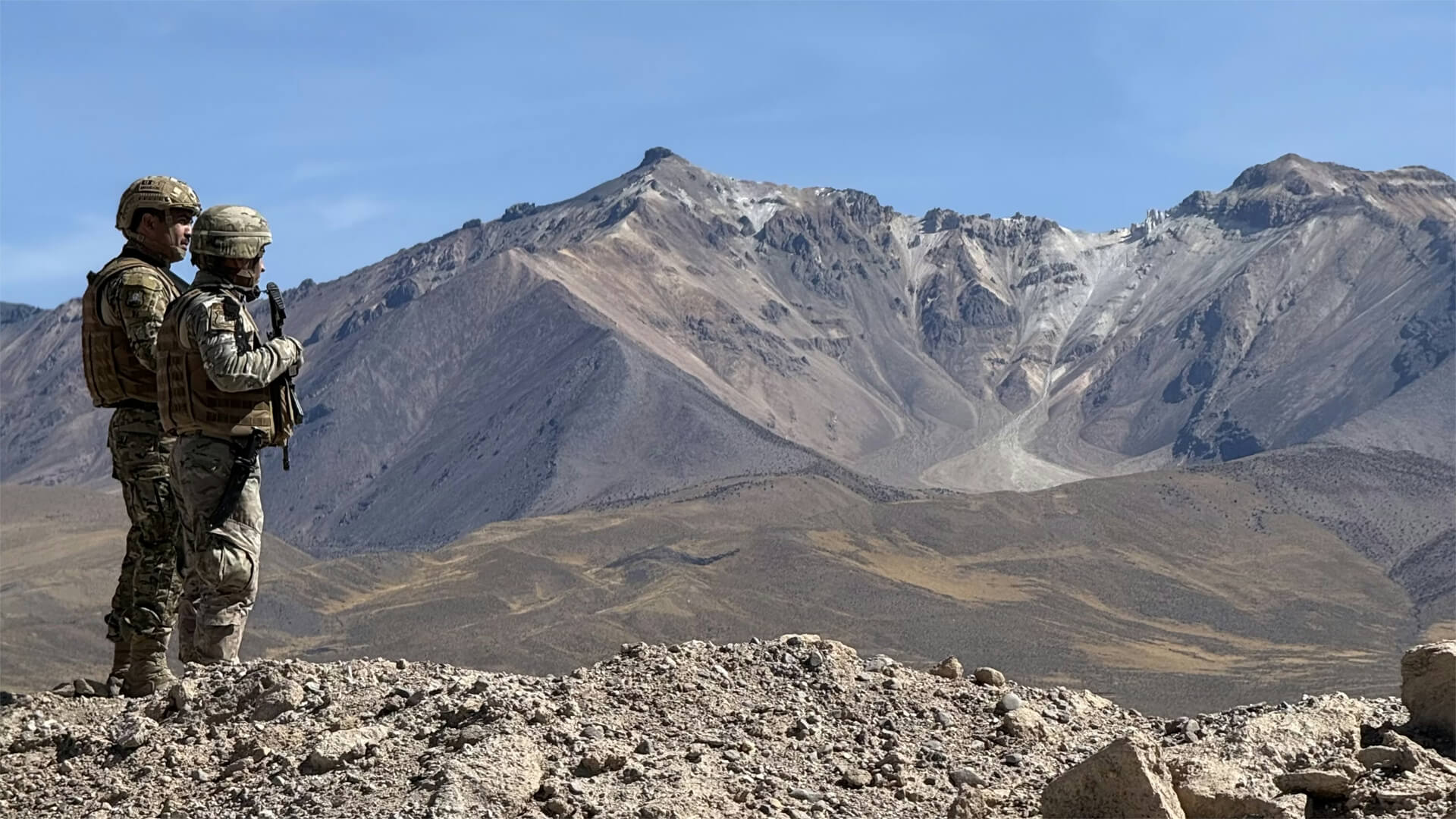
Two Chilean soldiers standing in front of a mountain

Sure, the US could probably overthrow just about any Latin American government with ease, but what happens after that?

Conventional warfare isn’t the issue at hand. The real problem lies in the geographic makeup of Latin America. We’re talking jungles, mountains, and fragmented population centers. Doesn’t take a genius to figure out what evolves from that…paramilitaries, insurgency, and a big pain in the ass for anyone trying to project power.

This has kept LatAm relatively peaceful since it’s hard to fight eachother. However, this also means that when toppling a government, most of the institutional capacity falls with it. So, the US would need a real, solid cleanup plan, or it risks a repeat of Iraq.

We’re heading towards a modern version of dollar diplomacy, where the US uses power to enforce US economic interests in Latin America. This is a messy and morally fraught endeavor that should not be taken lightly.

Transcript

Hey, everybody. Peter Zeihan here. Coming to you from Colorado. We’re going to continue what we talked about yesterday with the shape of military and the reality of deployment and apply it to Latin America. Now, obviously, the United States is far and away the most powerful military force, not just in the world, not just in the hemisphere, but in human history. And a big part of why that is true is because of the deployment capability. The United States has spent the last century building up the logistics that allows it to push troops, ships, and power anywhere in the world. And when you’re talking about places like Venezuela, which are just across the Caribbean, it’s not too hard to get there. 

The problem is not often the governments the United States could probably, if it wanted to, up every Latin American government in a matter of a few weeks. The question is, what happens the next day? 

Latin American militaries have zero deployment capabilities beyond their own shores. Part of this is economic. You takes a strong trade base, technically advanced economy, in order to attract power somewhere else. 

Part of it is a bit of a gap. One of the things we learned from the British Empire is that when you have industrial technologies and no one else does, you can literally bring a gun to a knife fight and rule the world for a century or two until the technology finally catches up. And the Anglos, which include the Americans, have held that kind of technological advance over the rest of the world for the better part of the last 300 years at this point. 

And it’s only in the last 50 years that the rest of the world has kind of caught up. And that is the rise of Russia and China and the rest. Of course, there’s also a digital divide. When you throw in revolution in military affairs, which the United States really started kicking in in the late 80s and really manifested for the first time on the battlefield in Desert Storm back in 1991, and then eventually Iraqi Freedom in 2002, 2003. Details for what’s fuzzy, the United States demonstrate that it had precision as well as reach. None of the Latin American countries have anything like that. So if you were to throw the United States against all of the Latin American countries, individually or together, the battle would be over in a few days, with the United States taking very few casualties and the Americans completely disemboweling the command and control of everybody on the other side. 

It would not be a contest. The problem, of course, is again, what happens the next day. And that is a geographic problem. You see, Latin America isn’t like Europe or the United States, where we’ve got these large chunks of flat land. Crisscrossed by rivers that you can transport goods and people and troops on. It’s mostly highland or jungle. 

And in doing so, the population centers get broken up from one another. So you really don’t have something like you’d have in the Midwest or on the East Coast or in northern Europe, where you can shuttle resources and people and troops and goods back and forth and back and forth and back and forth. And that’s what makes a modern economy super successful, is having very low resistance within your system. 

There really isn’t anyone in, Latin America that benefits from that. The mountains and the jungles cut the population centers off from one another. People have to move upland in many cases to get above the humidity and disease belts, which means all of a sudden you’re having population centers at five, six, seven, eight, 9000ft with all of the problems that come from that. 

But it’s better to not get disease and have those expensive so than to have diseases and maybe have slaughter land and means that the countries of Latin America cannot wage war in the way that we normally think of it in, say, Russia or China or Europe or North America. Instead, it’s a problem of fractional ization with different regions and identities and economic loyalties boiling up, not just between the countries, but within them. 

So while the Latin American countries don’t have much when it comes to conventional military forces, their paramilitary forces are an order of magnitude larger in relative terms, and they are elsewhere in the world, because that’s how you fight. You see the problem with countries like Colombia or Mexico or Venezuela or Brazil isn’t so much a conventional military threat. 

It’s a paramilitary threat that is caused by guerrilla groups and rebel groups that boil up throughout these territories, because they can’t project traditional power and cultural monolithic ness with their own, their own systems. And so Colombia has had the longest running civil war in the world. Really, it was only ended a few years ago because you had the population living on the sides of mountains at elevation, and kind of this V in the Andes and everywhere else, if you go too high, it’s too cold. 

If you go too low, it’s too humid. And too rugged. And so if you go too low, you’re all of a sudden and cocaine lands and you can have groups that can generate capital by selling illicit narcotics wherever it happens to be. Same thing in Brazil. The vast tracts of the Amazon might be romantic, but they’re impossible for Brazil to project power through. 

In fact, the last time that this wasn’t true fruit cheese, you’d have to go back. So the last war in Latin America was the send up, conflict between Peru and Ecuador in the highlands and the jungles where 300 people died at last, like a month. And that was it before that, man. It’s. You have to go back to the earlier century. 

There were two conflicts in the 1800s that were what Americans would probably consider a real war. You’re the war of the Pacific in the later part of the century, among, Peru and Bolivia on one side and the other side. That was largely a naval conflict with some desert fighting, where the Chileans wiped the floor with the other two. 

And northern Chile, they had a comma, became Chilean territory, and the only other one happened just, at the tail end of the Civil War in the United States. So 1864 to 1870, something like that. And that was a four way conflict with Argentina, Uruguay and Brazil on one side. And Paraguay on the other. And it was basically a fight over the laterals of the Rio de Plata region. 

If Paraguay had won, it would have controlled all of the rivers of those zones and, access to everything that mattered. But they lost, and Paraguay became the pathetic rump state that it is today. 

Since then, there’s been nothing worth fighting over because the countries can’t get at one another. So we’re entering this phase where the United States is far more interested in managing and dictating what happens throughout Latin America, and there is no doubt that it can kick over the anthill whenever and however, once. 

But if it wants anything productive to come out of the other side, it has to find a strategy for managing what happens after. The problem is that most of the people in the US government who have some degree of experience in that, and I’m not saying they’re great at it because these are the people who managed Afghanistan and Iraq didn’t go great, but they’ve all been fired. 

So the Trump administration is trying to do it from the top by Dick Tartt when they have no one to handle the administration. And on the other side, the very nature of the military attack means that you topple the governance structure that happens to be there already. So in many ways, it’s it’s taking the worst lessons of what we did in Iraq, where we root it out, not just Saddam, but the entire Baath party, and then tried to put on our own people over a society that didn’t have the ability to generate its own elites at first. 

And it took us been there for 15 years for them to generate the militant culture that was necessary to generate the elites. We discovered we didn’t like that at all. This time, the Latin Americans have gutted their own societies in places like Venezuela, and so the elites are already gone and we don’t have a management system. So you get two very brutal systems interfacing. 

Now that story will be different country by country. Colombia has a much more robust, elite system. The Brazilian system has a lot of oligarchs who can manage economically. And there is an opportunity for an interface there in a post intervention scenario. But if you think it’s going to be simple, it is not, at the moment, the path that we seem to be on is a little bit reminiscent of American strategies during the Cold War, where we indirectly or directly propped up authoritarian governments who would do what we wanted. 

Vis-a-vis the Soviet Union. The difference this time around is motivation. It’s much more similar to the late 1800s strategies where the United States would go and militarily knock off the government or make a fuss in order to enforce contractual norms that were not established by the US government. But there were established by U.S. corporations. And we called that dollar diplomacy back in the day. 

And some version of that seems to be where we’re headed right now. It’s going to be a very rocky road, because for the dollar diplomacy to work, the United States has to both build up institutions here to manage it and knock down institutions there to enforce it. It is kind of an ugly system, but if it works, and I’m trying to say this and as a moral point of view, as possible, it does allow the United States to treat Latin America like what it is, its strategic backyard, but then also make it its economic backyard. 

But I will warn you, where we are today, the U.S. government is unprepared for this, and U.S. corporations are unprepared for this because for the last 80 years, we have drilled into every American company that rule of law on a global basis is the first issue. And dollar diplomacy by default says it’s not.

The End of U.S. Military Deployments?

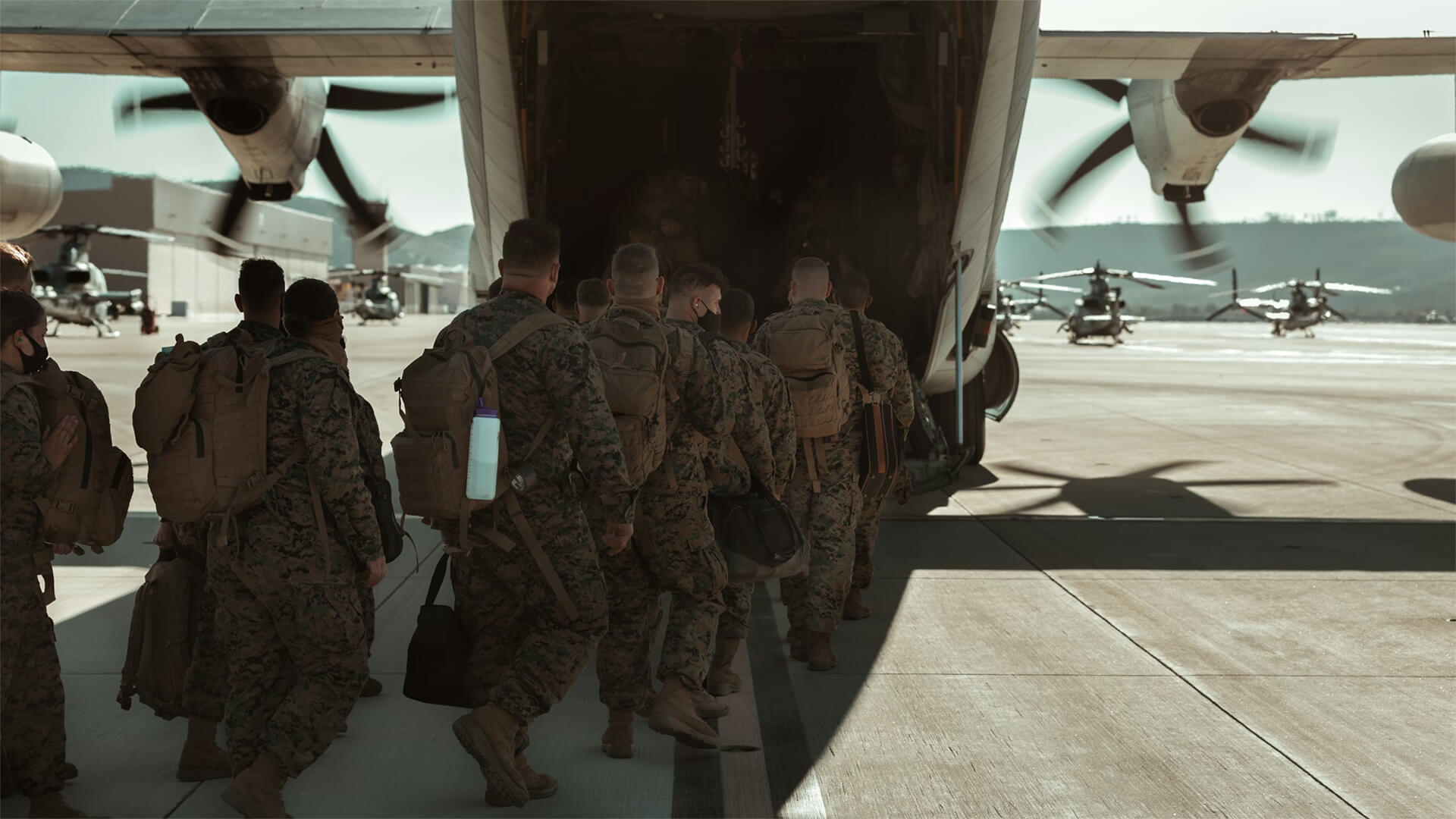
A group of Marines loading into the back of a C-130 aircraft

Just because the US intervened in Venezuela doesn’t mean that America will be abandoning its global military posture.

The US maintains military deployments in Japan, Germany, and South Korea. Don’t think of this as imperial overreach; think of it as a low-cost force multiplier that prevents bloodier conflicts down the road. Should the US withdraw from these positions, things would likely get ugly…and quick.

The US is the only country with the ability to project power globally, and these optimally-sized deployments help extend that reach.

Transcript

Hey everybody. Peter Zeihan here. Coming to you from Colorado, avoiding the crazy winds out there. Through with you inside. We’re taking questions from the Patreon crowd about the Venezuelan intervention and the rest of Nicolas Maduro, the former current. I’m not sure how that works out now. Venezuelan president. Anyway, he’s going to go in jail. We’ll never hear from him again. 

The question is, is, is this a prelude to a general disengagement from the Eastern Hemisphere and closing down all the bases we have there? He’s like, oh, let’s let’s not get ahead of ourselves. First things first. The United States currently has fewer troops stationed abroad than at any time since the since World War two. We had a surge with the war on terror. 

We’re back down to a pre, like the lows that we had in the early 2000. And it’s important to understand that the United States footprint globally is actually quite limited. Right now we have about, let’s called 100,000 troops abroad. Most of those are concentrated in three areas. You’ve got the largest contingent, which is in Japan. The second largest. which is in Germany and the third largest, which is in Korea, especially closer to the DMZ. All of these serve as force multipliers for the United States. Everything else is a very small contingent, maybe a naval base here and there that has a few hundred to a couple thousand people that are basically there to help the carriers operate. 

But the way World War Two ended, we already have places like midway, for example, which is U.S. territory or access to the United Kingdom, which has their own naval bases that we just kind of rent. And so the, the need for the United States to maintain a far flung Imperial style military deployment just doesn’t exist. If you see the United States back away from the deployments we do have, it means that we have made a very clear strategic decision as a country to foment a war and so that we can participate in the next one. 

And lose a few tens to hundreds, thousands of troops. So, for example, if we walk away from Japan, Japan is the anchor. And because of the way that the islands in the Pacific are position, it means that we basically give up the ability to influence the Asian mainland and the western third of the Pacific, which includes Japan and Korea and Taiwan and China and Singapore and Indonesia and Australia. 

And if we decide to walk away from that, we’re basically saying that this whole area can evolve on its own, maybe generate a new hegemon, that we will then have to come back and deal with decades from now, basically setting up something similar to the rise of Japan in World War two. If we walk away from Germany. 

Oh my God. Oh, God. Okay, so every time the Germans are responsible for making their own decisions, they start acting like a country or something. And as a large country, the largest of the European states by population, economy set in the middle of the continent, it will naturally try to influence the areas around it. And that is exactly what set everybody on the course to World War One and World War Two. 

And so to do that deliberately, to set up a repeat of the world wars in Europe, strikes me as something that would not be in American interest. And that’s before you consider the fact that the Russians have been pointing nukes at US my entire life, and I’m now 50, 52 birthday coming up. That strikes me as immensely unwise. 

One for the low, low cost of 30,000 troops stationed in bases that are nowhere near a front line. You can basically control the strategic destiny of a continent that’s cheap. Third, Korea, you draw those troops back. Forget about the likelihood of a war in the peninsula, which is would be very likely at that point. North Korea has nukes pointing at us, with the range to reach us. 

So your permanently now putting Minneapolis, Denver, San Francisco, Los Angeles under a nuclear threat and defending against that would require an order of magnitude more cost, than simply maintaining 20 to 25,000 troops on the Korean Peninsula. So really, the three big deployments we have right now are there for very good reasons, mostly in terms of controlling the strategic environment, and because not having them there would require us to take a defensive position in our hemisphere, which would be extraordinarily more expensive and set up the situation for war down the road. 

Okay, so that’s the United States. Now let’s talk about everybody else’s deployments. 

Okay. That’s all of them. Here’s the thing that most people forget. Deploying troops in the thousands, much less tens of thousands a continent away, is very difficult, requires specialized logistics and decades of practice and infrastructure development. And so we are the only ones in the modern era that does that. The last time any countries did it at scale, it was before World War Two when we had the Japanese Empire, which we, to be perfectly honest, modeled some of our stuff, and the British Empire, which of course we modeled some of our stuff off besides that in the modern era, and nobody does it now. 

Part of this is policy. The whole idea of the Cold War globalized system was that we will pay to create a world that keeps you safe is an exchange. You allow us to write your security policies. And that has been the basis of the American alliance going back to 1946. But the other part is just the sheer expense. 

By creating a globalized system, we gave everyone access to the globe and all the economic goodies that come from that. And trade and access to commodities and markets the world over. And they didn’t have to have the military for it. So most of them never even bothered to try. And so the world’s second and third largest navies are the Japanese and the Brits, both of which work hand in glove with the United States. 

And if we decided to withdraw from the Eastern Hemisphere, those two countries, as well as a number of others, would have no choice but to develop that capacity. Now, they wouldn’t do it in two years or five years. This is a generational thing, but eventually we’d have a half a dozen navies that had regional, maybe even global reach, and it would look a lot like 1929. 

I would argue that’s something that we don’t want to do, because doing it the first time was really expensive in men and lives in the United States honestly got off cheap because it was most of the fighting was over there rather than over here. Okay, let’s talk about the the big countries, more specifically China. People keep pointing to the fact that they’ve got a large Navy unit, and they do and they do have about, 50 ships that are capable of operating more than 600km from the shore. 

But even if you ignore the first island chain, which really hems them in, that doesn’t give them very much, because the Chinese don’t have basing rights in places that are useful to them. So when you look at the United States, we’ve got Japan’s second most powerful naval power on the world. Where we stage ships, we have midway, we have places that are allied in the North Atlantic basin, whether it happens to be Italy or Spain or the United Kingdom or Iceland. 

We have global power projection, in part because of our territories and in part because of our allies. The Chinese have no allies, so they’ve gone out trying to build what they call a string of pearls model, where they develop friendly ports along the route that they want. And so they get along okay with Malaysia. They basically bought Cambodia. 

And even though it has a coastline, they’re trying to build port there. They’ve got some friendly relations with Bangladesh and Myanmar, Sri Lanka and Pakistan. And so the idea is they can use their short haul ships to hop from base to base to get all the way to the Persian Gulf, where they, where the oil is. 

And of course, everybody, because of pirate reasons, has a small base in Djibouti. But here’s the thing. If one of those gets broken in a hot war, every ship west of that is lost. The Chinese have tried to do it on the cheap, and that means it’s really easy to unravel. And so even if the United States were to find its vessels, say, stuck in the Indian Ocean, they have enough range to get out. 

The Chinese don’t. And so I’ve never really been worried about the Chinese naval build out. Let’s talk about the Russians. The Russians aren’t a naval power. They’re not an air power. They’re losing their space capability. Within a decade. Pretty much everything that they have that’s not ground base is going to be gone. They just lost the manufacturing base to maintain it, much less expand it. 

But they still have a large army, over a million men under arms. And every month, they’re bringing them another 20 to 40,000 men into the fight. That’s awful. If you’re on Russia’s border. And that’s the situation that the Ukrainians are struggling with right now. But if you’re not on Russia’s border, it’s actually not all that bad because you have standoff distance where you can use drones and air power. 

If you’re another country back, you know, you really don’t have to worry about the tanks coming either. By the way, the Russians have almost run out of tanks, which is crazy. They started this war with 20,000 armored vehicles. They’re down to probably less than a quarter of that now anyway. Bottom line is that their their exposure is huge, but their ability to push back that exposure is very, very limited. 

And their ability to use naval forces to protect power is basically zero. Now, they still have a handful of ships, but they’re split into four different bodies of water the Black Sea, where they can’t get past Istanbul unless the Turks allow them, and everything that does get passes. Relations with the Turks go south. That’s lost. They’ve got the Baltic Sea, but that is now completely a NATO lake. 

At this point they’ve got the Arctic Sea, which is their their most powerful fleet is up there. But the problem is it’s a long way from anywhere. And they have to get by Norway and Iceland and Scotland and the United Kingdom, the United States, all of which are superior naval powers on that, but one that Iceland doesn’t have a military. 

But everybody else could probably do it by themselves at this point, even without the United States. And then they have the Pacific Fleet that is based off of, Petrobras, which is basically a city you can only fly to on the peninsula. And of course, the Japanese are there. They could potentially be some things in the code Vladivostok, but that is literally surrounded by Japan, world’s second most powerful navy. 

And even if all of the Russian ships were in the same place, the Japanese could still easily take them out because they’ve done that before. So the ability of the United States to project power is huge, in part because of its geography, but also because of its allies. The Chinese are blocked in by geography, the Russians are blocked in by geography, and neither of them have allies. 

So we’re in this weird situation where the United States is considering a full scale withdrawal from everything, which will guarantee higher defense costs and longer, long term security challenges. This is one of the things that the people who are really pro isolation tend to miss the the footprint that we have right now is almost perfectly optimized to not have to spend money or lives. 

As an added benefit, you also get to control the security architecture a huge part of the planet. You pull back all that goes away.


Venezuela’s End: Peter Goes Squirrel Killin’

squirrel laying on a log

Following the capture of Venezuelan President Nicolás Maduro, I’ve had a ton of theories and ideas flood in. So, it looks like it’s time for a good old-fashioned squirrel killin’.

Some of the theories (aka squirrels) that we’re going to be killing today are: Venezuela was a credible drone/military threat to the US, Russia was waiting for an excuse (like this) to attack the US, China might use this as justification, and that this was just a warm-up for Iran.

As you can see, no shortage of squirrels here.

Transcript

Hey everybody Peter Zeihan here coming from Colorado. It’s above 50 degrees, so I think we would go for a hike. Anyway, a lot of folks have written in with a lot of questions about what’s gone on in the aftermath of Venezuela. For those of you who have been in a coma over the last weekend, Delta forces went into Caracas and grabbed the president, Nicolas Maduro, and brought him to New York to face arraignment, where he is facing, narco terrorism and conspiracy charges that date back over a decade. 

We’ll never hear from him again. Anyway, lots of people had lots of questions about what this means. So the point of this video is to do what I call squirrel killing. So coming up with these arguments that people think might be have something to them, show why they really don’t what the real issue is. So let’s start with the big one. 

And that’s the idea that part of the reason why the US, went after Maduro is because of the fear that, Venezuela could be used as a military base to attack the United States, particularly with drones. Short version is. No, first of all, there are very few drone systems on the planet that have the range that is necessary to cross the Caribbean. 

You’re talking over a thousand miles here and hit the United States. Of the ones that could, most are American. But the Russians don’t have models like that. The Chinese don’t have models like that. Ironically, the Ukrainians now do. Pretty sure they’re not going to want to attack the United States. That just leaves Iran, which has the showerheads, which the newer ones do have probably barely the range that’s necessary. 

What they lack is decision making capability and real guidance. 

And so when you program a showerhead, you have to tell it what routes to follow and where to drop its payload. And in the open ocean, there’s nothing to follow. So technologically, there really isn’t a weapon system that is set for this task. And even if there was, the first city that you’re going to hit, the only one of size that you’re going to hit is Miami. 

You know, we all have our opinions about Miami, but I don’t think any of us like, oh, Miami. That’s militarily critical. Yeah. No. So, you know, blowing up some hotels on South Beach is not the sort of thing that the United States is going to be intensely concerned about. What it would do, however, is trigger an adverse reaction in the American political system, which would lead to massive American counter strikes on whoever was behind it. 

Because clearly, the Venezuelan government, the Venezuelan economy can’t make a biplane, much less a drone. So not that one. What’s next? 

The Russians have been itching to have an excuse to attack the United States. And this is it. No, the Russians are locked down in a war that has been moving incredibly slowly. At the pace they’re going. They’re not going to conquer Ukraine, this century. And they need to really finish it up before they run out of troops in just a few years. In addition, the Ukrainians recently have been on counter attacks and have reclaimed a number of cities, including, you ask, and there just isn’t any Russian spare capacity to do anything else anywhere. They’ve even pulled a lot of troops out of not just the Far East, but off of the NATO border in order to focus them on Ukraine. And if if they were stupid enough to think that they could do otherwise, let’s say they stage some weapons in Cuba, for example. 

Number one, the Cubans would not go for it after Venezuela. And the Cubans are pretty sure that they’re next, and they’re desperate to find a way to avoid an American attack. Staging Russian weapons all 1963, much less launching them, would guarantee the end of their regime because the Soviet Union is no longer exists, and post-Soviet Russia, in its current form, really can’t do a thing to protect any of its allies, whether that is Iran or Venezuela or Cuba. So no. And if if that were to happen, I can guarantee you that the president not just Donald J. Trump, any American president, would then make ending Vladimir Putin at the very, very top of a very short list of things to do once Cuba was neutralized. And if there’s one thing Vladimir Putin values above all else, it’s his own skin. And every time in the past he has been personally threatened, he has backed down, especially when it comes to relations with the United States. So No. 

One more thing on the Russians. You know, it says doesn’t react well to threats, especially if the threats actually make us bleed a little bit. So if you think back to, say, Sputnik or the Cuban missile Crisis, the US massively overreacted and it caused the Soviet Union a series not just geopolitical defeats, but global humiliation in their inability to counter what the United States did. 

And Putin doesn’t just know this. Putin has lived this, so he will never do something that is intended as a direct strike on the United States. You always work through third parties. He will always work to turn us against one another. That’s one of the reasons why the Russians intervened in the elections. That’s one of the reasons why they both support Trump and oppose him. Russian propaganda is very active on all sides of all ideological debates and especially the culture war. So, you know, careful where you’re sourcing, no matter who you are. And the goal of the Putin administration is very simple to get the United States to lash out, to get it to react badly, to get it to attack, but not Russia, to get them to do someone else. Which is one of the reasons why Greenland is featuring so hot and heavy right now, because the Russians are actively working now to get the Trump administration to attack a NATO ally. Don’t do it. All right, what’s next? 

Okay. Next. Squirrel. The idea that the Russians, the Chinese and maybe others will use, the United States grabbing of Maduro to justify military action in their own theaters. Can’t rule out what people will say, but this is certainly not going to nudge them in a direction. Be purely rhetorical. Let’s start with the Russians again. They’re in a full fledged war where they’ve redirected all of their military assets to one theater, and they’re not doing all that well. 

Also, we’re talking about a war where the Russians have literally set up rape camps and establish a cabinet level officer to assist and coordinate the mass kidnaping of children in the thousands from the occupied territories. We have over 100,000 documented war crimes. It is difficult for me to wrap my mind around what else the Russians feel they need justification to do in the Ukraine war. 

So, you know, it might make it out in a press release, but it’s not going to move any decision that they’ve already made. The second one is China, of course, gets a little bit squirrely, but still, I don’t think it’s going to change their meaning. If the Chinese thought they could do a lightning raid overnight and overthrow Taiwan, they would. 

But that’s not how advanced technocratic democracies work. Also, if they thought they could do it, they probably would have done it already. Keep in mind our discussion of military deployment capability before the Chinese don’t have it. The Russians don’t have it. No one really has it, except for the United States into a much, much, much, much lower degree. 

The French and the Brits, who mostly focus their deployments on territories they already control part of their other colonies of their empires, if you want to call them that. So, keep in mind that every war that the Chinese have fought on land since 1949 comes down to just two basic conflicts. One with the Russians, over an island and one with the Vietnamese where they had their asses handed to them. 

I’m not suggesting that the military of China is incompetent today. I will point out, however, that it is in the process of being massively purged and to think that their order of battle actually matches what they can do is a bit of a stretch. But the bottom line is that, vitriolic, rhetoric against Taiwan is bread and butter to the Chinese Communist Party, especially these last eight years, as she has basically purged everybody in the country. 

So if they start using some North Korea style rhetoric and not only wouldn’t be new, but it also has not shaped strategic policy to this point. Basically, these are authoritarian, expansionist, neo imperialist powers who are not constrained by rule of law or allies. They don’t need justification from anyone to attempt what they want to try to do. 

Their only constraints are physical, of which they have many. What’s next? 

The new president, Rodriguez of Venezuela, said that this was all Israel and the Jews……..What’s next? 

Okay. What else? That Venezuela is a warm up for the real country. Iran, which is clearly next. Probably not now. Cuba. Cuba’s probably next, and we’ve already dealt with that in a previous video. But Iran’s a very different situation. Well, the United States certainly has the military capability of interfering in Iran’s oil shipments, because you could either stop them at Kharg Island, where everything is loaded, or the Straits of Hormuz, which is a narrow passageway out of the Persian Gulf that everything has to pass through. 

That’s a lot different from taking up the political leadership. See, Venezuela wasn’t exactly a one man show, but it was definitely a strongman system with a tight cluster at the top that helped him loot the country. And then very little below. There may be a mass movement, of chavistas, but they’re not organized in the way that say, the Democratic Republican Party is. 

So, like, if someone were to take out the American leadership at the top, even every member of Congress, there’s still the states and localities, and there’s 2 million elites in the United States in the political class. That’s not the case in Venezuela. You had a couple dozen. And that’s certainly not the case in Iran. Two big reasons why Iran is probably not next. 

Number one is that elite, probably 10,000 mullahs are part of the clerical class, and it’s going to take a lot more than some Delta forces guys or a bad flu season to take them all out. So even if you could get the Supreme Commander, you wouldn’t be able to exercise the regime. The second problem is geographic. 

Tehran is definitely not coastal in the way that Caracas is just a few miles from the water. So you’re talking about inserting over a couple hundred miles of desert mountains? No. I’m sorry, I shouldn’t say desert mountains. A lot of these are not desert. It’s populated. 

And as the United States found out back in the 70s during the Carter administration, that if you try to send a bunch of helicopters to pull people out, there’s a really good chance that it’s all going to end very badly, just like it did with the hostage rescue back in 1979, I think. So much more durable regime. Much harder to get to. And I just don’t see that working. Doesn’t mean that there can’t be an angle for American policy on Iran that’s going to evolve because of this and become much more muscular and threatening. All of that is absolutely possible. But this isn’t a dress rehearsal in any way 

It’s a very different economic, political and strategic challenge to go after Iran.