
Say Goodbye to the World’s Trade Routes

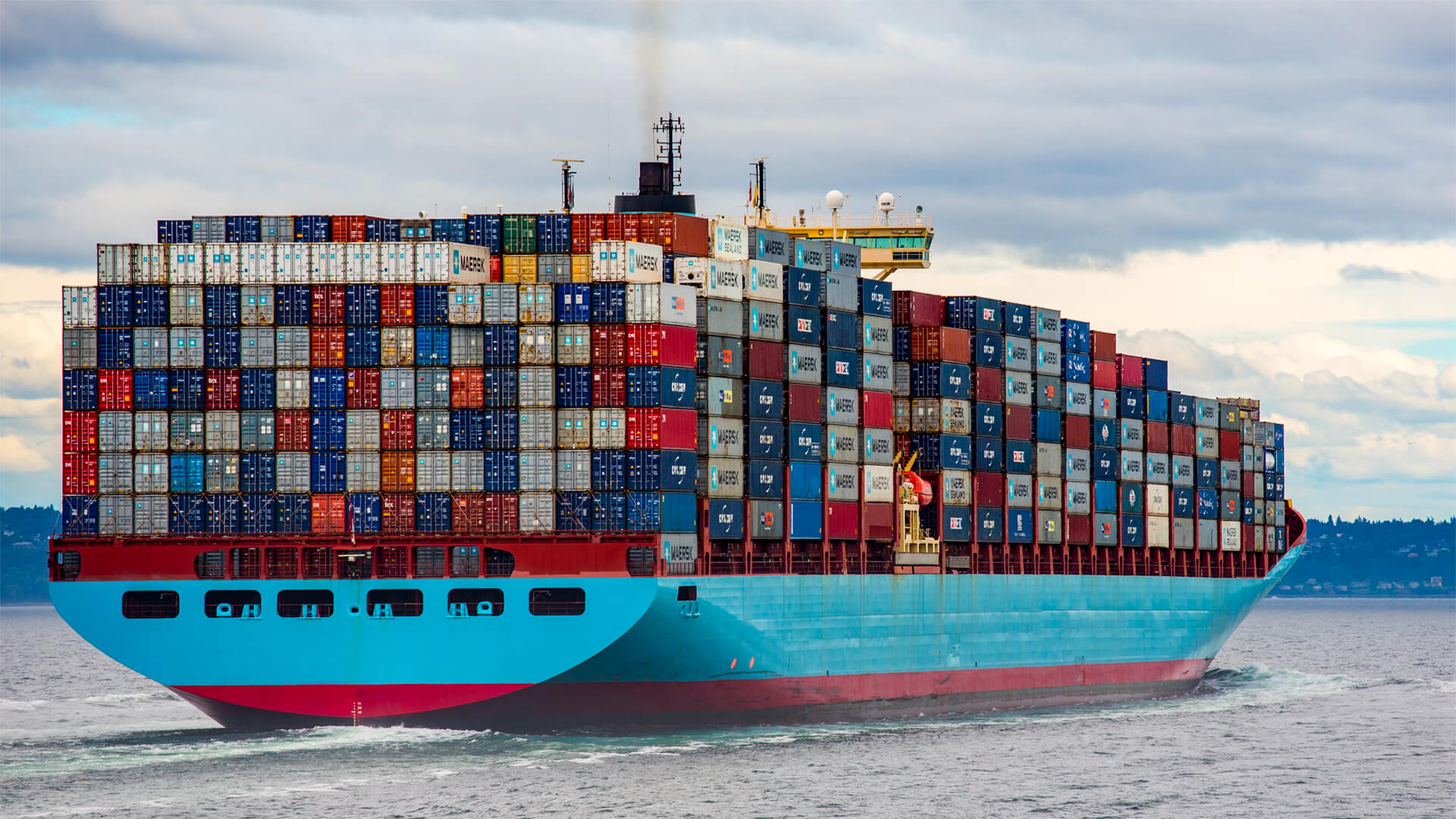
Cargo ship with containers

It’s always lovely when everything you’ve talked about throughout your career decides to happen all at once. At this critical decade, how will the globes trade routes fare? And which routes will fracture first?

There are three major trade routes that come to mind. Southeast Asia is made up of many regional states that rely upon each other, so none of them want this to shut down. While this should hold, there are some other players (China, Japan, and India) that could add some tension. The Persian Gulf and Strait of Hormuz are easy to disrupt and will likely be the first to go; this will have an outsized impact on places like Japan, Korea, Taiwan, and China, that rely on oil coming through here. And the last route to keep an eye on is the Baltic Sea; the Ukraine War’s outcome will likely determine what happens here.

Bottom line…get your s*** while you still can.

Transcript

Hey all, Peter Zeihan here. Coming to you from the Lost Creek Wilderness. I have moved out of the jump on him into the narrows. So I like a one sided canyon sort of thing. Anyway, trail goes. 

Back in there somewhere. Anyway, taking a question from the Patreon crowd, specifically, as globalization breaks down and as military alliances fracture, which trade route will fracture first become unusable? 

We’re at the point in history where there’s a lot of things going wrong at the same time. Most of my work has been saying that all of these factors, whether it’s demographics, globalization, American isolationism, European fractures, the Chinese fall, whatever happens to be, they all come together in about the same ten year period. 

And we have now entered that ten year period. So the partial cop out to answering this question is, I really don’t know, because everything is going wrong. And all of these, routes are going to be in some degree of danger. But let me give you the two that I think. Well, let me do the three that I think are most concerning. 

First, the one that I think actually will hold together and that’s the Southeast Asian route through, Indonesia, Malaysia, Singapore, Strait of Malacca, the Luna Strait, that area basically connecting Northeast Asia with the rest of the Eurasian continent. This is an area with 15 countries, all of which have their own ideas of what should happen, and none of them have the ability to project naval power, far enough for the entire zone. 

The reason that I think it’s still going to work out for this area, though, is that most of those countries in Asean and then link in to, say, Australia, see the world through similar lenses. I don’t anticipate them launching wars of aggression against their neighbors. They know that they occupy different parts of the manufacturing supply chain. 

They know they need inter-regional trade and agriculture and energy and intermediate manufactured parts. So they have a vested interest in finding a way to make it work. The problem would be countries from out of region India, China, Japan who might see things differently. But even here, I think it’s pretty safe to say, that it’s going to hold. 

Japan might try to raid Chinese shipping, but they have no intention of shutting down shipping through the region as a whole. With Australia, you have the Americans of all to a degree. And India is really not a trading power. And China, of course, if it’s going to survive in any form, has to have access to this trade route. 

So that one’s probably okay. The second one, the ones absolutely hosted so opposite is coming out of the Persian Gulf here. You’ve got a number of countries with limited global reach, but missiles and jets and drones would have no problem closing the Strait of Hormuz. And even if you get past the Strait of Hormuz, you then have India and Pakistan, who in a globalized world would love to see the other one lose access to things like energy. 

And so I can see any number of scenarios where Iran or Pakistan or India or Saudi Arabia or even the United Arab Emirates find it in their interests, at least for periods of time, to close that entire route down. And that’s 20 million barrels a day of crude that could no longer make it to market. It would have catastrophic impacts for everyone further east, most notably Japan, Korea, Taiwan, and especially China, which uses more than the other three put together. 

And then the third route, depends on what happens in the Ukraine war. The Baltic Sea has always been a zone of commerce, but it’s always been a zone of conflict. And in times past, the countries that are either adjacent to the sea or just one step removed. So we’re talking here, all of the Scandinavian countries Finland, Sweden, Norway, Denmark, also Poland, also Germany, also the United Kingdom, also the Baltic, also Russia, have all at various times in their history tried to militarize their part of the sea, to shut it down for the people. 

At the moment, everyone is on the same side except for the Russians. And the Russians are using the Baltic Sea because we’re still in globalization, barely to ship 1 million to 1 million, a half barrels of crude out to the wider world around sanctions. Sooner or later, that’s not going to work anymore. Either. The Western countries are going to interfere with the oil shipments, which I’m a little surprised hasn’t happened already. 

Or the Russians are going to say screw it and basically Mess up, corporate shipping on the Baltic Sea. One way or another, this is likely to happen. The question is, how long will it last? If Russia does well in Ukraine, it can last a long time because you don’t need to be able to poke out. 

All that much pressure collapses in Ukraine that this is no longer concern. And the issue is how Europe evolves or devolves in the future, whiskey or any number of directions. So Middle East shipments, most notably through Hormuz, look really bad. Red sea is not much better. Baltic something to keep an eye on. But there’s reason for hope. And then Southeast Asia. That’ll only break if things go really horribly bad.

What Does a Post US NATO Look Like?

A NATO flag with buttons of other countries flags on it

As the US steps back from NATO, which country is best suited to take the seat at the head of the table?

While the Germans have been the backbone of the EU’s financial model, they no longer have the people to keep up. So, who will step up? The French scratch this itch best, both militarily and as the future anchor of Europe. They have the most solid mix of everything necessary: population growth, nuclear arsenal, wine, etc.

There are some support players rising in the background as well. Poland and the Scandinavian countries have economies, militaries, and enough resilience to weather the storm that is headed for the EU. Together, these countries will define the future of Europe.

Transcript

Hey everybody. Peter Zeihan here coming from, where am I? Bottom of the Tilden Canyon in northwest Yosemite. Taking another question from the Patreon crowd, specifically with the United States stepping back from NATO, do you think anyone will step up, most notably France? Yes, but probably not for the reasons you’re thinking. 

Europe has two institutions that define it NATO, the North Atlantic Treaty Organization, of which the United States and Canada are members. 

Everyone else is in Europe and the European Union, of which 27. I think it’s like people keep coming and going. 27 countries are members. NATO is a military alliance. The EU is a economic and financial grouping. The problem is, is the economic and financial grouping is failing for demographic reasons. The country that is paid for everything to this point has been Germany primarily. 

And Germany over the next ten years will basically age into an old folks home and convalescence can’t pay a lot of income. So, you’re going to have to see the entire European Union structure renegotiated away from the financial and economic union that we have right now. Because if there’s one thing the French are sure of, they’re not going to pay everyone to be part of the group. 

But if you make it a political and a military grouping, perhaps affiliated with NATO, perhaps not, then you’re talking about something that plays to French proclivities and their strengths. Remember, this is a country that has an aircraft carrier. This is a country that has an independent nuclear arsenal, and this is the only major country in Europe that has seen population growth. So whatever future Europe has ten, 20, 30, 40 years from now, France is going to be by far the most important piece of it. 

Second, there are a few other countries to look at. The number one is Poland. Poland is having a demographic moment. If they can’t get their birth rate up, they’re going to have some problems in 30 years. 

But that’s a problem for 30 years from now. For now, they’re a robust economy. They’re getting to the manufacturer in every possible way. They’re getting to defense industries courtesy of the South Koreans and since they have the Ukraine war going on right on the doorstep, they’re getting very big into drone technology as well. So whatever the future of warfare looks like, the poles are about as prepared as you can be. 

Everyone else is playing catch up. And then finally there’s a third group, the Scandinavians, mostly centered on Sweden. These are countries with better demographics, better financial situations. They’re not as dependent upon the European Union and the euro. In fact, some countries in the Scandinavian bloc aren’t even in the euro. So it could go away and they’ll probably be more or less okay. 

I mean, it’ll be a it’ll be a hard couple of years, but, it doesn’t define them in the way that it defines countries like the Netherlands or Italy. These are also countries that have always maintained an independent defense posture. Sweden and Finland, most notably. So whatever future defense issues in Europe bubble up. Sweden, Poland and France are by far the ones to watch the most. 

They’re also the ones to watch the most in terms of, economics, because their demographics are pretty good. And so if there is a post EU economic grouping in the region, these three are going to be part of it.

The Most Violent Chapter of Israel and Palestine

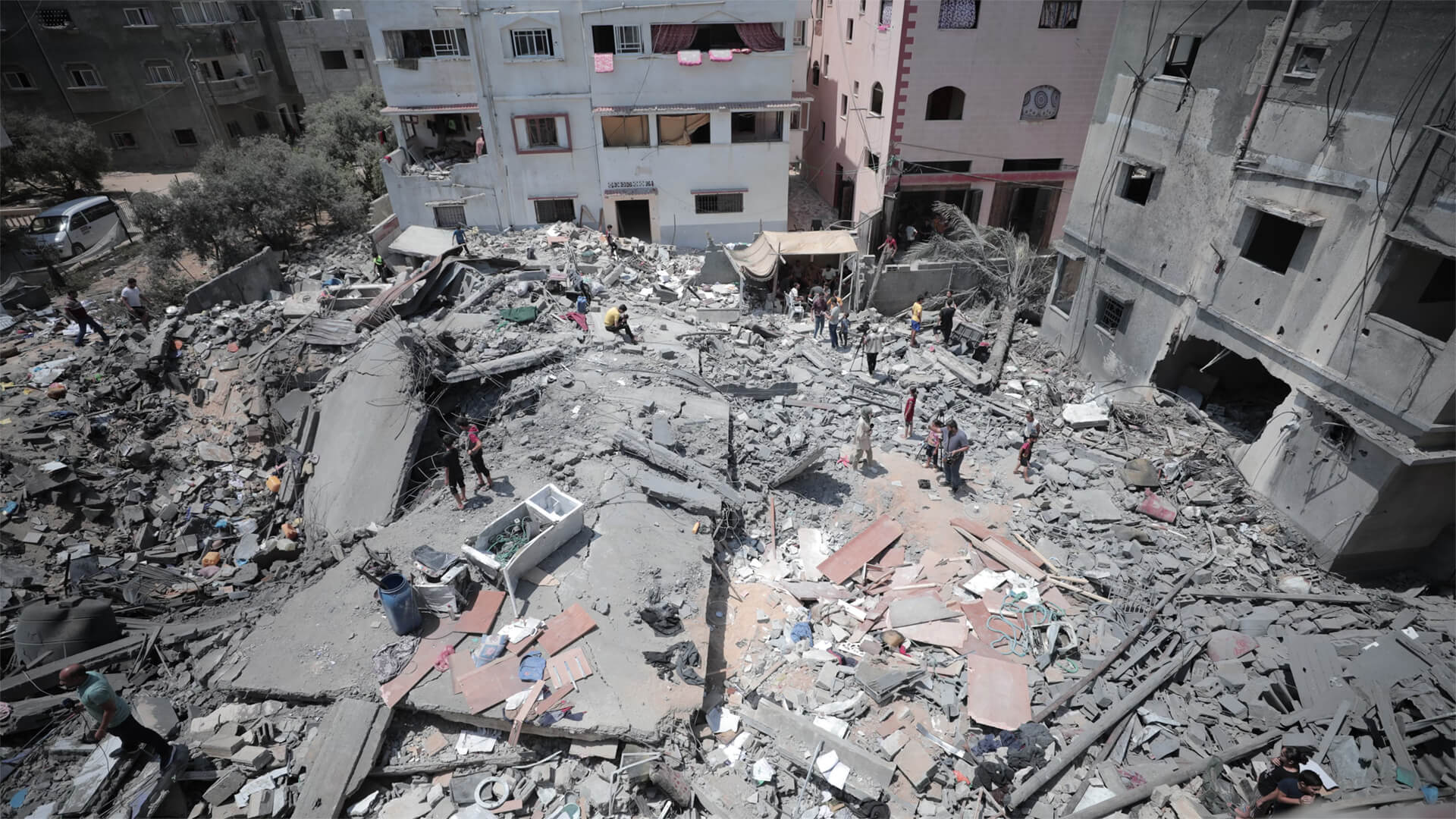
Buildings in Gaza destroyed from bombings

This topic is going to piss off everyone, regardless of where you stand. So, while you watch today’s video, take comfort in the fact that everyone will be offended. Now, onto Israel and Palestine’s ongoing conflict.

The Israeli invasion of Gaza has reached its most violent period yet. Netanyahu, who has aligned with extremist factions who favor the complete expulsion of Palestinians, is still clinging to his political power. And with no conventional military threats, the Israeli’s can focus all their efforts on Hamas.

Trump has sidelined the American security apparatus, leaving Israel with few external checks. With no one to intervene and both Hamas and Israel leaning further into their stances…there really is no good solution here.

Transcript

Hey, all Peter Zeihan here. Coming from Colorado today, we’re gonna talk about Israel and Gaza. I’m sure I’m going to piss off everyone in this one. So, you know, if you are not pissed off, that would actually be a surprise. So here we go. The Israelis have launched a major invasion of the Gaza Strip, which is where about half the Palestinians live, specifically focusing on Gaza City, which is the largest urban center in the strip. 

Tanks are involved, artillery is involved, it seems, from what we’ve been able to see, incredibly indiscriminate. They seem to be deliberately attempting to drive people just to flee the area and herd themselves into smaller and more compact zones. Further south. By any definition, this is a horrific conflict, and we’re seeing more violence now in the last two weeks than we have seen at any stage of the Israeli-Palestinian conflict, going back to the 1946, 1947, 1948 period when Israel was created in the first place. 

There are more than a few reports that allies of the Prime Minister, Benjamin Netanyahu, are involved in almost gang activity, in various Palestinian territories, more in the West Bank than in the Gaza Strip. And under normal circumstances, this just wouldn’t fly. Not only would Israeli society not tolerate it, but you’d see a lot of pushback from countries across the world, most notably including the United States. 

We’ve seen that from a diplomatic point of view. We have any number of countries France, the United Kingdom, Australia, Canada who have now recognized Palestine as an independent entity, which from my point of view, is completely pointless because unless you’re willing to change the military facts on the ground, none of this really changes anything at all. 

And I don’t think it will. Now, that said, the only country on the planet that has the ability to militarily intervene in Gaza would be the United States. And there is no appetite in any American administration to do that. So I wouldn’t count on that either. Anyway, why has it gotten so bad? Why is it getting so bad so fast? 

Why are we in this seemingly new chapter and what this region looks like? Five things are going on. First and most importantly, when the initial attack by Hamas, that’s the political slash militant authority that used to rule the Gaza Strip, launched their attack across the border into Israel proper back in October of 2020. Three more Jews died in a 24 hour period than had died since the Holocaust. You can understand the baseline position that a lot of Israelis are coming from. I don’t mean to belittle that in any way, but there’s a lot more going on. 

The second issue is more strategic. Israel has been the superior military power in the region for the better part of the last six years, at least since the 1973 wars. There hasn’t been any force that can stand up to them on the battlefield or in the air. Over the 50s and the 60s and the 70s, they soundly beat all the Arab states in their neighborhood militarily. 

And all that’s been left is paramilitary and irregular forces like Hamas, militant groups, Hezbollah. But the Israelis dare not let down their conventional military guard, because while Hezbollah and Hamas are threats, they are irritants compared to, say, if Egypt decided to roll in with a thousand tanks. Well, that changed relatively recently. We now have a completely different strategic map of the Middle East. 

The Syrian civil war is over and the Assad government is gone. And the replacement government. Yes, it can hold together big. Yes. I wouldn’t call it pro-Israeli, but they certainly don’t want to fight with Israel. It’s more likely they’ll fall into a second civil war that will destroy any military capability of the state. And remember, Israel has already done a few thousand bombing ranges to take out pretty much every arsenal and chunk of equipment that they could find. 

Number two, Iraq is no more as a conventional threat, because of the Americans. Number three, Egypt, as, if anything, an ally. Same with Jordan through peace deals. Number four, Libya, which used to be an irritant, has fallen apart. And number five, Iran was defanged earlier this year in a series of strikes. It didn’t simply set the nuclear program back several months, but basically destroyed Iran’s ability to defend itself with air defense. 

So the strategic picture, for the first time in modern Israel’s history, is calm. I don’t want to use the word safe. This is still the Middle East, but they’re not worried about a conventional invasion from anywhere, which frees them up to deal with some of the unconventional threats that they’ve never really cared for. Ergo, Gaza. Third, politics in Israel are wonky. 

Benjamin Netanyahu is the PM was about to go to prison for bribery and corruption when he was elected last time. And as long as he’s the prime minister, he won’t go anywhere. So he has a vested interest in making the conflict as hard as possible in order to forge a coalition with the real Wackadoo in the Israeli political world, who just want to kill everybody who isn’t a Jew. 

And so that coalition has been sufficiently strong to keep Netanyahu in power, and they do not have a vested interest in seeking a peace agreement, even if that was possible. In fact, many of them see that expulsion of the Gazans from the strip to say the Sinai Peninsula isn’t even something they want because they think that the Sinai Peninsula should belong to Israel as well as long as the West Bank, as long as the East Bank, which includes parts of Jordan, some of them, you actually think they should push all the way to Baghdad. 

And these are the people in charge. So, you have a political alignment in Jerusalem at the moment that is very not just pro-war, but pro slaughter, because they know they can’t just erase 2.3 million Gazans. So they have to make life so miserable that someone, somewhere will take them in. And things have to get a lot worse before a country somewhere around the world, is going to bring in a 2 million people with minimal education and no money. 

Number four politics in the United States. Trump went out of his way when he was building his cabinet to make sure there was no one in the cabinet who could ever tell him something that he didn’t want to hear. And then he basically gutted the national security apparatus of the United States, using people like Tulsi Gabbard, who indirectly or directly worked for the Russians and wanted to destroy it on principle. 

Marco Rubio is the secretary of state and the national security advisor now, and he actually knows what he’s doing. And so Trump has basically shut him and the State Department and the NSC out of the white House so that, there’s no interaction. So the parts of the American national security apparatus, they’re still working aren’t really allowed to report to the president at all. 

And the president decides what types of information get in front of him, while he’s doing everything else he’s supposed to be doing, or comes through Tulsi Gabbard, where it’s usually misinformation. So, President Trump does not have an accurate view of what’s going on in Gaza, much less the rest of the world. And has to compete for everything else he wants to do for his time. 

He hasn’t basically delegated that. So in many ways, we have the general incompetence of the Obama administration, remade. It’s just that Obama didn’t let anyone in the room. Trump has made sure that there’s no one in the room who likes to tell the truth. And that means that the Gaza situation, the Israeli situation, like every situation in the world, is not getting the, the bullet time that it really needs from the American president to make an informed decision. 

So the United States, who would, under normal circumstances, serve as kind of a connector between Israel and the rest of the world, makes things to go too crazy. That’s gone. And it’s really given the Jerusalem government carte blanche to do whatever it wants. 

And finally, while the media is out of control and I don’t mean like the mainstream media, that’s kind of become a joke of late. I mean, like alternate medias and social medias. Two big themes here that are starting to intertwine in a really destructive way. Number one, anti-Americanism, is obviously something that’s always been in the system. 

But over the last 20 years, we’ve seen it become more organized and more conspiracy driven and have better hooks for getting into people’s brains. And rightly or wrongly, there’s a lot of people in that community who see Israel as a front for the United States, or at least as a proxy, or at least as an ally or whatever. 

Everybody makes up their own story, and their propaganda has got a lot more slick of late. And it’s also interfacing with other types of especially the American political issues that just seem weird. So we’ve seen reports recently of the most far left radical, lefty, crazy, commie, socialist, whatever word you want to use. Aspects of this group that are starting to quote people like Marjorie Taylor Greene. 

She is the the CrossFit chick from northern Georgia in the House of Representatives, who we used to go on about Jewish space lasers. She is now being heralded as an anti Israeli viewpoint within the United States. That’s close to the administration and seeing these two things cross is just crazy. Obviously, the second vein is, anti-Semitism of various forms that has been around for a long time, but also now is a lot more slick and organized and coherent. 

And these two things are blending together to make a really powerful narrative that doesn’t have to have facts. That’s part of the general degradation of information communication we’ve had across the world in the last 20 years, where facts and figures go out and the narrative is all that really applies to the situation and every possible way, even before you consider the level of the violence that is going on in Gaza. 

So, if you’re looking for a solution here, I do not have one for you. If there was a solution to the Palestinian situation, we probably would have bumbled into it by accident at some point over the last 60 years. It’s not going to happen now. There is literally no place for the Gazans to go. If they were to be relocated. 

And as long as they are living in Gaza, they are completely dependent upon food aid from the outside world, which the Israelis can turn on or off at a whim. So as a result, we get this not so much of a stalemate, but this extreme increase, of violence. By the Israelis against the Gazans. And before you decide that you want to jump on the bandwagon of condemning the Israelis, keep in mind that Hamas is the one that started this. 

But more than that, Hamas has never, ever had the goal of actually having a two state solution or a modern, independent Palestine. They want a global caliphate where everyone who isn’t Islamic is killed. So, as always with this fight, careful who you condemn. Careful who you cheer for.

Immigration and Tariff Policies Stunt US Economy

Immigrants standing in line in front of an American flag | Licensed by Envato Elements

The Trump-era policies are going full Darth Vader and have the US economy in a chokehold (or force choke for the nerds out there). Today, we’ll be focusing on the policies covering immigration and tariffs.

Nearly all legal (and illegal) forms of immigration have been closed or drastically restricted. This includes high-skilled H-1B visas, which now have six figures in fees; most startups can’t go dropping that kind of dough. Once you mix in all the costly deportations and the retiring baby boomers, the US labor force is drying up quickly.

Tariffs are only adding to the problem. With 10-60% tariffs on imported goods (the Chinese sitting near the top with 50%), we’re beginning to see rapid price increases. Walmart and other retailers are reporting hikes that are only going to get worse.

Fewer workers, higher costs, and not enough domestic investment, all the things you don’t want to hear about an economy. The Fed warns that the only reason a recession hasn’t formally set in yet is because labor demand and the workforce are shrinking at similar rates. That has left the US economy dazed, confused, and highly vulnerable.

Transcript

Hey, all Peter Zeihan here come from Colorado. Today we’re going to, look at the American economic situation, how a number of Trump policies are coming together in the current environment and where we should expect that to take us during the rest of the year. Short version is the picture doesn’t look great. Let’s start with immigration. 

There’s basically four paths to immigration that the Trump administration has, put the crimps on first. You’ve got your illegal, irregular migrants, who cross the border and then try to slip into the system somehow. Number two, you’ve got your people who try to follow the rules and do it legally. Third, you’ve got your folks who come in on a high skilled visa, something like H-1b, to get a specific job sponsored by a specific company. 

And then finally, you got your rich folk that just come because they went to all four of these routes are in collapse. We now have the Trump administration going into churches during services in order to round up Hispanics and kick them out, as well as intervening in courtrooms and going, where they’re having their hearing on things like asylum or even just to see if they’ve done the paperwork. 

Right. And, before the hearing can happen, escorting them out of the country comes out to about 17 grand per person to do extraditions this way. And it strongly preferences people who do not have criminal records because they’re more likely to be out in public. So the original promise of just going after criminals that has long in the past, and we’re basically going against the rank and file of people who came for jobs or to be with families. 

Regardless of what you think about this, from a legal point of view or an ethical point of view, it it has an absolute impact on the job market. We’ll get to that in a minute. Legal pathways, those are pretty much all been closed down. And that is not simply a Trump two thing. That’s also a trump one thing that is also a Biden thing. 

Most of restrictions that Trump won put on legal migration were actually codified by the Biden administration and now than doubled down on. So you wanna come to United States, there’s only two paths left. 

Number one is you get an H-1b visa. That is the visa that like, say, the tech industry uses to bring high skilled people in to help populate their workforces. The number of those being granted is being reduced by about three quarters. And the fee for it is going up to something between $100,000 and $2 million. What that means is not only are far fewer companies going to do it, but the companies that will do it are only going to be the really big ones. 

So your apple, your meta, things like that. And so if you’re a small startup, you’re now stuck with local labor. And as anyone who’s in the tech space will tell you, there is not enough local labor for a tech industry in any country of the world. There’s a global supply, but there’s only enough to man tech sectors in maybe one quarter of the world’s countries, of which the United States has always been the largest market. 

And by severing the United States from that labor pool, you’re basically guaranteeing that the pace of technological change, will arrest, significantly. And we’ll see impacts of that within a month. And then finally, the only other way to get in is a gold visa. Now, Trump’s original idea was a $5 million gold visa that would get you into the country and basically give you residency. 

There were no takers. None. That’s put too fine a point on it. But if you’ve got $5 million to spend for a green card, you don’t need a green card. So they’ve dropped the price now to $1 million. We’ll see if they get any takers from that. It’s pretty steep. Still has to be approved by Congress. 

So basically, almost every path, for bringing migrants, immigrants, vacationers, whatever you want to call it, you know, have to have a bond to travel the United States for tourism, has been severely crimped, if not closed down completely. And it’s leading to the first population reduction in American history. And, from an economic point of view, we’ve got two issues going on that are both really bad. 

Number one, for the first time since Vietnam, the workforce is shrinking. And for the first time in American history, the labor pool is shrinking. What companies are doing is in this sort of environment, they’re letting go their older employees as they retire the baby boomers, and they’re not hiring replacements. Now, that has happened before. But for that to show up in the data this time as a reduction in overall employment numbers, you’ve got to remember the scale here. 

The boomers were, until very recently the largest generation in American history. And the Zoomers at the bottom of the pyramid right now are the smallest generation in history. So for that to register as a collapse in jobs, the numbers is immense. And it’s the opinion of the Federal Reserve that the only reason we haven’t seen a formal recession yet is that the job market and the labor pool are shrinking at the same rate, and that it’s the fastest we’ve ever seen in any era of American history. 

Now, macroeconomic theory tells us that this will generate and, not particularly long order, a very, very crushing recession. But I’m not ready to say that yet. Jerome Powell, the Federal Reserve is not ready to say that yet because there’s so many things in motion. What we do know for certain is it makes the United States much more vulnerable to any sort of shock, because there’s just simply fewer pillars holding up the system. 

Well, we’re getting that shock because of the tariff policy. We’ve got tariffs ranging from 10 to 60% on various countries in the world. The tariffs are on China at 50%, which is where we get a lot of our consumer goods. And so just since September 1st, just in the last two, three weeks, we’ve now seen price increases across the board that will show up in statistics next month most likely. 

But we’re seeing in corporate earnings already, remind you’re that we went in and out and in and out and in and out of these tariffs from when they were, initially applied in April. There were extensions. There were there were holidays, and most of them are now in place. So we’ve really only had them now for about six weeks, but that’s an long enough time to burn through some inventories and jack up prices on shelves. 

So Walmart, writ large, is looking at a 30% increase in prices across the board, with some items being more than double that. Keep in mind that this is when people are still pulling inventory that they built up during those holidays in preparation, so that 30% increase is going to absolutely increase month on month unless and until these tariffs go away. 

So we have a far weaker employment situation. We have far smaller labor force. We have a far less skilled labor force. We are not seeing the industrial investment that would be necessary to replace the manufactured goods that we’re losing access to, and we have tariffs that are making everything more expensive. This will generate an economic adjustment, in the not too distant future. 

The question is how soon, how bad in which sector? If I were a betting man. Usually not, but here we are. I would say the manufacturing is a sector to look at first, because more blanket the tariff structure, the easier it is to relocate manufacturing supply chain steps outside of the country with the tariff structure and just do it somewhere else, because instead of having product going back and forth across borders, which is how we say produce cars, you then have to pay that tariff multiple times per vehicle, whereas if you build the car completely beyond your shores and then bring in the finished vehicle, you only have to pay it once. And we’re seeing that in the investment decisions of companies that will manifest as employment problems next year. I think we’ll have our economic correction far before that, though.