Hey, everybody, Peter Zeihan here. Coming to you from Colorado. And today we’re going to talk about what went down to the white House over the weekend.
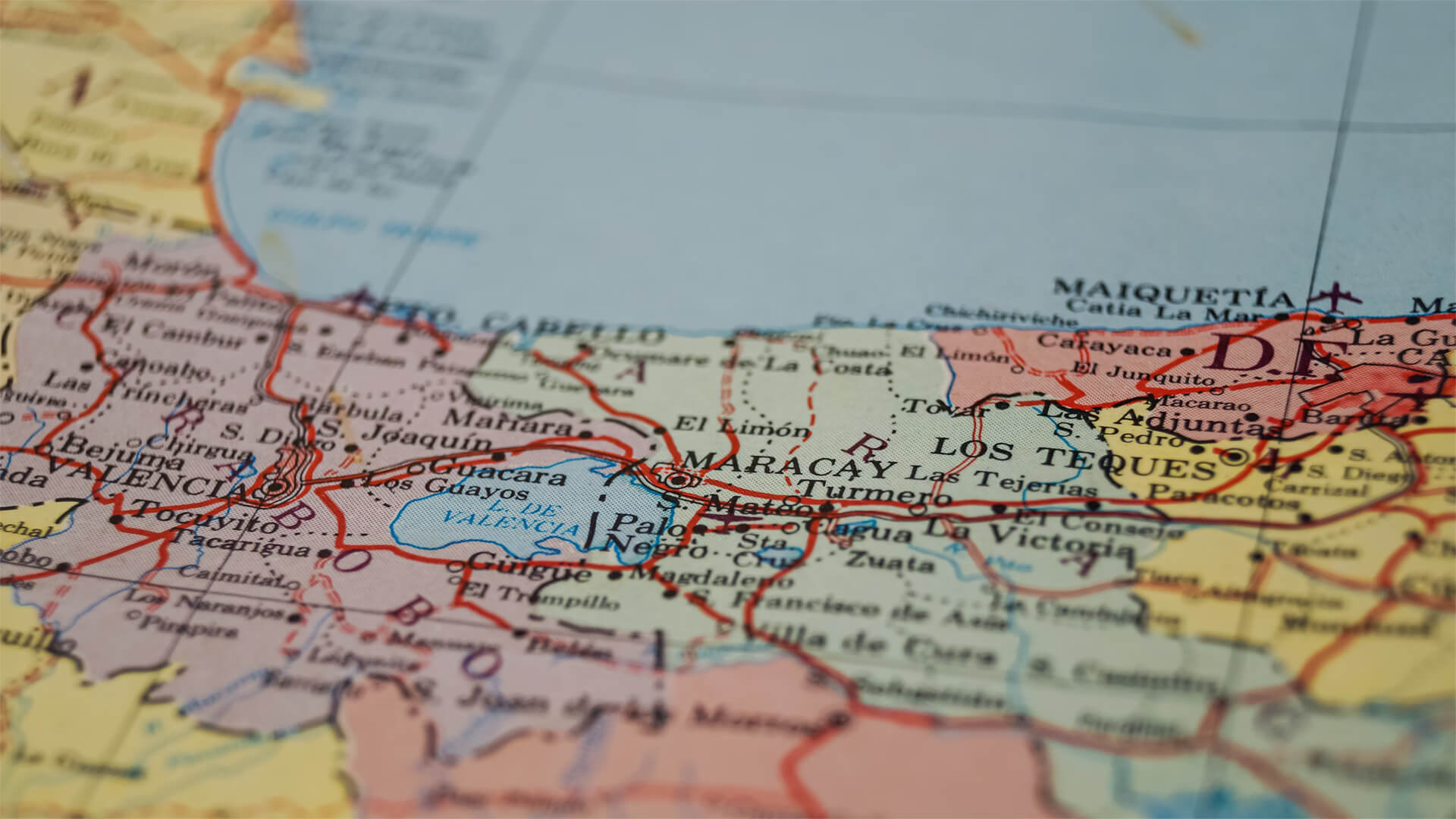
Specifically, there’s this new grouping called shield of the Americas that Donald Trump has initiated between the United States and a number of Latin American countries that he considers ideological allies. So, by the way, that the Latin Americans use the term further to the right, so not including Colombia or Brazil, but concluding places like El Salvador or Trinidad and Tobago or Argentina.
Keep in mind that what means left and right in Latin America is a little bit different from what it means here in the United States, but the Trump administration has not picked up on that. Bygones. Second that to all of these governments, just like any other democracy, switch back and forth. So this is an alliance, an alignment of the moment.
And first thing, you should not count on the current roster of countries being what is there tomorrow or the next day, or much less the day after. There are always elections going on. We won Columbia this summer. That is probably going to be quite significant.
And so the roster moves. But what is more important about the Shield of Americas, is not so much the Secretariat or any idea of policy. There’s no talk of trade deals. It’s all all about security cooperation. And the idea is that the Trump administration has decided it wants to take the U.S. military, push it into Latin America specifically to go after drug smuggling organizations. Now, back story. Historically speaking, the United States involvement in Latin America has been somewhat limited unless there is a third party from out of hemisphere operating the whole concept of the Monroe Doctrine is it’s not so much that this is our hemisphere, but it’s certainly not your hemisphere.
So whether it was the Germans or the Soviets or the Chinese or whatever, there’s always been a degree of built in American hostility to anyone on the outside pushing in here. That doesn’t necessarily mean that the United States is dominant economically, although there are periods in the history where that has happened. Second, with the United States is in the process, independent of Trump, exemplified by Trump of contracting its footprint and its interests in the Eastern Hemisphere.
Now we can have a conversation of whether that’s smart or not, but politically, it’s very popular on both sides of the aisle to bring the boys home and to be less involved in trade on a global basis. I would argue that’s mostly self-defeating, and guarantees will get drawn into something bigger later. But, you know, I’m only one guy.
If 330 million of us, my vote isn’t all that big. What it does mean, however, is that if you take the United States military and all of a sudden it’s not obsessed with the Eastern Hemisphere, and a lot of the forces come home, and of course, it’s going to be used more aggressively in the Western Hemisphere. And since there’s no country in the Western Hemisphere that’s even remotely capable of fielding a force that is of any conventional threat to the United States, then the question is, what are you going to use the tools for?
They may have been designed for Islamic fundamentalism or the Chinese army or whatever it happened to be, but if they’re here, they’re going to be applied to different threats. And the threat of international drug trafficking organizations is obviously a significant one that everyone agrees is a problem. We just all agree on what to do with it. I would argue that the simple way to destroy all of these organizations overnight is just just not do cocaine.
But again, I’m only one vote of 330 million. So we now have the Trump administration and at least 14 other governments, at least on the surface, agreeing to deploy American forces throughout the hemisphere to combat these cartels. Now, two things. Number one, as I said originally, the roster is going to change. And so you’re going to see a lot of small bases and coordination facilities popping up and then going away after an election and then popping up again after the next election.
And that means we’re not talking about a regular army, and probably not even the Marines, because the type of permanent footprint that’s necessary for those two institutions is in the billions of dollars of investment. And you can’t just come and go and come and go and expect it to be useful at all. It takes months to deploy the Army in a meaningful way.
Marines a little bit faster, but not by a lot. This is not a job for the Navy and aircraft carriers. This is much more specific. Once you limit what you can do with bases, and that means facilities that are small. And then if they get folded up tomorrow, it’s no big deal. Which means that the entire American deployment for this sort of thing is going to be special forces, whether it is the Green Berets or the Rangers or the Seals or the CIA.
Now that community, the Special Forces community, has more than doubled the number of operators they’ve had as an outcome of the war on terror, because you never knew where you needed to drop in a small team of a dozen people. Now that the war on terror is over, I don’t want to say that the Special Forces Command has nothing to do, but they’ve gone from having a long grading war where they’ve been working in tandem with over 100,000 Americans deployed in combat situations, throughout the Middle East to all of a sudden that’s gone.
And so they have become the premier force for the American president, whoever that happens to be, to address whatever issue happens to be coming up in the world or to a degree, deniable, they’re small, they’re agile, they’re lethal, they’re very skilled. They have a long logistical tail. But that means that at the point of the spear is a lot of force behind it.
So when you look at things like Latin America, you think of drug cartels. This is really the perfect tool for the job, independent of the fact that it’s twice as big as it used to be. It depends on the fact that they’re actually very good at what they do. The only problem, and it’s not a really big one from my point of view, is that they’ve been training for something else for 25 years now.
There’s not a lot of desert territory in Latin America where there’s drug trafficking. You’re talking primarily mountains. You’re talking primarily jungle or jungle mountains. That means we’re probably going to be seeing the teams deployed throughout the length and the breadth of the region. The question and only Donald Trump can answer this question right now is whether or not you’re going to deploy them exclusively in places where you have a degree of political cover and agreement with the host country.
In a place like El Salvador, pretty easy. El Salvador is not a major drug trafficking location in places like Colombia, where the government is currently kind of hostile. That’s a different question. As a rule, when Latin American countries realize they have a cartel problem, they’re usually pretty enthusiastic about working with the United States on security matters. But it’s always been a step of remove.
So, for example, if you look at Plan Colombia, which was the deal we cut with the Colombians in the early 2000, we shipped a lot of equipment, we provided a lot of Intel work. We provided some naval support, but it was always Colombian boots on the ground doing the actual grunt work. And in doing so, it ended their Civil War and led to a collapse in cocaine production.
You’re not going to do that with ten special forces teams. You can go after specific nodes. You can go after specific production sites, you can go after specific people. But we’re talking about an industry here. The drug industry gets tens of billions of dollars. And as long as there’s demand north of the border in the United States for these products, special forces are not going to be able to change the math to a huge degree.
That’s the second problem. The third problem is really much bigger. And that’s Mexico, in Mexico, with the current government in Colombia. Shame bomb. We have a government that is much more willing to work with the United States, even in the United States, as being a bully. But you’re talking about where the cartels, the big ones, originated.
And while they are in the process of fracturing because their leaderships have been removed, all of the economics that are still pushing the cocaine north are still there. And so you’re talking about having to do something like not special forces, but actually deploying tens of thousands of troops in order to impose a security reality. Here’s the thing. We’ve tried that if you go back to the Afghan war, at its height, we had 90,000 troops there.
And while they were trying to hold the country together to fight the war on terror, heroin production increased. Because you can only be so many places once Mexico is over twice the size of Afghanistan, Mexico has over twice the population of Afghanistan. And so even if we were to put a couple hundred thousand troops in Mexico, I really doubt it would be enough to change the overall economics of drugs.
Anyway, bottom line of all of this is, while the United States can’t solve these problems, as long as there is an insatiable source of narcotics demand, it does have some tools that allow it to interfere in the region in a really deep piercing, meaningful way. The question is whether or not the political and economic side effects of that are worth the perceived benefits.
Mild disruption of cocaine production, transiting versus breaking the political relationship that allows, say, the trade relationship to happen. Because Mexico is by far our largest trading partner and will be for the remainder of my life, and without them in the American trading network, everything we need to do gets a lot more difficult.